PART OF THE AQUACULTURE GLOSSARY
Overstocking means keeping more fish, by weight, than your filter and aeration can handle. It rarely happens all at once. It usually creeps up slowly, without anyone noticing.
How It Actually Happens
Almost no one sets out to overstock their pond on purpose. It’s usually just the normal result of healthy growth. A pond stocked right for young fish outgrows its carrying capacity a year or two later, simply because those same fish got bigger. Nothing else changed.
Why Fish Count Alone Doesn’t Tell the Story
Biomass, the total weight of your fish, is what really drives waste and oxygen demand, not how many fish you have. Ten young fingerlings and those same ten fish full-grown are very different loads on your pond, even though the number never changed.
What Overstocking Actually Breaks
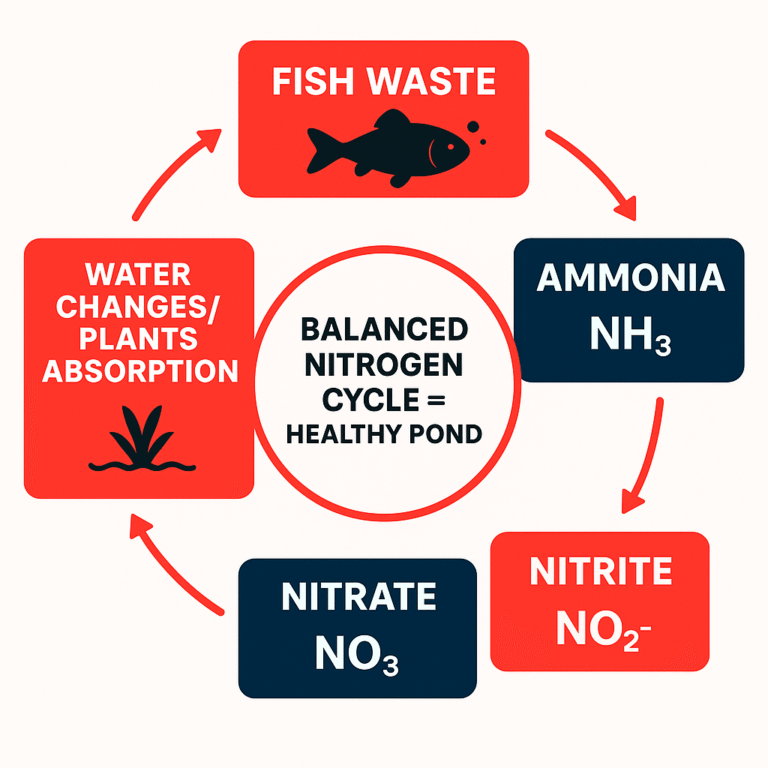
Your biofilter can only process waste at a certain speed. Too much biomass for that speed means ammonia and nitrite start climbing, even if nothing about your filter actually failed. More fish also means more competition for oxygen, especially overnight or during a summer heat wave.
Signs Your Pond Is Overstocked
- Water stays cloudy despite normal cleaning
- Ammonia or nitrite keeps showing up, even a little
- Fish seem stressed or grow slower, for no clear reason
- You need water changes more often than before
How It Builds Up Over Time
A pond that ran perfectly fine in year one can start showing problems in year two, purely from normal fish growth. This is exactly why stocking plans need a regular recheck, not just a one-time calculation when you first set up the pond.
How to Fix an Overstocked Pond
You really have three options:
- Reduce biomass, by rehoming fish or, in farming, harvesting some early
- Boost filtration and aeration to match your current fish load
- Do both together
Feeding less won’t fix this on its own. It slows growth a little, but it doesn’t meaningfully cut down on fish waste.
Overstocking From Breeding
Adding fish isn’t the only way ponds get overstocked. If spawning succeeds and baby fish survive, that adds biomass too, sometimes faster than buying new fish would, since it starts a whole new generation at once.
Why Waiting Costs More
Every extra month of overstocking makes things worse. More waste builds up. More oxygen gets used. Your biofilter falls further behind a load it was never built for. Fixing this early, at the first signs, costs far less than waiting until the water fully breaks down.
Related Terms
Carrying Capacity · Biomass · Stocking Density
Related Memeilo Content
A Simple Example With Numbers
Say your 500-gallon pond safely holds 50 total inches of fish. You stock 10 fish at 3 inches each, that’s 30 inches, well under the limit. Two years later, those same 10 fish are 8 inches each. Now you’re at 80 total inches, well over your pond’s safe limit of 50. No new fish were added. The pond simply outgrew its own filtration through normal, healthy growth.
Rehoming vs. Harvesting
For ornamental ponds, giving away extra fish to another pond owner is the usual fix. For small food-fish farms, a planned harvest at market size does the same job, and it’s also the whole point of raising the fish. Many commercial stocking plans build a harvest date into the plan from day one, rather than expecting fish to live together forever.
Fixing biomass once, without changing your stocking plan going forward, often just repeats the same problem in another year or two.
Update your plan around your fish’s grown size, not their size at purchase, and the same drift is much less likely to happen again.