PART OF THE AQUACULTURE GLOSSARY
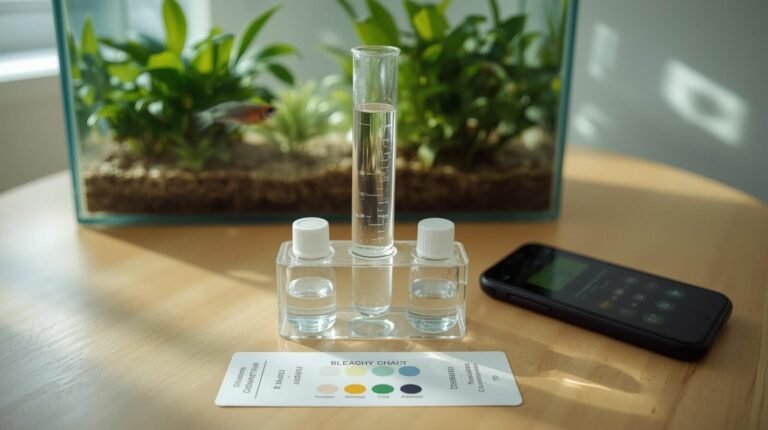
pH tells you how acidic or basic your pond water is. Every fish has a range it likes best. But sudden swings in pH hurt fish more than a steady number that’s a bit off from ideal.
What’s a Good Range?
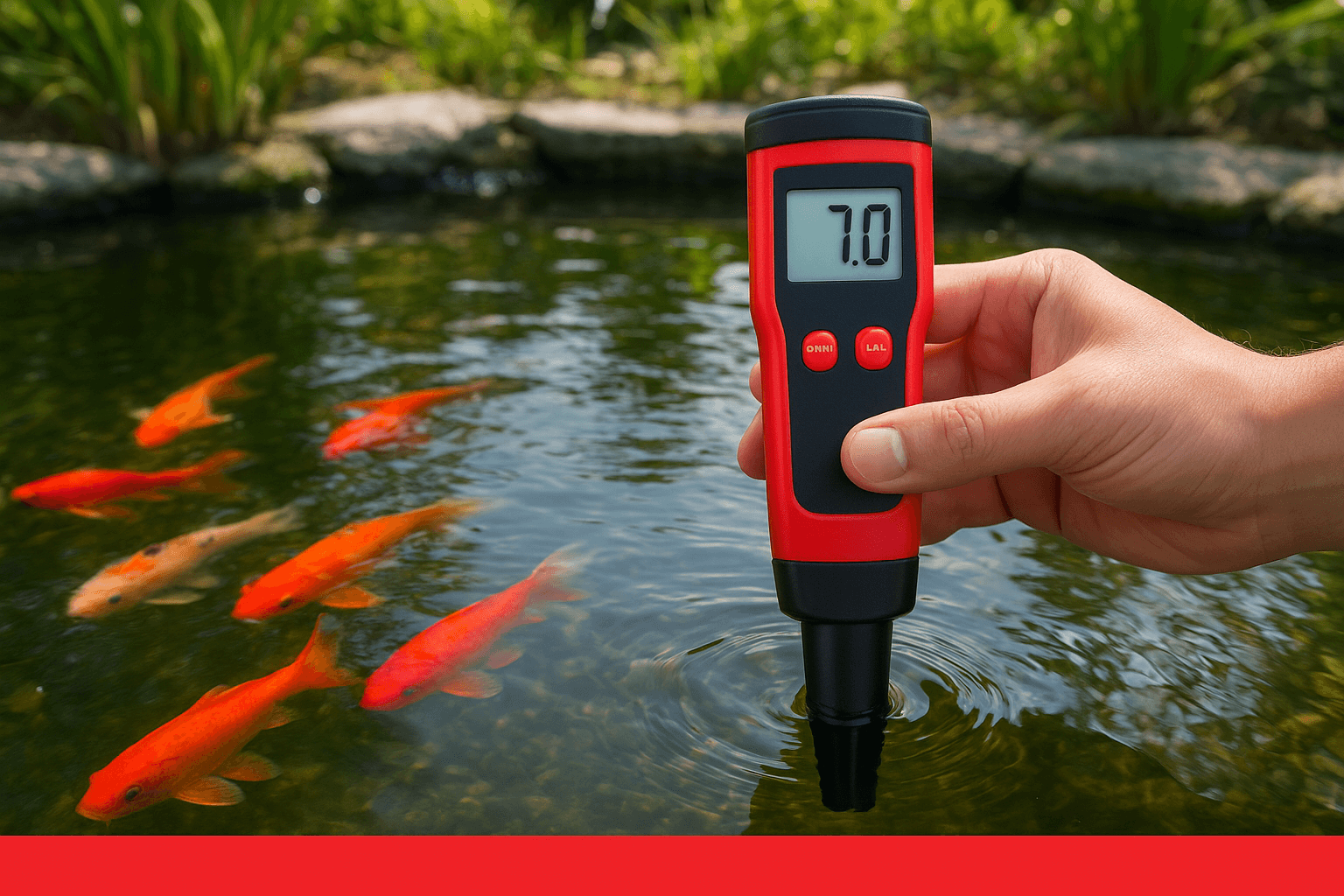
Most common pond fish do well in a range that’s neutral to slightly basic. This includes koi, goldfish, tilapia, and catfish. But each species is a little different. A pH that’s fine for one fish might stress another fish sharing the same pond.
Why Stability Beats a “Perfect” Number
Fish can handle a pH that’s steadily a bit high or low. What they can’t handle well is a pH that jumps around a lot in one day. A pond that swings between two “okay” numbers stresses fish more than a pond that stays at one steady number, even if that number isn’t ideal.
What Makes pH Drift?
A few things push pH down over time:
- The nitrogen cycle itself makes acid as a side effect
- Rain is naturally a little acidic
- Rotting food and dead leaves add more acid as they break down
The Hidden Helper: Buffering
KH (Carbonate Hardness) is what stops pH from swinging wildly. Low KH means little to no buffer, so pH can crash fast, even from something small. This is why two ponds can get hit by the same rainstorm and react completely differently, it all comes down to their KH.
Why pH Changes Through the Day
pH naturally rises during the day. Plants and algae pull carbon dioxide out of the water as they use sunlight. At night, this reverses, and pH drops again. This means testing at different times of day gives you different answers. Always test at the same time each day so you’re comparing fairly.
Fixing Low pH
- Use a product that raises both pH and KH together, not just pH alone
- Clean up leftover food and rotting plants, since they keep adding acid
Fixing High pH
High pH is less often an emergency. But it still causes stress. It also makes ammonia more toxic. Start with:
- A partial water change
- Feeding less
Avoid strong chemical pH-lowering treatments. They can overcorrect and cause a new swing.
Common Mistakes to Avoid
- Chasing one “perfect” pH number with frequent dosing, each dose is its own small swing
- Testing pH without also checking KH, since KH tells you how stable that pH will stay
Related Terms
KH (Carbonate Hardness) · General Hardness (GH) · Nitrogen Cycle
Related Memeilo Content
How to Test pH the Right Way
Testing pH is easy, but doing it consistently is what matters most. Follow these steps:
- Test at the same time each day, morning is a common choice
- Write down your results so you can spot patterns over time
- Test after any big change, like a water change or heavy rain
A single reading tells you very little on its own. A pattern of readings over a few weeks tells you a lot more, especially whether your pond’s pH is stable or drifting.
A Simple Example With Numbers
Most pond fish do fine somewhere between pH 6.5 and pH 8.5. That’s a wide range. Here’s why stability matters more than the exact number: a pond sitting steady at 6.8 all week is safer than a pond swinging from 6.5 in the morning to 8.0 by afternoon, even though 6.8 is the “lower” number. The swing itself is what stresses fish, not the number alone.
How Fast Is Too Fast?
A change of more than 0.3 to 0.5 in a single day is generally worth investigating. The same size change spread slowly over a month is far less stressful to fish. Testing at the same time each day, and writing the number down, is the easiest way to tell a slow drift from a dangerous swing.