PART OF THE AQUACULTURE GLOSSARY
Ich, short for Ichthyophthirius (white spot disease), is one of the most common parasitic infections in pond fish, recognizable by small white dots that spread across the body and fins, and it’s usually a stress-triggered outbreak rather than a random event.
What It Looks Like
Small white spots, like the fish has been sprinkled with salt or fine sand, scattered across the body, fins, and sometimes gills. Fish often flash, rubbing themselves against rocks, liner, or substrate, or develop clamped fins before spots become clearly visible.
Why It’s Usually a Stress Response
The parasite responsible for ich is often already present in low, harmless numbers in many established ponds. It takes hold and multiplies when fish are stressed and their immune defenses are down, commonly from a sudden temperature swing, poor water quality, transport stress, or a new fish introduced without quarantine.
The Parasite’s Life Cycle and Treatment Timing
Ich has a multi-stage life cycle, and treatments generally target the free-swimming stage, not the stage embedded in fish tissue, which is why a single treatment often isn’t enough. Raising water temperature slightly speeds up the parasite’s life cycle, moving more of the population into the vulnerable free-swimming stage faster and making treatment more effective over a shorter window.
Prevention Beats Treatment
Quarantining every new fish for several weeks before introduction is the single most effective prevention, since it catches an outbreak in isolation rather than in an established pond. Minimizing avoidable stress, stable temperature, good water quality, careful handling during transport, reduces the odds of a low-level parasite population ever becoming a visible outbreak in the first place.
Related Terms
Quarantine · Parasite · Acclimation
Why Ich Spreads Fast Once It Starts
Part of the parasite’s life cycle involves a free-swimming stage that actively seeks out new fish to attach to, which is why an outbreak that starts on one fish rarely stays contained to just that one for long in a shared pond, especially at higher stocking density where fish are in closer contact.
Ich in Newly Stocked Ponds
New ponds, and new fish specifically, see disproportionately more ich outbreaks than established, stable populations, the combination of transport stress, unfamiliar water, and often skipped quarantine creates close to ideal conditions for the parasite to take hold.
Distinguishing Ich From Other White Spot Conditions
Not every white mark on a fish is ich, some fungal growths and other conditions can look superficially similar at a glance. Ich spots are typically small, numerous, and evenly distributed rather than a single larger patch, a distinction worth checking before assuming and treating for the wrong issue entirely.
Post-Outbreak Recovery
Fish that survive an ich outbreak can show lingering effects, patchy slime coat, minor fin damage, for a while after visible spots clear, without this necessarily meaning the parasite is still present. Distinguishing lingering cosmetic recovery from an active, ongoing infection sometimes takes a bit of patience rather than immediate re-treatment.
Related Terms
Preventing Reintroduction
A pond that’s fully cleared an ich outbreak can be reinfected just as easily as it was infected the first time if a new, unquarantined fish carrying the parasite is introduced later. Clearing an outbreak doesn’t make a pond permanently immune, ongoing quarantine practice matters just as much afterward as it did before the first outbreak.
Treating a cleared outbreak as a lesson in quarantine discipline going forward tends to prevent more repeat outbreaks than any water treatment product on its own.
It’s a hard lesson to relearn twice.
Related Memeilo Content
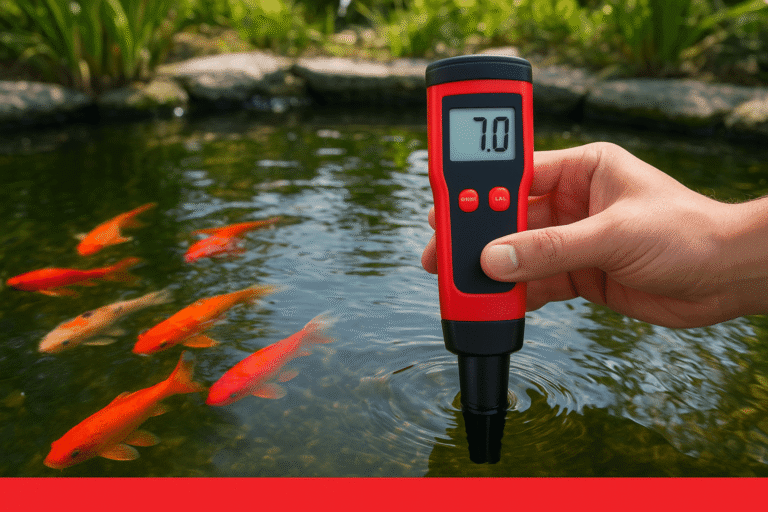
Water testing catches the stress-inducing conditions, poor ammonia levels, unstable pH, that make ich outbreaks more likely in the first place.