PART OF THE AQUACULTURE GLOSSARY
A pond liner is what actually holds your water in. Getting the material, thickness, and size right matters more than almost any other choice you’ll make. Fix a liner mistake later, and you’re draining the whole pond, not just patching it.
What a Liner Does
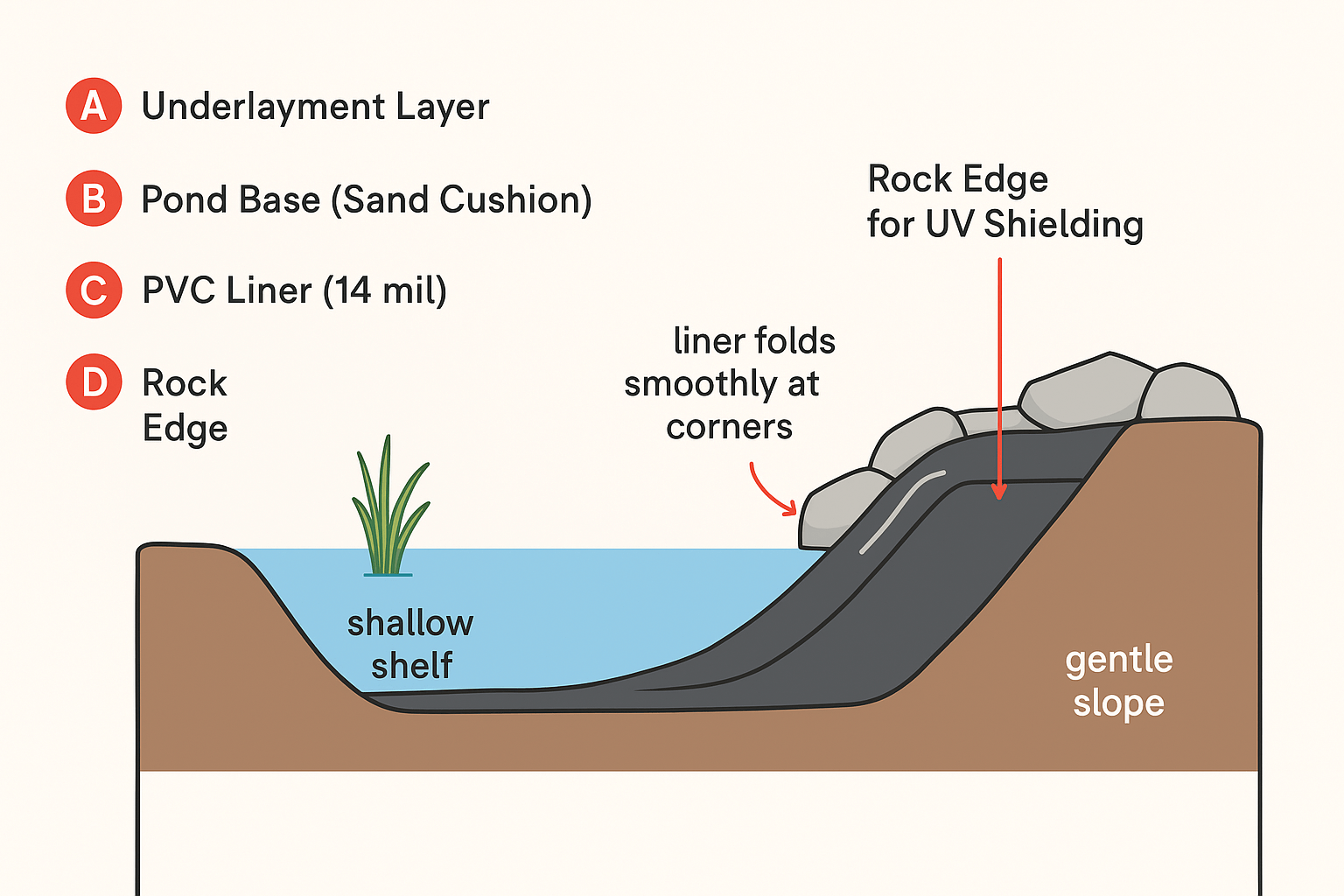
A liner is the waterproof layer between your pond water and the soil around it. Everything else in your pond, filters, pumps, fish, sits inside a system that depends on this one material not failing.
Comparing the Three Main Materials
- EPDM rubber – the top pick for backyard ponds. Flexible, tough against punctures, and often lasts decades. Costs more upfront.
- PVC – cheaper and easier to find. But sunlight wears it out faster, and it cracks more easily in cold weather.
- HDPE – tough and resists chemicals well. Common in large or commercial ponds. Harder to shape around small, curvy backyard designs.
What “Mil” Thickness Means
Liner thickness is measured in mil, which is one thousandth of an inch. A thicker liner (like 45 mil) resists punctures better but costs more and bends less easily. A thinner liner (like 20 mil) is easier to fold around curves but tears more easily on sharp rocks or roots.
How to Size Your Liner
Use this simple formula:
- Length needed = pond length + (2 x depth) + extra for overlap
- Width needed = pond width + (2 x depth) + extra for overlap
Example: a pond that’s 10 feet long and 3 feet deep needs at least 16 feet of liner length (10 + 3 + 3), plus extra on top for a safe overlap at the edges. Skimping on this math is one of the most common, and hardest to fix, mistakes people make. A liner that’s too small simply can’t stretch to cover the gap once your pond is already dug.
Don’t Skip the Underlayment
Underlayment is a soft layer, like fabric, old carpet, or sand, placed between the soil and your liner. It stops sharp rocks and roots from poking a hole through from underneath. This kind of damage is invisible until your pond starts losing water.
Installing Your Liner
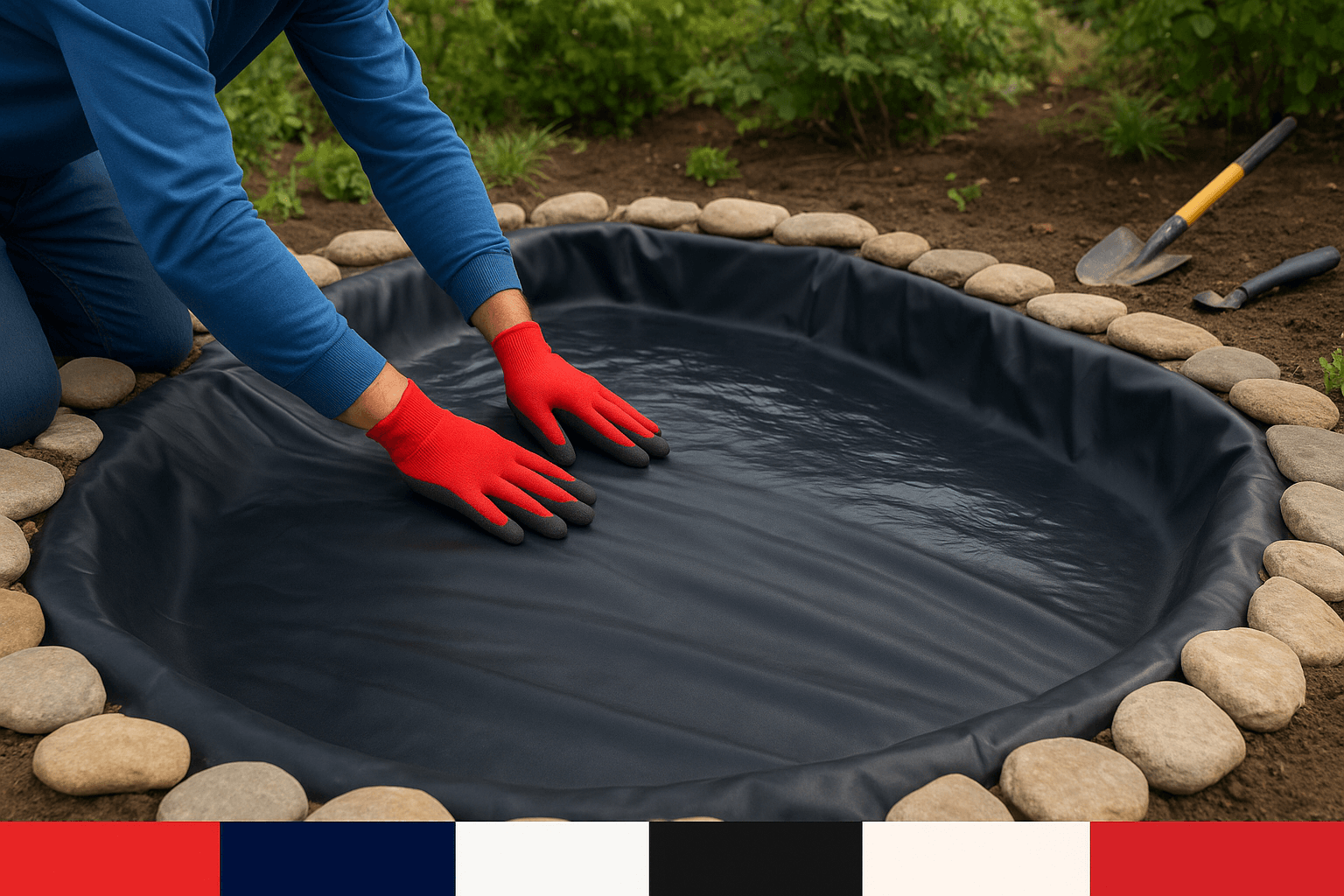
Let the liner relax into the pond’s shape before you trim it or secure the edges. Pulling it tight right away often creates weak spots that show up later. Edges are usually held down under rocks, pavers, or soil. This keeps the liner in place and blocks sunlight, since sunlight breaks down liner material fastest right at the exposed edges.
Common Mistakes
- Buying a liner too small and running short at the edges
- Skipping underlayment to save money, then finding a puncture months later
- Leaving edges exposed to direct sun instead of covering them
- Adding water before checking for folds that create weak spots
How Long Does a Liner Last?
EPDM liners, if installed well and protected from sun at the edges, often last 20 years or more. PVC usually wears out faster, especially in hot, sunny climates. How long your liner lasts depends as much on how well it’s installed as on the material itself.
Patching a Damaged Liner
Most liners can be patched instead of replaced:
- EPDM uses a special glue-on patch
- PVC often uses heat-welding or a solvent-based patch
Using the wrong repair method for your liner type can fail to stick, so check your material first.
Spotting a Slow Leak Early
A slow leak often shows up as needing more top-offs than usual, not as a dramatic drop in water level. Keep a rough note of how much water your pond normally needs each week. That way, a new leak stands out fast instead of going unnoticed.
Check the Warranty
Warranty length often reflects how long a material is really expected to last. Comparing warranties, not just price and thickness, gives you another useful clue when choosing between products.