

PART OF THE AQUACULTURE GLOSSARY
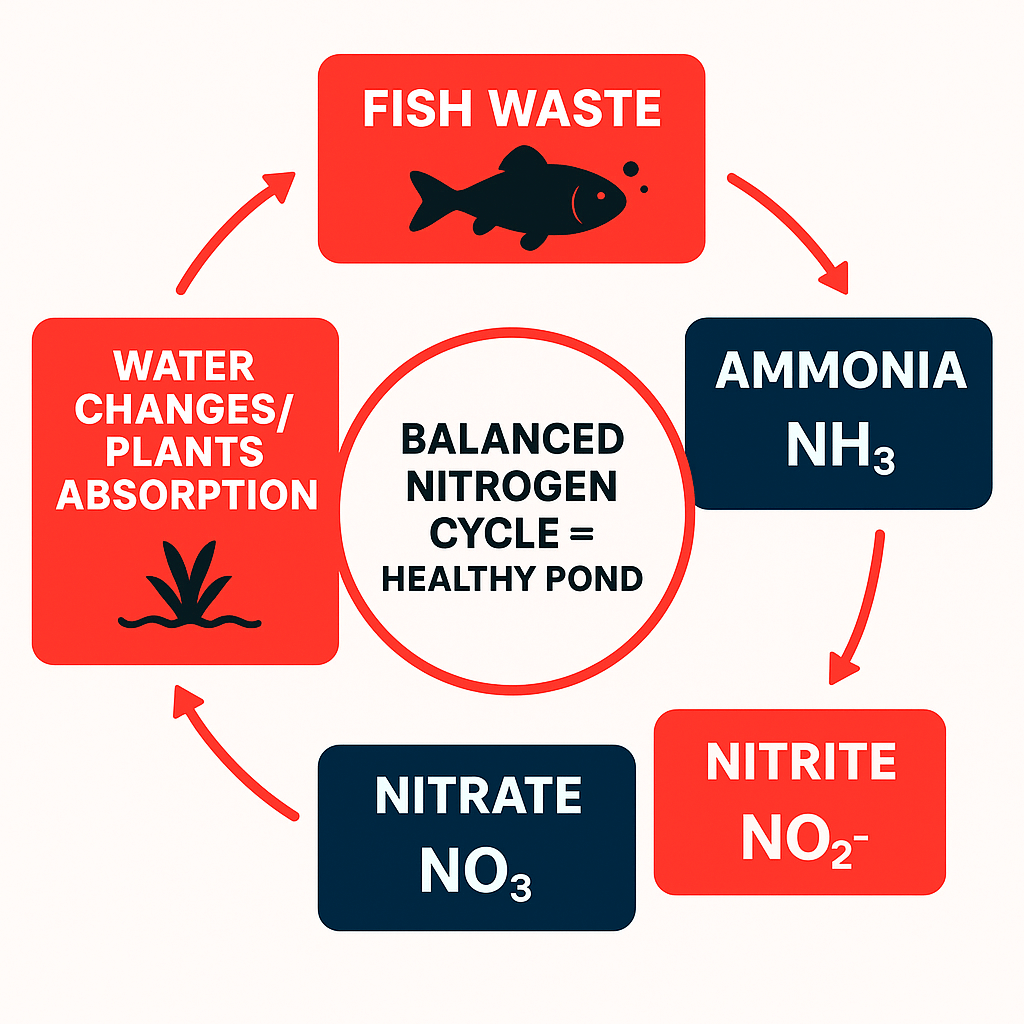
The nitrogen cycle is how a pond turns dangerous fish waste into something safer. Good bacteria do this work. Every healthy pond depends on it. Most fish deaths in new ponds happen because this cycle hasn’t finished yet.
Three Steps of the Cycle
The nitrogen cycle happens in three steps:
- Fish waste and old food break down into ammonia. This is the most toxic stage.
- Bacteria eat that ammonia and turn it into nitrite. Nitrite is still dangerous, but in a different way.
- A second type of bacteria turns nitrite into nitrate. Nitrate is much less harmful. Most ponds manage it with regular water changes.
Why New Ponds Need Time
The good bacteria that handle ammonia and nitrite don’t show up right away. They need two things:
- A place to live, usually the filter media inside a biofilter
- Food, which for these bacteria means ammonia itself
A brand-new pond has neither an established bacteria colony nor much time for one to grow before fish go in. That gap is exactly what causes ammonia and nitrite spikes in new ponds.
How Long Does Cycling Take?
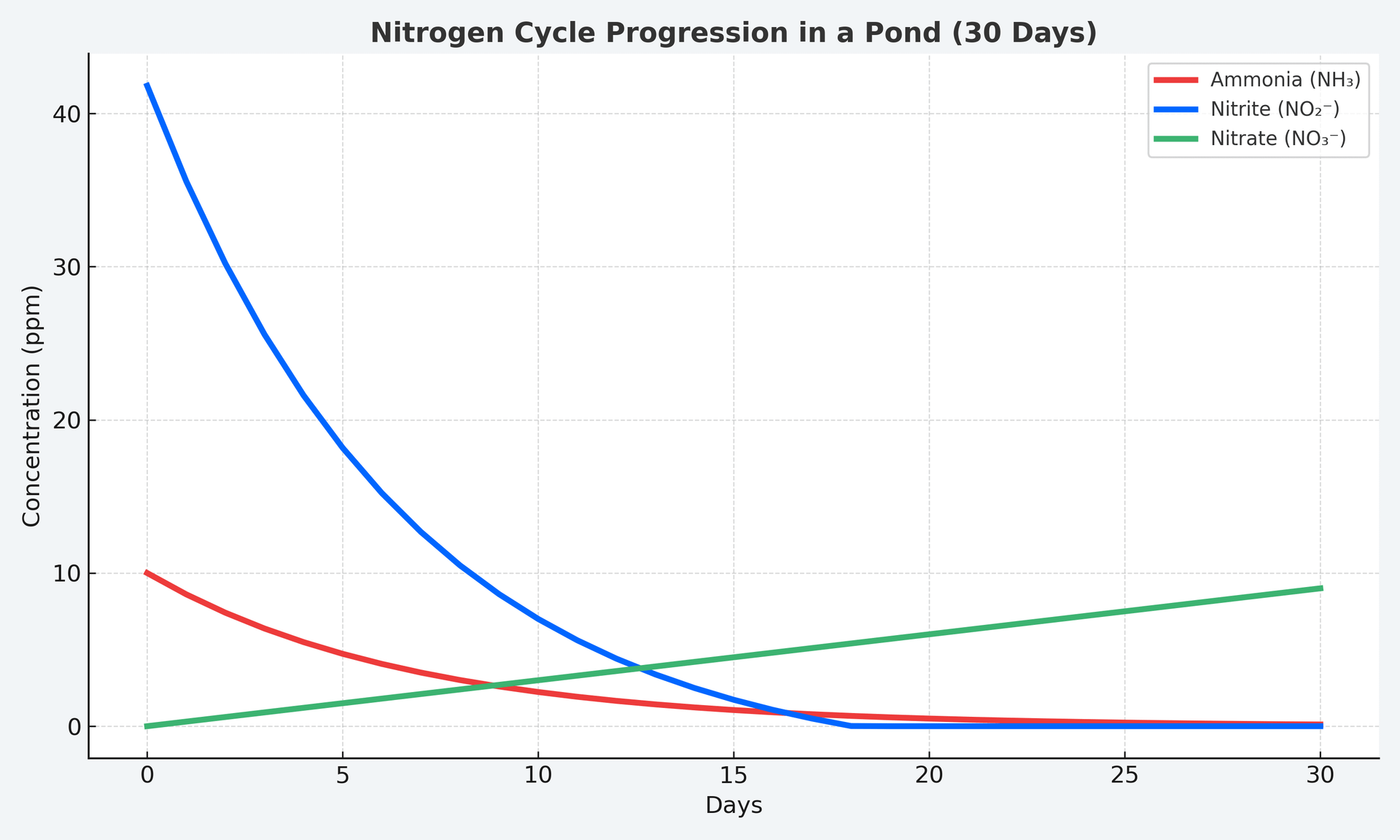
There’s no single answer. It depends on water temperature, how many bacteria you start with, and how much ammonia is being produced. As a rough pattern:
- Ammonia rises first, then falls
- Nitrite rises next, then falls
- Nitrate becomes the main compound left as the cycle settles down
Warm water speeds this up a lot. A cycle that takes a few weeks in summer can take much longer in cold weather.
Two Ways to Cycle a Pond
Fishless cycling means adding an ammonia source, like a chemical additive or decaying fish food, to an empty pond. You wait until ammonia and nitrite both test at safe levels before adding fish.
Fish-in cycling means adding a few fish right away and watching the water closely as the pond cycles around them. This is riskier for those first fish.
Fishless cycling is usually the safer choice if you don’t need to stock your pond right away.
Signs Your Pond Hasn’t Finished Cycling
Watch for these signs:
- Any ammonia or nitrite reading above zero, even a small one
- Cloudy water
- Fish acting strange, like gasping, moving slowly, or holding their fins close to their body
- An algae bloom soon after adding fish
Test your water instead of guessing when you see any of these signs.
How to Speed Up Cycling Safely
You can speed things up two ways:
- Add a bottled bacteria starter product
- Add filter media, gravel, or water from an already-cycled, healthy pond
Both give your pond a head start with living bacteria instead of waiting for a colony to grow from nothing. Neither replaces the need to test your water.
Keeping the Cycle Healthy Long-Term
Once your pond has cycled, the bacteria colony is fairly tough, but it can still be damaged. Cleaning your filter too hard, rinsing it in tap water, or replacing all the media at once can wipe out enough bacteria to cause a mini version of new pond syndrome.
To protect your cycle:
- Rinse filter media in pond water, not tap water
- Replace media in small batches, not all at once
Common Mistakes
- Stocking a full group of fish on day one, before any bacteria exist
- Thinking clear water means the cycle is done, clear water and a finished cycle are not the same thing
- Deep-cleaning the whole filter at once, which resets your bacteria colony to zero
- Testing only for ammonia and missing a nitrite spike that follows right after
Testing Often During Cycling
Test your water daily or every other day while cycling. This helps you catch the ammonia-to-nitrite change as it happens, instead of finding out later that you missed a spike.
Once ammonia and nitrite both read zero across several tests in a row, your pond has likely finished cycling.
Related Terms
Ammonia · Nitrite · Nitrate · Cycling · Biofilter
