PART OF THE AQUACULTURE GLOSSARY
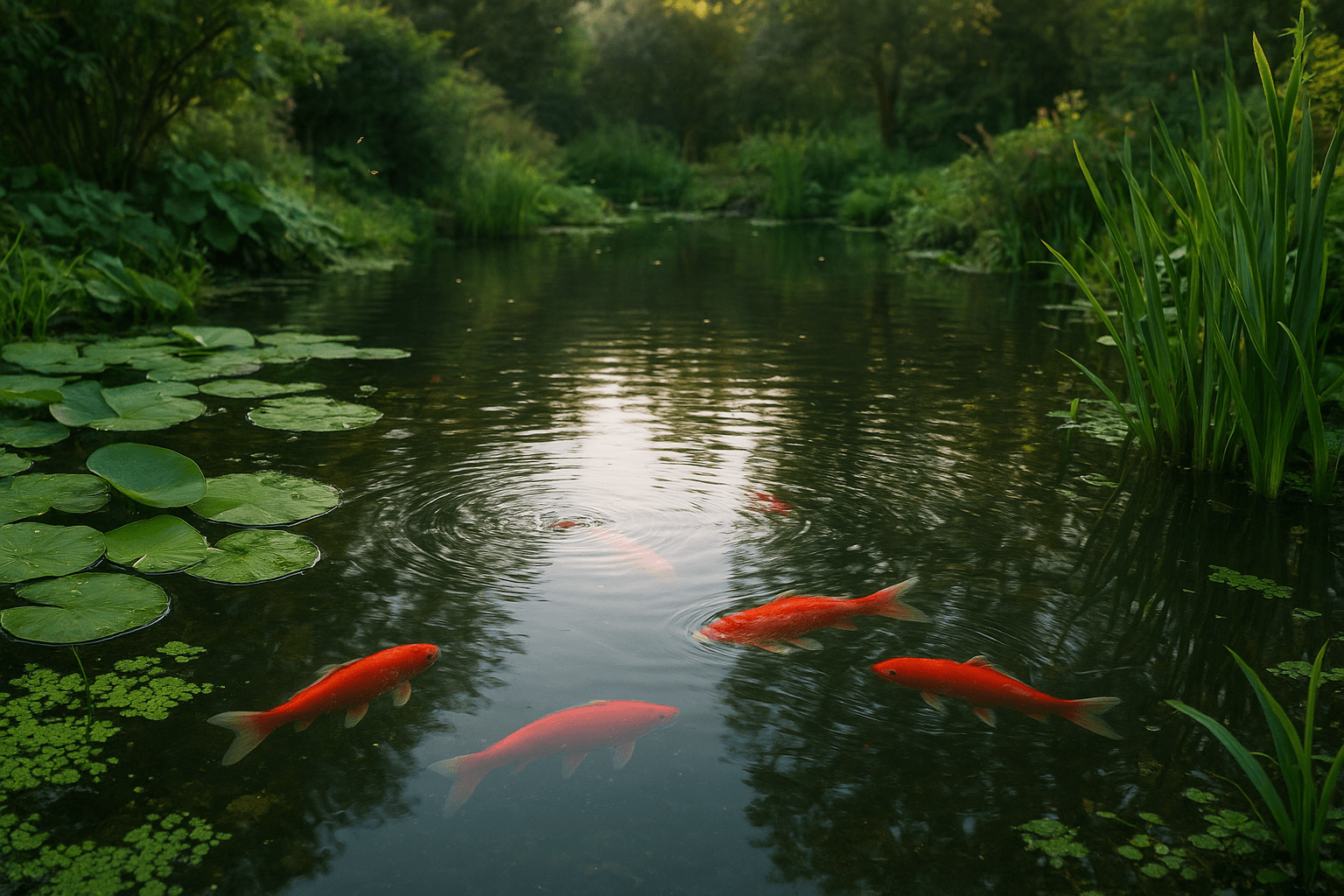
Koi are ornamental carp, bred for centuries for color and pattern instead of food. They’re often the fish that turns a simple backyard water feature into a real, long-term hobby, one with different needs than most people expect.
Koi Grow Much Bigger Than You’d Think
A koi bought at 3 to 4 inches long can reach 24 inches or more within a few years. Some varieties grow even bigger. This one fact drives most of the differences between koi ponds and typical backyard ponds, everything gets planned around adult size, not the size fish are at purchase.
Depth Matters More for Koi
Koi ponds are usually built deeper than a typical goldfish pond. This helps as fish grow, and in cold climates, keeps the pond from freezing solid in winter. Not building deep enough is one of the most common mistakes in koi pond design.
Filtration Needs Are Higher
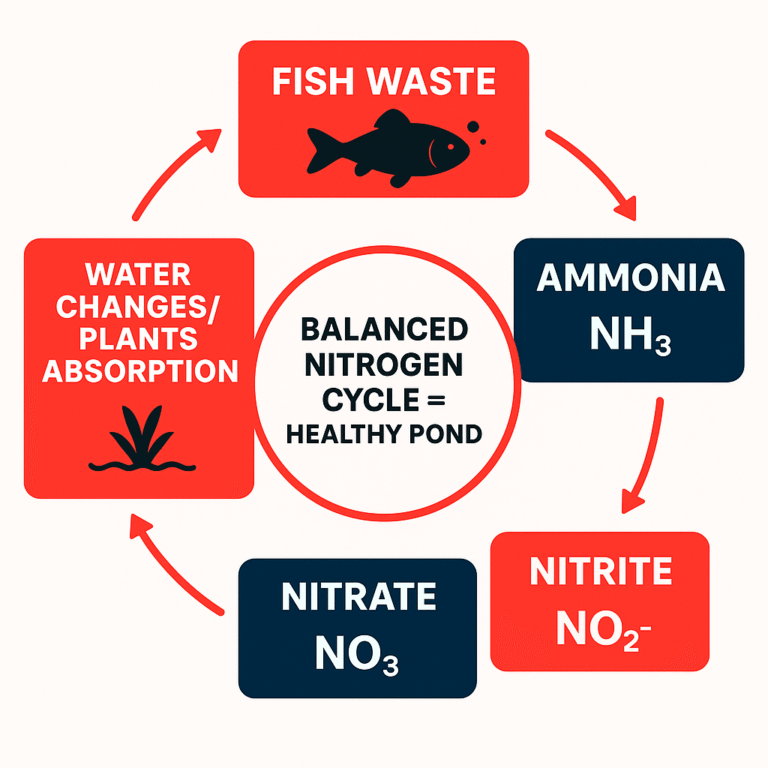
Koi produce a fair amount of waste for their size. A mature koi population needs stronger biological filtration and mechanical filtration than the same pond might need for smaller fish. Undersizing filtration early on, based on how the pond looks with young fish, often causes problems two or three years later.
A Simple Example With Numbers
Say you stock a 1,000-gallon pond with five koi at 4 inches each. At that size, they’re a light load. Five years later, those same koi could reach 20 inches each. That’s a huge jump in total biomass, from the exact same five fish, no new stock added. Filtration sized for the 4-inch fish won’t keep up with the 20-inch version.
Feed and Color
Xanthophyll pigments in feed genuinely affect how bright a koi’s color becomes. This is a real mechanism, not just marketing. That said, feed can only bring out color a fish already has the genes for, it can’t create a pattern that isn’t there.
Watch for Predators
Koi’s size and visibility make them a common target for predation. Herons in particular are known for targeting koi ponds specifically. Good depth, hiding spots, and sometimes physical deterrents matter more here than in a smaller, less noticeable fish setup.
Koi vs. Goldfish
The two are often kept together and get along fine in most cases. But koi grow much bigger and make more waste. A pond with both should be planned around the koi’s future size and filtration needs, not the goldfish’s smaller requirements.
Related Terms
Xanthophyll · Predation · Biofilter
Related Memeilo Content
Koi Lifespan
Well cared for koi commonly live for decades, far longer than most people expect from what looks, at first, like an ordinary pond fish. This long lifespan is part of why koi ponds tend to be built as long-term, semi-permanent setups, not something reworked every few years.
Koi Varieties and Coloration
Different koi types, like Kohaku, Showa, and Sanke, are known for specific color patterns and where those colors sit on the fish. This is a real breeding specialty of its own. Feed rich in xanthophyll can deepen existing color, but it won’t change the underlying pattern that’s already set by genetics.
Related Reviews
Picking the right feed matters just as much for koi color as any other single choice you’ll make. Memeilo’s pond fish food reviews cover several options worth comparing side by side.
Sticking with a good feed for months, rather than switching often, tends to show more visible color improvement than any single product change.
Patience pays off more than constant switching here.
A Note on Koi Compatibility With Other Fish
Beyond goldfish, koi generally get along with other peaceful, similar-sized freshwater species. But their size and appetite mean they often dominate feeding time, worth planning around if you’re setting up a pond with multiple species.