PART OF THE AQUACULTURE GLOSSARY
Ammonia is a waste product that fish release. It comes out through their gills and in their waste. Ammonia is toxic to fish, even in small amounts.
Where Does Ammonia Come From?
Every pond makes ammonia. Fish release it through their gills. It also comes from leftover food and rotting plants. More fish and more feeding means more ammonia. That’s why stocking and feeding choices matter so much for ammonia levels.
Two Types of Ammonia
Ammonia comes in two forms in water:
- Ammonium – mostly safe for fish
- Free ammonia – very toxic to fish
Warmer water and higher pH turn more ammonia into the toxic form. This means a pond can have the same ammonia reading on two different days, but be far more dangerous on the hot day. Most home test kits measure total ammonia, called TAN. They don’t separate out the toxic part. So always think about pH and temperature too, not just the number on the test.
Why Ammonia Hurts Fish
Ammonia damages fish gills. This happens even at low levels. Damaged gills make it hard for fish to breathe. A fish exposed to ammonia can look like it’s suffocating, even if there’s plenty of oxygen in the water. Ammonia also weakens a fish’s immune system. This makes fish more likely to get sick, even after the ammonia is gone.
Warning Signs in Fish
Watch for these signs of ammonia stress:
- Gasping at the water’s surface
- Low energy or hiding
- Not eating
- Red or swollen gills and fins
These signs can also point to other problems. That’s why testing your water is better than guessing.
How the Nitrogen Cycle Helps
In a healthy pond, good bacteria live in the biofilter. These bacteria turn ammonia into nitrite. Then, different bacteria turn nitrite into nitrate, which is much safer. This whole process is called the nitrogen cycle. It’s why an older, established pond handles fish waste better than a brand-new one.
What Causes Ammonia Spikes?
- New pond syndrome – adding fish before good bacteria have grown
- Too many fish – more waste than the biofilter can handle
- Overfeeding – leftover food breaks down into waste
- A dead fish – it releases a lot of waste as it breaks down
- Cleaning the filter wrong – rinsing it in tap water kills the good bacteria
What to Do About High Ammonia
Here’s how to bring ammonia down fast:
- Change 25 to 50 percent of the pond water. Use dechlorinated water.
- Stop feeding until levels drop.
- Don’t scrub or replace your whole filter. This can kill the good bacteria you need.
Testing for Ammonia
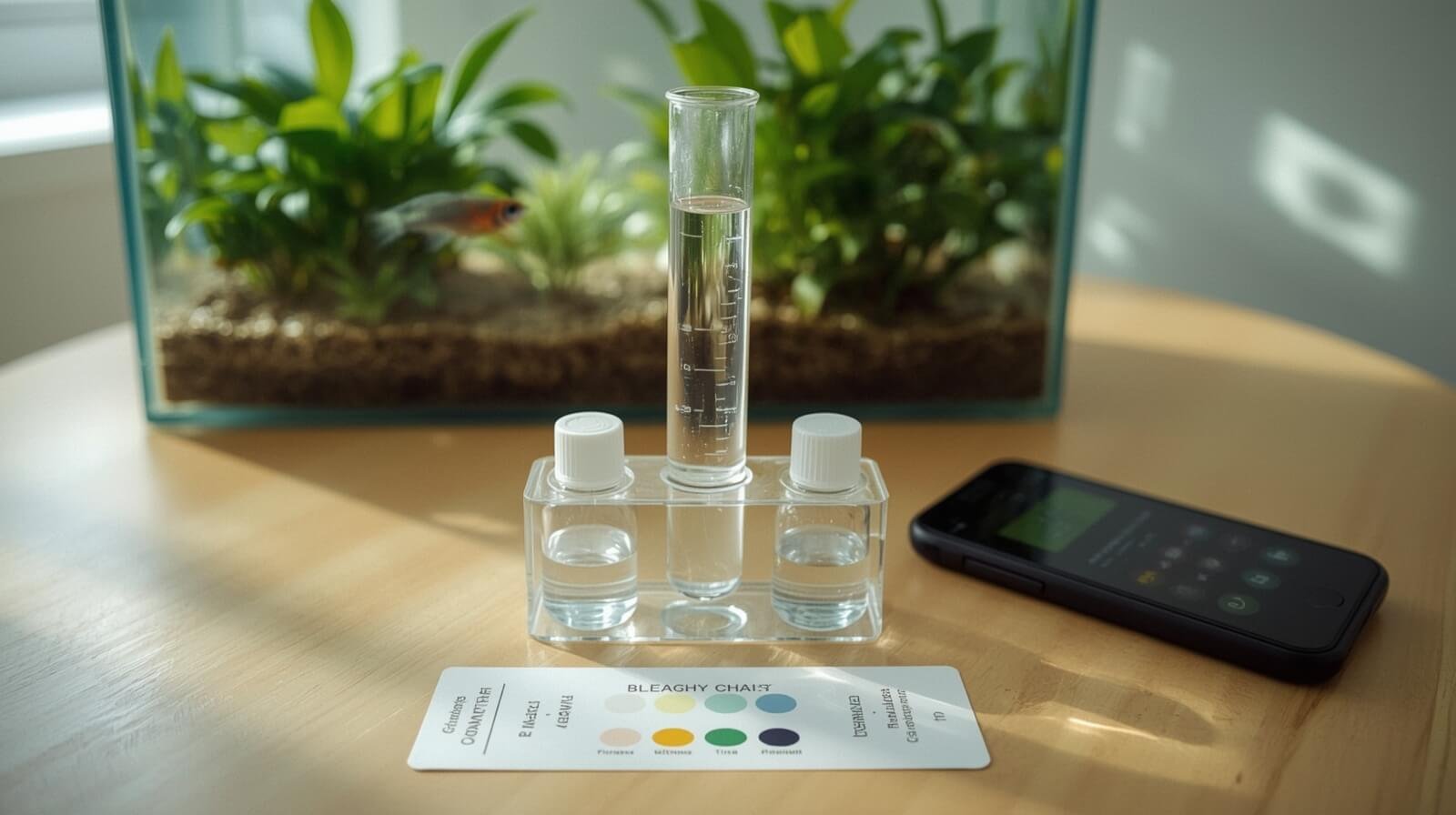
Test your water often, especially in a new pond or after you add more fish. There are two main test types:
- Test strips – fast, but colors can be hard to read
- Liquid test kits – take longer, but give a clearer answer
Use liquid kits when you suspect a real problem. Strips work fine for routine weekly checks.
Preventing Ammonia Problems
The best fix is to stop problems before they start:
- Don’t add fish faster than your biofilter can handle
- Don’t overfeed
- Give a new pond enough time to cycle before adding lots of fish
Do All Fish React the Same Way?
No. Some fish handle ammonia better than others. But it’s safest to treat any ammonia as a problem to fix right away. Young fish and fry are more sensitive than adult fish. Keep this in mind if your pond has fish of different ages.
Related Terms
Nitrogen Cycle · Nitrite · Nitrate · Total Ammonia Nitrogen (TAN) · Biofilter