

PART OF THE AQUACULTURE GLOSSARY
Dissolved oxygen is the oxygen that’s actually in your pond water. It’s the only kind fish can use to breathe. And it can drop to a dangerous level faster than almost any other water problem.
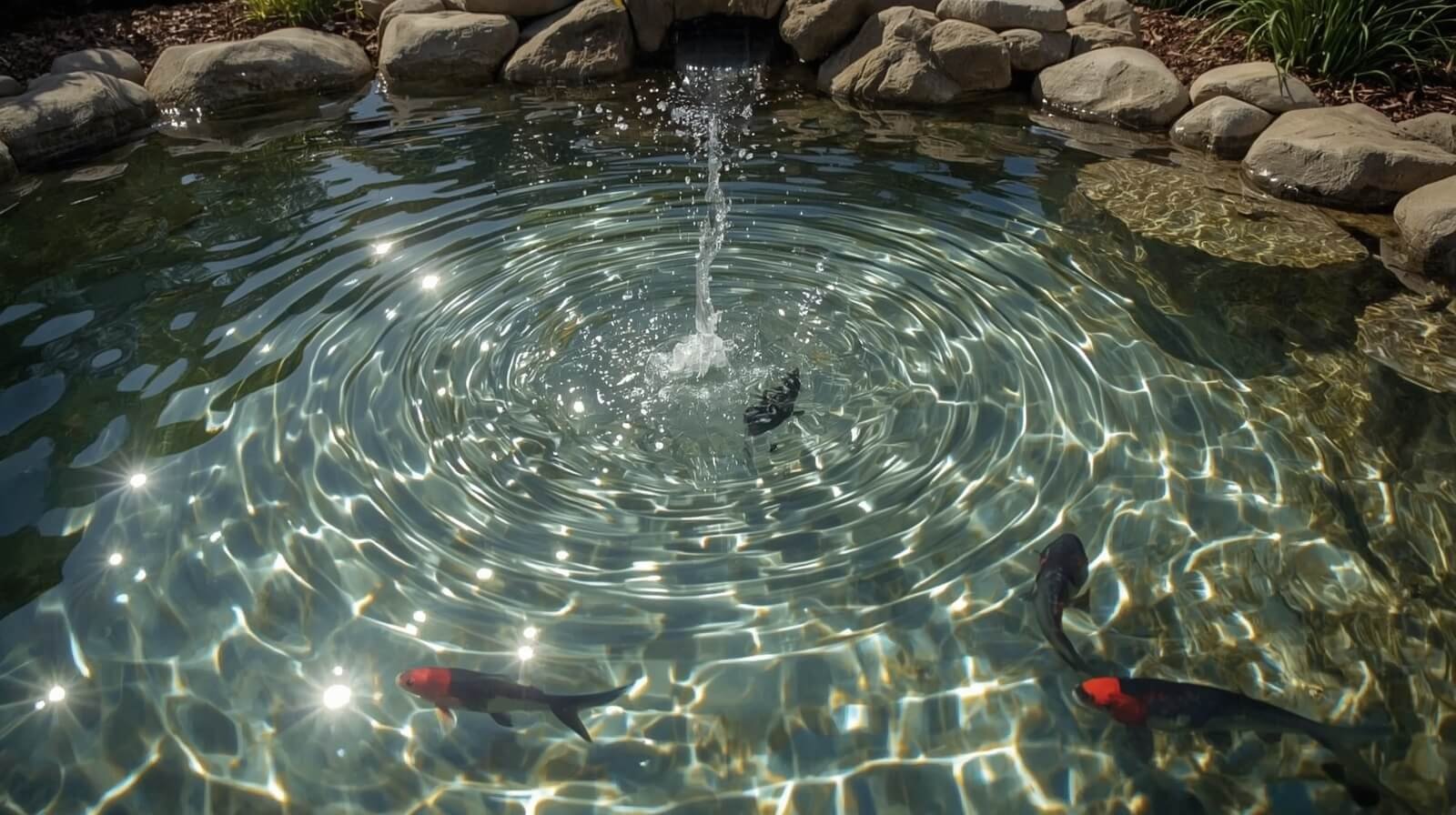
How Oxygen Gets Into Water
Two things do most of the work:
- Moving water at the surface, from waterfalls, fountains, or pump outlets
- Plants and algae making oxygen during the day through sunlight
Still, calm water barely trades any oxygen with the air. A pond with no aeration and no plants is at higher risk.
What Lowers Oxygen Levels
- Warm water holds less oxygen than cold water, it’s simple chemistry
- Too many fish means more demand, but no more supply
- A dying algae bloom uses up oxygen as it breaks down
- Cloudy days mean less sunlight, so less oxygen from plants
- Every pond loses oxygen at night, since plants stop making it and start using it instead
This is why early morning is the riskiest time of day, oxygen has been dropping all night with nothing refilling it.
Warning Signs of Low Oxygen
Watch for:
- Fish gasping at the surface, especially near a pump or waterfall
- Fish hanging near the top of the water, even outside feeding time
- Low energy or loss of appetite
Ways to Add Oxygen
- Pond pumps – circulate water and often add a spray or waterfall
- Air stones – release a steady stream of small bubbles
- Venturi aerators – use water pressure to pull in air, often built into your existing pump
Larger ponds often use more than one method at once.
Sizing Your Pump Right
Pumps are rated by GPH (Gallons Per Hour). A common rule: your pump should move your pond’s full volume once every one to two hours. If you have lots of fish or live somewhere hot, aim higher than the bare minimum.
If Fish Are Gasping Right Now
- Turn on any pump or add an air stone immediately
- Do a partial water change with cooler water
- Stop feeding until oxygen levels recover
Feeding uses up oxygen too, through digestion, so it’s the wrong move during a crisis.
Seasonal Risks
Summer heat and algae blooms cause most sudden oxygen crashes. In freezing climates, winter brings a different risk: ice can seal the pond’s surface. This traps gases underneath and blocks new oxygen from getting in. That’s a big part of why preparing your pond for winter matters just as much as summer aeration.
Related Terms
Aeration · Venturi Aerator · GPH (Gallons Per Hour) · Algae Bloom
Related Memeilo Content
Backup Oxygen for Power Outages
A battery-powered air pump is cheap insurance. Here’s why it matters: if the power goes out overnight in summer, your main pump stops right when your pond needs it most. A backup air pump keeps oxygen flowing until the power comes back. It’s a small cost for real protection.
Plants: Helpful and Risky
Plants add oxygen during the day. But they use it up at night, just like fish do. A pond packed with plants can actually lose more oxygen overnight than a pond with fewer plants. More plants isn’t always better for oxygen levels, balance matters more than quantity.
Testing Oxygen Directly
Most pond owners never test oxygen directly. They watch for warning signs instead. But dissolved oxygen meters do exist. Commercial fish farms use them often, since even a small, unnoticed drop can cost real money in lost fish.
For most backyard ponds, watching your fish is enough. Testing tools are more useful for larger or commercial setups.
Simple observation still catches most problems in time.
