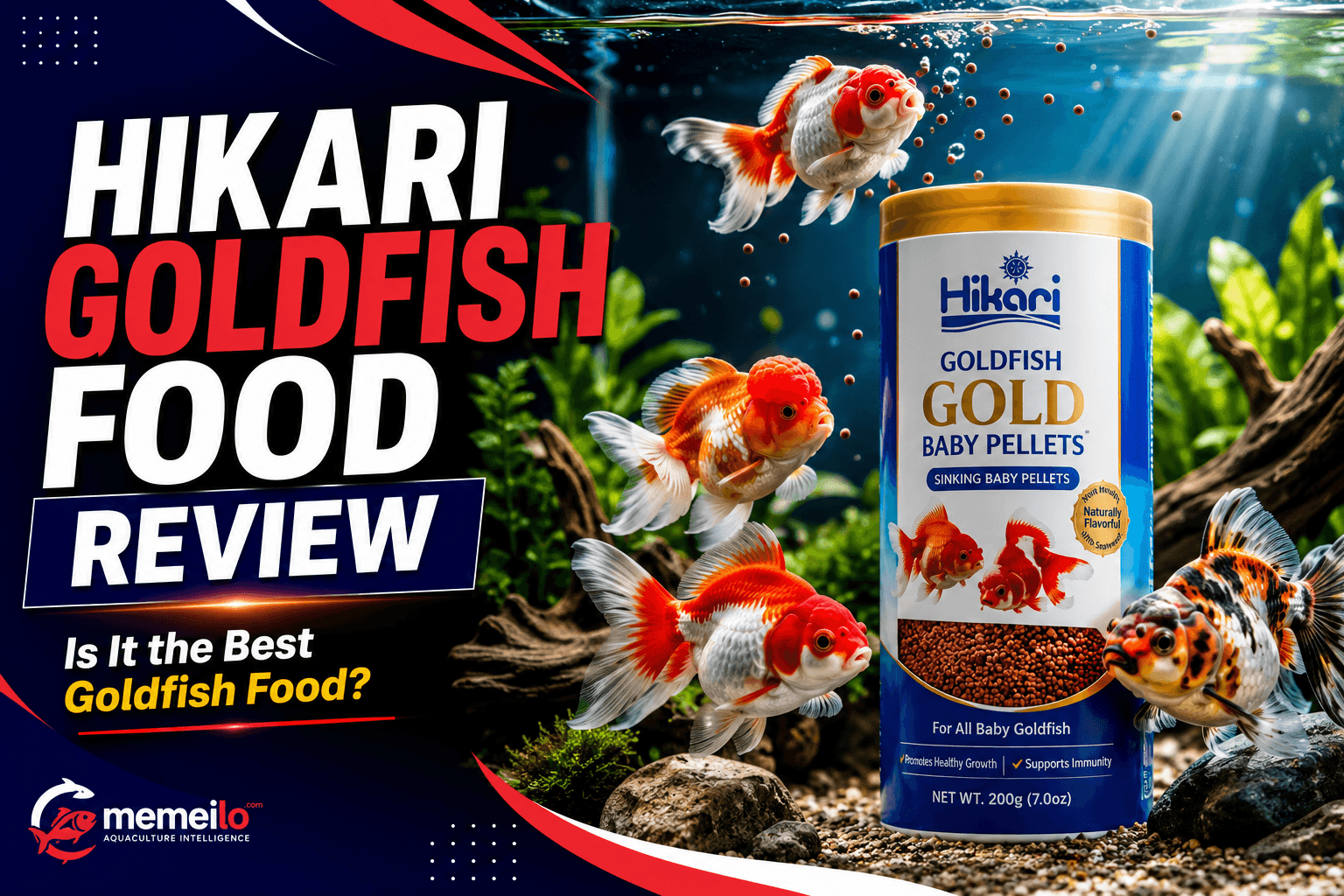
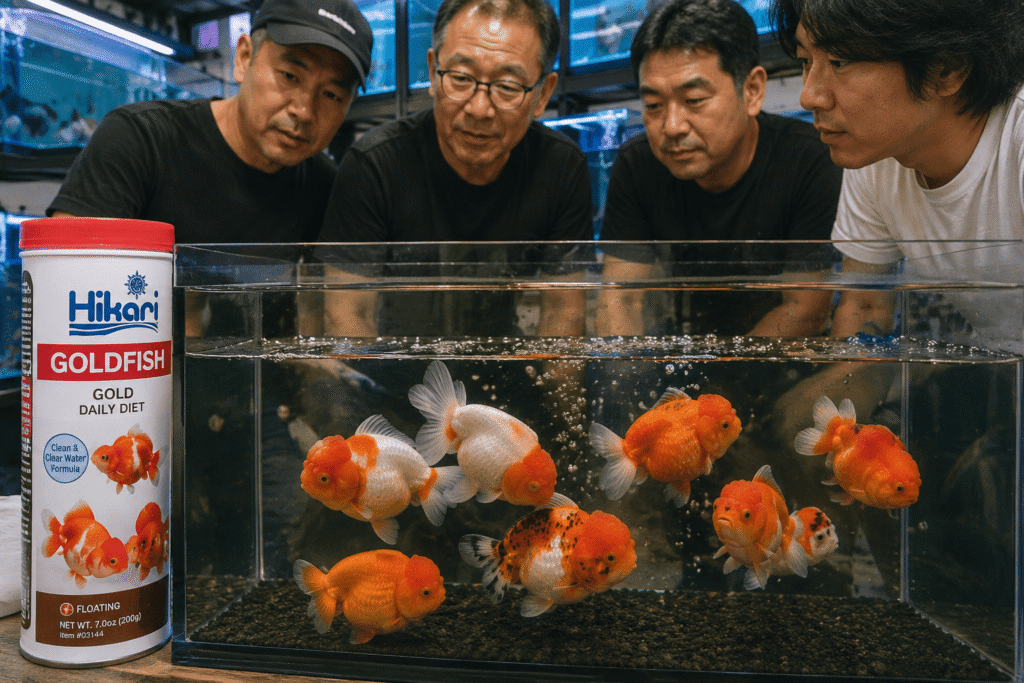
Hikari Goldfish Food is one of the best premium goldfish foods available, combining high-quality nutrition, excellent digestibility, and natural colour enhancement, making it a worthwhile choice for goldfish keepers seeking long-term health and performance.
Specs
Brand: Hikari
Product Name: Hikari Goldfish Gold
Food Type: Floating pellets
Best For: Fancy & common goldfish
Life stage: Juvenile & adult
Protein: Minimum 40%
Fat: Minimum 4%
Key Ingredients: Fish meal, wheat germ, spirulina, krill meal
Colour Support: Natural carotenoids & spirulina
Digestibility: Highly digestible formula
Water Quality: Low waste when fed correctly
Pellet Size: Mini & medium (varies by product)
Available Sizes: 100 g, 300 g and larger (market dependent)
Made In: Japan
Suitable for Ponds: Yes (small and medium goldfish)
Storage: Store in a cool, dry place
Pros
High-quality fish protein
Highly digestible formula
Enhances natural colour
Supports healthy growth
Produces less waste
Helps maintain cleaner water
Highly palatable to goldfish
Trusted Japanese brand
Cons
Premium price
Floating pellets may not suit some fancy goldfish
Contains wheat and soybean ingredients
Colour enhancement is gradual
Walk into almost any aquarium shop, browse an online fishkeeping forum, or ask experienced goldfish keepers for food recommendations, and one name repeatedly appears—Hikari.
That popularity naturally raises an important question:
Is Hikari Goldfish Food genuinely one of the best foods you can buy for your goldfish, or is it simply benefiting from decades of brand recognition?
For example, the aquarium education platform lists Saki-Hikari Fancy Goldfish among its favourite prepared diets for goldfish, citing its probiotic formulation, spirulina, wheat germ, vitamin C and vitamin E as reasons for the recommendation. The article also notes that colour-enhancing ingredients such as astaxanthin and spirulina help improve pigmentation while supporting digestive health.
Community discussions show a similar trend.
In a recent discussion on the Goldfish subreddit, experienced keepers described the Saki-Hikari line as “a good choice” with several contributors specifically mentioning the probiotic formula and high protein content as reasons they continue using it. Others reported rotating it with vegetables and frozen foods rather than relying on pellets alone. While these comments are anecdotal and should not be treated as scientific evidence, they provide useful insight into long-term hobbyist experiences.
Interestingly, another recurring theme across goldfish communities is that even enthusiastic Hikari users rarely recommend feeding it as the only food. Many experienced keepers advocate combining a quality Goldfish food pellet with vegetables, gel foods, or frozen invertebrates to provide dietary variety, a practice consistent with current understanding of ornamental fish nutrition.
Hikari Goldfish Food Ingredients and Nutritional Analysis
Does Hikari’s Formula Stand Up to Scientific Scrutiny?
When reviewing any fish food, the ingredient list tells only part of the story.
Professional aquaculturists rarely judge a diet solely by the order of ingredients on the label. Instead, they evaluate three critical factors: • Ingredient quality • Guaranteed nutritional analysis • Whether the formulation matches the biological needs of the target species
A food can contain premium ingredients, but if the nutritional balance is poor or the ingredients are difficult for fish to digest, its overall quality suffers. Conversely, a carefully balanced formula using well-selected ingredients can deliver excellent growth, health, and feed efficiency.
With that in mind, let’s examine what Hikari actually contains.
What Ingredients Does Hikari Goldfish Food Use?
The exact ingredient list varies depending on the product in Hikari’s goldfish range. However, several ingredients appear consistently across the premium formulations.
According to the official Hikari product specifications, the major ingredients include: • Fish meal • Wheat germ meal • Brewers dried yeast • Soybean meal • Wheat flour • Wheat starch • Fish oil • Spirulina • Dried seaweed meal • Stabilised Vitamin C • Vitamin E • Mineral supplements
The premium Saki-Hikari Fancy Goldfish line also includes Hikari-Germ™, a proprietary probiotic (Bacillus subtilis) that the manufacturer states supports digestion, nutrient absorption, and waste reduction.
At first glance, this appears to be a balanced omnivorous diet. However, each ingredient deserves closer examination.
Fish Meal: The Primary Protein Source
One of the first ingredients listed is fish meal.
This is encouraging because ingredients are generally listed in descending order by weight before processing.
Fish meal is widely regarded as one of the highest-quality protein ingredients in aquaculture feeds because it supplies essential amino acids that freshwater fish require for: • muscle development • tissue repair • enzyme production • healthy growth
Unlike terrestrial livestock, fish utilise aquatic animal proteins particularly efficiently because their amino acid requirements closely match those found in marine organisms.
This doesn’t automatically make every fish meal equal—its quality depends on the source and processing—but fish meal remains one of the industry’s most trusted protein ingredients.
From a nutritional standpoint, Hikari’s reliance on fish meal places it above many economy foods that depend primarily on cereal proteins.
Wheat Germ: Why Does Hikari Include It?
Some hobbyists are surprised to find wheat germ high on the ingredient list.
This sometimes leads to the misconception that wheat germ is simply a cheap filler.
In reality, wheat germ serves several functional purposes. It is: • highly digestible • rich in Vitamin E • an excellent energy source • lower in indigestible fibre than whole wheat
For cold-water fish such as goldfish and koi, wheat germ has long been used because it remains relatively digestible even as water temperatures decline.
This explains why Hikari also manufactures dedicated wheat germ diets for pond fish during cooler seasons.
Although wheat germ is a plant ingredient, its inclusion is supported by decades of practical use in ornamental aquaculture rather than being merely a cost-cutting measure
Spirulina: More Than a Colour Enhancer
One of Hikari’s most heavily advertised ingredients is pure-cultured spirulina. Spirulina is a nutrient-rich cyanobacterium containing: • carotenoids • chlorophyll • vitamins • minerals • antioxidants • protein
Its inclusion serves two main purposes.
1. Colour Development Carotenoid pigments cannot be produced by fish themselves.
Instead, they must obtain these pigments through their diet.
Numerous ornamental fish feeds therefore include carotenoid-rich ingredients such as spirulina and astaxanthin to intensify red, orange, and yellow pigmentation.
Hikari states that laboratory testing demonstrated its balance of purified astaxanthin and cultured spirulina enhances red coloration without discolouring the white areas of fancy goldfish.
2. Nutritional Value Beyond pigmentation, spirulina contributes: • highly digestible protein • essential fatty acids • vitamins • natural antioxidants
These nutrients may support general health when included as part of a balanced diet.
Astaxanthin: Is the Colour Enhancement Scientifically Plausible?
One ingredient repeatedly highlighted throughout Hikari’s premium product range is astaxanthin.
Astaxanthin is not simply a marketing buzzword.
It is a naturally occurring carotenoid found in algae, shrimp, krill and salmon.
Its use in ornamental aquaculture is well established because fish deposit dietary carotenoids into their skin and scales.
Hikari’s premium formulations combine purified astaxanthin with spirulina, while its Bio-Gold+ range incorporates concentrated zeaxanthin for colour enhancement.
Community experiences broadly align with this mechanism. In one Reddit discussion, astaxanthin color change, hobbyists shared before-and-after photographs showing noticeably deeper red pigmentation after prolonged feeding with astaxanthin-rich diets, including Saki-Hikari. While these observations are anecdotal rather than controlled scientific evidence, they are consistent with the known biological role of dietary carotenoids.
The important takeaway is that Hikari’s colour-enhancing claims are based on recognised nutritional principles rather than artificial dyes.
The Hikari-Germ™ Probiotic: Marketing or Meaningful Innovation?
Perhaps Hikari’s most distinctive feature is its inclusion of Hikari-Germ™, a live beneficial bacterium (Bacillus subtilis) in several premium formulations.
According to the manufacturer, this probiotic helps: • improve nutrient assimilation • enhance digestive enzyme activity • reduce waste output • improve filter efficiency by producing finer waste particles • support immune function when fed continuously. Independent hobbyists frequently mention the probiotic as one of the main reasons they choose Saki-Hikari. In a recent discussion on Reddit’s Goldfish community, Thoughts on Hikari Balance goldfish food , experienced keepers described the probiotic formulation as a notable advantage and reported good long-term results when it formed the staple diet, although these are personal experiences rather than controlled trials. At present, the strongest evidence available for Hikari-Germ™ comes from the manufacturer’s own testing. While probiotics have shown promise in aquaculture research generally, hobbyists should recognise that specific performance claims for Hikari-Germ™ have not been independently validated in large, peer-reviewed studies on ornamental goldfish.
One of the easiest ways to compare fish foods objectively is through the guaranteed analysis.
A protein level of 45% places Saki-Hikari among the higher-protein prepared diets available for ornamental goldfish.
However, protein percentage alone should not be viewed as a measure of quality. The digestibility and amino acid profile of that protein are equally important, which is why the use of fish meal as a leading ingredient is significant.
Hikari publishes the following minimum nutritional values:
After examining the formulation, several strengths become clear.
Strengths • Fish meal is the primary protein source rather than relying solely on cereals. • Spirulina and astaxanthin are established carotenoid sources used in ornamental fish nutrition. • Stabilised vitamins C and E support nutritional stability during storage. • The premium range includes a probiotic component that distinguishes it from many competing products. • The published guaranteed analysis provides transparency for buyers.
Potential Limitations No formulation is perfect.
Several experienced hobbyists point out that wheat flour, wheat starch, soybean meal and other plant-derived ingredients appear relatively high in the ingredient list.
In their reddit discussion,How well does hikari goldfish food work,Some advanced keepers prefer premium foods with a greater proportion of marine-based ingredients and fewer cereal components. These criticisms are recurring themes in experienced aquarium communities, although opinions differ on how much practical impact these ingredients have on healthy goldfish.
Overall, Hikari’s ingredient profile reflects a carefully formulated commercial diet with several scientifically supported features, but it is not beyond criticism. Understanding these strengths and trade-offs is essential before deciding whether the premium price is justified.
Hikari GoldFish food Real-World Performance
How Does Hikari Goldfish Food Perform in Everyday Aquariums?
The ultimate test of any fish food is not how impressive its ingredient list looks on the packaging—it is how consistently it performs in real aquariums over weeks, months and years.
To assess Hikari Goldfish Food fairly, we examined four areas that matter most to goldfish keepers: • Fish acceptance (palatability) • Growth and body condition • Colour enhancement • Digestibility and water quality
Rather than relying solely on Hikari’s marketing claims, this evaluation combines the manufacturer’s published information with observations from experienced aquarists, breeders and aquarium communities.
1. Do Goldfish Actually Like Eating Hikari?
The first hurdle for any fish food is simple: will the fish eat it?
Across multiple aquarium communities, Hikari consistently scores highly for palatability. While fish preferences naturally vary, reports of healthy goldfish refusing Hikari are relatively uncommon compared with reports of enthusiastic feeding.
For example, customer reviews for Saki-Hikari Fancy Goldfish at Aquarium Co-Op show an overwhelmingly positive response from keepers. At the time of writing, the product held 58 customer reviews, with 97% awarding the highest rating. Many reviewers specifically commented that their goldfish accepted the pellets immediately and continued eating them readily over time.
One reviewer wrote that goldfish rescued from an elementary school had grown from approximately 3 inches to 7 inches while being fed Saki-Hikari as a staple diet. Although this is an individual experience rather than a controlled experiment, it demonstrates long-term satisfaction with the product.
Similarly, in a recent discussion on Reddit’s Goldfish community, thoughts on hikari Goldfish food,several experienced keepers described Hikari as a “high quality food,” while another commented that their fish had “loved every Hikari line” they had tried.
Our assessment The consistency of positive reports across retailers and hobbyist forums suggests Hikari has excellent palatability. As with any prepared diet, occasional individual fish may reject a new pellet initially, particularly if they have previously been fed flakes or gel foods, but widespread feeding refusal is not a recurring theme.
2. Does Hikari Promote Healthy Growth?
Growth is often advertised on premium fish foods, but it is also one of the hardest claims to evaluate objectively.
Goldfish growth depends on many interacting factors, including: • genetics • water temperature • stocking density • oxygen availability • filtration • water quality • feeding frequency • overall husbandry
Because of these variables, no responsible reviewer should attribute rapid growth solely to a particular food. What can be evaluated, however, is whether the formulation provides nutrients that support healthy growth.
According to Hikari Goldfish food guaranteed analysis, Hikari Goldfish food contains a minimum crude protein level of 45%, with fish meal listed among its leading ingredients and supplementation with essential vitamins and amino acids. Such protein levels are consistent with the nutritional requirements of growing ornamental fish when fed as part of a balanced husbandry programme.
Independent hobbyists also report satisfactory growth.
On Aquarium Co-Op, one keeper described substantial long-term growth alongside excellent body condition after feeding hikari Goldfish food as a primary diet.
However, it is important to emphasise that these observations are anecdotal and should not be interpreted as proof that Hikari grows fish faster than competing premium foods.
Our assessment The nutritional profile supports healthy growth, and community reports are consistent with that expectation. Nevertheless, there is currently no independent comparative study demonstrating that Hikari produces significantly faster growth than other premium goldfish diets under identical conditions.
3. Does Hikari Goldfish food Really Enhance Colour?
Colour enhancement is one of Hikari’s most frequently advertised benefits.
Unlike artificial food dyes, Hikari Goldfish food relies primarily on naturally occurring carotenoids such as spirulina and astaxanthin.
The biological basis for this claim is well established.
Goldfish cannot synthesise carotenoid pigments themselves. Instead, they deposit carotenoids obtained from their diet into the chromatophores (pigment cells) responsible for red, orange and yellow coloration. This is why ingredients such as spirulina, krill and astaxanthin are commonly included in premium ornamental fish feeds.
Hikari specifically states that its premium formulations are designed to intensify red pigmentation without discolouring the white areas of fancy goldfish. This is a manufacturer claim rather than an independently verified comparative finding.
Interestingly, hobbyist experiences broadly support gradual colour improvement.
Long-running discussions within Reddit’s Goldfish community, including Hikari Review and Saki-Hikari Review, feature numerous accounts from experienced keepers who observed richer red pigmentation after several months of feeding Hikari’s colour-enhancing diets. While individual results varied depending on factors such as genetics, lighting, and overall husbandry, the general consensus was that colour improvements developed gradually over time rather than appearing within just a few weeks.
Our assessment The science supporting dietary carotenoids is well established, making Hikari’s approach biologically plausible. Community experiences generally align with these nutritional principles, although the extent of colour enhancement varies depending on genetics, lighting and overall health.
4. Digestibility and Waste Production
Perhaps the strongest practical advantage reported by experienced keepers concerns digestibility.
Goldfish are notorious waste producers because they lack a true stomach and process food relatively quickly. Foods that are poorly digested contribute to increased organic waste, which can ultimately reduce water quality.
Hikari addresses this issue in two ways.
First, the food uses relatively digestible ingredients such as fish meal and wheat germ.
Second, the premium Saki-Hikari line incorporates Bacillus subtilis (Hikari-Germ™), a probiotic that the manufacturer states improves nutrient utilisation and reduces waste output.
Independent evidence specifically quantifying waste reduction in home aquariums is currently unavailable.
However, experienced keepers frequently report cleaner tanks and firmer waste compared with some lower-quality pellet foods.
For example, in a recent Reddit discussion on hobbyists’ experiences with Saki-Hikari Balance found that several experienced keepers feed the food as approximately 90% of their goldfish’s prepared diet, supplementing it with vegetables and frozen foods while reporting consistently good digestive performance. While these observations are anecdotal rather than scientific evidence, they provide valuable insight into long-term user satisfaction.
Likewise, experienced contributors on Fishkeeping UK’s discussion on sinking versus floating goldfish foods recommend sinking pellets particularly for fancy goldfish, noting that their body shape can make surface feeding less suitable. Members also emphasise supplementing prepared foods with vegetables and live or frozen foods to provide a more varied diet.
Our assessment Although independent quantitative studies are lacking, Hikari’s digestibility claims are consistent with fish nutrition science, and community reports generally support good digestive performance.
5. Swim Bladder Concerns: Can Hikari Help?
Swim bladder disorders are among the most common health concerns in fancy goldfish.
Many cases are linked to genetics, infection, injury or poor water quality rather than food alone. Consequently, no manufacturer can honestly claim that a particular pellet prevents swim bladder disease.
That said, several experienced keepers deliberately choose sinking Hikari formulations because they reduce prolonged surface feeding and the associated intake of air.
Among experienced fancy goldfish enthusiasts, Saki-Hikari sinking pellets are frequently discussed as a premium feeding option for varieties such as Ranchus and Orandas. Hobbyists sharing their long-term experiences often pair these pellets with practices such as small controlled meals, fresh vegetables, and careful water management rather than relying on pellets alone.
It is important to note that these recommendations reflect practical experience rather than controlled clinical research.
Hikari Goldfish Food Key Takeaways
After reviewing retailer feedback, aquarium communities and Hikari’s published specifications, one conclusion becomes clear: Hikari Goldfish Food has earned its reputation over many years rather than through marketing alone.
The strongest evidence supports its: • excellent acceptance by goldfish, • nutritionally balanced formulation, • use of scientifically recognised colour-enhancing ingredients, • premium probiotic formulation in the Saki-Hikari range, and • consistent satisfaction among experienced hobbyists.
However, prospective buyers should also recognise the limits of the available evidence. Claims such as “faster growth” or “reduced waste” are supported primarily by manufacturer information and community experience—not by independent head-to-head scientific trials comparing Hikari with every competing goldfish food.
Hikari Goldfish Food Compared
Is Hikari Goldfish Food Really Worth the Premium Price?
After analysing the ingredients, nutritional profile, and real-world performance of Hikari Goldfish Food, we now arrive at the question that matters most to buyers:
Is Hikari actually better than other premium goldfish foods, or are you simply paying more for a famous brand name?
A premium fish food should justify its price through measurable advantages: • Better nutritional composition • Higher ingredient quality • Improved digestibility • Better acceptance by fish • Reduced waste • Visible improvements in fish condition
However, it is also important to acknowledge that no commercial fish food is universally the “best”. The ideal diet depends on the type of goldfish, age, aquarium conditions, feeding strategy, and keeper’s goals.
A Ranchu breeder maintaining show-quality fish has different priorities from someone keeping common goldfish in an outdoor pond.
Therefore, this comparison focuses on where Hikari performs exceptionally well—and where other foods may offer advantages.
Hikari Goldfish Food vs Competitors: Complete Comparison
The most commonly compared premium goldfish foods include: • Hikari Saki-Hikari Fancy Goldfish • Repashy Super Gold • New Life Spectrum Goldfish Formula • Omega One Goldfish Pellets • Tetra Goldfish Foods
Each has a different philosophy.
Hikari focuses heavily on scientifically formulated pellets, probiotics, colour enhancement, and digestibility.
Repashy focuses on gel food that more closely resembles natural feeding behaviour.
New Life Spectrum emphasises marine-based ingredients and whole-animal proteins.
Omega One focuses on whole seafood ingredients.
Tetra targets affordability and accessibility.
Let’s examine them individually.
Hikari Saki-Hikari vs Repashy Super Gold
Hikari Advantage: Convenience and Pellet Stability
Hikari’s greatest advantage is convenience. Pellets are: • easy to measure • easy to store • easy to feed • nutritionally consistent
The Saki-Hikari Fancy Goldfish formula provides: • 45% minimum crude protein • 7% minimum crude fat • 3% maximum fibre • 10% maximum moisture according to Hikari’s published guaranteed analysis.
The food also includes Hikari-Germ™, a probiotic formulation that the company states improves digestion and nutrient utilisation.
For busy aquarium owners, this consistency is extremely valuable.
Repashy Advantage: Natural Feeding Behaviour Repashy Super Gold is popular among advanced keepers because gel foods allow fish to graze naturally and incorporate fresh ingredients into the diet.
Some experienced goldfish keepers prefer gel foods because: • fish cannot selectively eat only preferred ingredients • the food remains softer • vegetables and proteins can be incorporated together
Across experienced goldfish-keeping communities, many hobbyists recommend rotating high-quality goldfish foods instead of relying on a single diet. For example, a discussion on Reddit about the best goldfish food found that several experienced keepers use Saki-Hikari Fancy Goldfish as their staple pellet while supplementing it with Repashy Super Gold, blanched vegetables, and occasional frozen foods to provide greater dietary variety and balanced nutrition. This feeding approach aims to mimic the more diverse diet goldfish would naturally encounter in the wild.
Verdict Winner: Tie For convenience → Hikari wins. For maximum dietary variety → Repashy has an advantage. The best approach for many serious keepers is rotation rather than choosing only one.
Hikari vs New Life Spectrum Goldfish Formula
New Life Spectrum has built its reputation around whole-animal ingredients and marine proteins.
Many experienced aquarists appreciate its ingredient philosophy because goldfish naturally consume: • insects • crustaceans • small aquatic organisms • plant matter
in the wild. However, Hikari offers something New Life Spectrum does not emphasise as strongly: a dedicated probiotic goldfish-specific formulation.
Saki-Hikari was specifically designed for fancy goldfish, particularly premium varieties such as Ranchu and Oranda. In its product info,Hikari states that the formula was developed to support: • colour development • growth • immune health • digestion • breeding performance
Verdict Winner: Depends on your priority Choose Hikari if: • you keep fancy goldfish • digestion is a concern • you want a specialised goldfish formula
Choose New Life Spectrum if: • you prefer whole-food ingredient philosophies • you want broader species compatibility
Hikari vs Omega One Goldfish Pellets
Omega One is another respected aquarium food brand known for using seafood-based ingredients.
Its supporters often praise: • whole fish proteins • lower reliance on fillers • natural colour enhancement
However, Hikari’s advantage is decades of goldfish-specific development.
The company does not simply make “general freshwater fish food”; it maintains specialised formulas for different ornamental species.
This matters because goldfish have unique nutritional requirements compared with tropical fish.
Hikari vs Tetra Goldfish Food
This is one of the most common comparisons because
Tetra is widely available worldwide. Tetra foods have one major advantage: Affordability. They are accessible to beginners and available in almost every aquarium shop.
However, premium keepers often upgrade to Hikari because they want: • higher-quality ingredients • better digestibility • more specialised nutrition This does not mean Tetra foods are unsuitable.
A healthy goldfish depends on much more than food: • tank size • filtration • oxygen • temperature • water quality • feeding quantity A well-maintained aquarium with a moderate-quality food can outperform a neglected aquarium using expensive pellets.
Price vs Value: Is Hikari Too Expensive?
The biggest criticism against Hikari is simple: It costs more. For casual fishkeepers, the price difference may appear difficult to justify.
However, evaluating fish food only by purchase price can be misleading.
A cheaper food may require: • larger feeding quantities • more frequent cleaning • more water changes • increased waste management
A highly digestible premium food may reduce some of these issues.
Hikari’s manufacturer specifically claims that Hikari-Germ™ helps produce smaller waste particles that filtration systems can process more easily. However, independent studies comparing aquarium maintenance requirements between Hikari and competing foods are limited.
Therefore, the value argument is reasonable—but should not be exaggerated.
Who Should Buy Hikari Goldfish Food?
After reviewing the evidence, Hikari is particularly suitable for: 1. Fancy Goldfish Owners This is where Hikari shines. Varieties such as: • Ranchu • Oranda • Lionhead • Ryukin • Fantail often have compact body shapes and digestive sensitivities.
Many experienced keepers specifically choose sinking Hikari formulas for fancy varieties.
A Reddit discussion involving fancy goldfish keepers showed several experienced hobbyists using Saki-Hikari alongside vegetables, frozen foods, or gel diets as part of a balanced feeding routine.
2. Breeders and Serious Hobbyists Breeders often value: • predictable nutrition • consistent pellet size • reliable ingredient quality
Hikari’s long-standing reputation in ornamental fish breeding communities contributes strongly to its popularity.
3. Aquarium Owners Who Prioritise Water Quality Because goldfish generate significant waste, digestibility matters.
A food that is efficiently utilised by fish can help reduce unnecessary organic loading.
Again, while Hikari’s waste-reduction claims come primarily from manufacturer information rather than independent trials, many experienced keepers report satisfactory results.
Who May Not Need Hikari?
Hikari is not automatically the right choice for everyone.
You may not need premium Hikari diets if: You Keep Common Goldfish Outdoors Outdoor ponds often provide natural foods: • algae • insects • microorganisms • plant matter
In these situations, expensive colour-enhancing pellets may provide less noticeable benefits.
You Have a Limited Budget The most important investment is always: 1. Proper aquarium size 2. Filtration 3. Water testing 4. Regular maintenance Food comes after these basics.
Frequently Asked Questions (FAQ)
1. Is Hikari Goldfish Food good for goldfish?
Yes. Hikari Goldfish Food is widely regarded as one of the leading premium commercial diets for goldfish because it contains high-quality protein sources, stabilised vitamins, and ingredients such as spirulina and wheat germ that support healthy growth, digestion, and colour development. Premium products in the Saki-Hikari range also contain the probiotic Bacillus subtilis (Hikari-Germ™), which the manufacturer states supports digestive efficiency and nutrient utilisation. The food is used by many hobbyists and professional breeders worldwide.
2. Is Hikari better than Tetra Goldfish Food?
It depends on your priorities.
Hikari generally offers more specialised formulations, higher-quality ingredients, and premium options with probiotics. Tetra Goldfish Food is often more affordable and widely available, making it a good choice for beginners.
If you’re keeping valuable fancy goldfish such as Ranchus or Orandas, Hikari is generally the stronger choice. For casual fishkeeping on a tighter budget, Tetra can still provide adequate nutrition when combined with proper aquarium care.
3. Which Hikari Goldfish Food is best?
The best choice depends on your goldfish and your goals. • Hikari Goldfish Staple – Best for everyday feeding. • Hikari Goldfish Gold – Best for enhancing natural colour. • Sinking Goldfish Excel – Best for fancy goldfish prone to buoyancy issues. • Saki-Hikari Fancy Goldfish – Best premium option with probiotics for serious hobbyists and breeders.
4. Is Hikari Goldfish Food suitable for fancy goldfish?
Yes. Hikari offers several formulations specifically designed for fancy goldfish, including Ranchu, Oranda, Ryukin, Fantail, Lionhead, and Black Moor varieties.
Many experienced keepers prefer the sinking pellet versions because they encourage more natural feeding behaviour and may reduce excessive surface feeding.
5. Does Hikari Goldfish Food help prevent swim bladder problems?
No fish food can guarantee the prevention of swim bladder disorders because these conditions have many possible causes, including genetics, infection, poor water quality, injury, and overfeeding.
However, many hobbyists choose Hikari’s sinking formulations because they encourage feeding below the water surface and contain highly digestible ingredients. These characteristics may help reduce digestive stress in some fish, but they should not be considered a cure or guaranteed preventive measure.
6. Is Hikari Goldfish Food worth the money?
For many hobbyists, yes.
Although Hikari costs more than many budget brands, the higher price reflects premium ingredients, specialised formulations, and decades of research into ornamental fish nutrition.
If you own valuable fancy goldfish or want consistent long-term nutrition, many aquarists consider Hikari to offer excellent value.
7. How often should I feed Hikari Goldfish Food?
Adult goldfish should generally be fed two to three small meals per day, providing only what they can consume within about 2–3 minutes.
Young, growing goldfish may benefit from more frequent, smaller meals.
Avoid overfeeding, as excess food can quickly reduce water quality.
8. Can baby goldfish eat Hikari Goldfish Food?
Yes, provided you choose an appropriately sized pellet or crush the pellets into smaller pieces.
Juvenile goldfish require high-quality protein, vitamins, and minerals to support healthy growth, making Hikari suitable for young fish when fed in moderation.
9. Does Hikari Goldfish Food sink or float?
Hikari manufactures both floating and sinking goldfish foods. • Floating pellets are easy to monitor during feeding. • Sinking pellets are often preferred for fancy goldfish because they encourage feeding lower in the water column.
Choose the type that best suits your goldfish’s feeding behaviour.
10. What ingredients are in Hikari Goldfish Food?
Ingredients vary by formulation but commonly include: • Fish meal • Wheat germ • Wheat flour • Soybean meal • Fish oil • Spirulina • Seaweed • Stabilised Vitamin C • Vitamin E • Mineral supplements
Premium Saki-Hikari products also contain the probiotic Bacillus subtilis (Hikari-Germ™).
11. Can Hikari Goldfish Food improve colour?
It can help enhance your goldfish’s natural colours when used consistently as part of a balanced diet.
Many Hikari formulations contain carotenoid-rich ingredients such as spirulina and astaxanthin, which are known to support red, orange, and yellow pigmentation. The extent of colour improvement also depends on genetics, lighting, health, and water quality.
12. Does Hikari Goldfish Food make aquarium water dirty?
When fed correctly, Hikari Goldfish Food is formulated to remain stable in water and is made with highly digestible ingredients.
Any fish food can pollute an aquarium if overfed, so feeding appropriate portions and removing uneaten food are essential for maintaining good water quality.
13. How long does Hikari Goldfish Food stay fresh?
When stored in a cool, dry place with the lid tightly sealed, Hikari Goldfish Food typically remains at its best until the manufacturer’s expiry date.
For maximum nutritional value, avoid exposing the food to moisture, heat, or direct sunlight, and purchase container sizes that can be used within a few months after opening.
14. Can I feed Hikari Goldfish Food every day?
Yes. Hikari Goldfish Staple and Saki-Hikari Fancy Goldfish are formulated as complete daily diets.
For optimal health, many experienced aquarists also supplement with occasional vegetables (such as blanched peas or spinach), gel foods, or frozen foods to provide dietary variety.
15. What is the best food for goldfish?
There is no single best food for every goldfish.
The ideal choice depends on factors such as the fish’s age, variety, and health. Hikari is among the best premium pellet foods available, while many advanced hobbyists rotate it with gel foods, fresh vegetables, and frozen invertebrates to provide a more varied diet.
Hikari Goldfish Food Final Verdict
Is Hikari the Best Goldfish Food?
After examining manufacturer data, nutritional science, independent aquarium recommendations, and long-term hobbyist experiences, the conclusion is balanced:
Hikari Goldfish Food is among the highest-quality commercial goldfish diets available today, especially for fancy goldfish keepers who want predictable nutrition, strong colour development, and excellent digestibility.
However, it is not a magical solution. The healthiest goldfish are produced by combining: • premium nutrition • excellent water quality • proper feeding quantities • adequate filtration • dietary variety
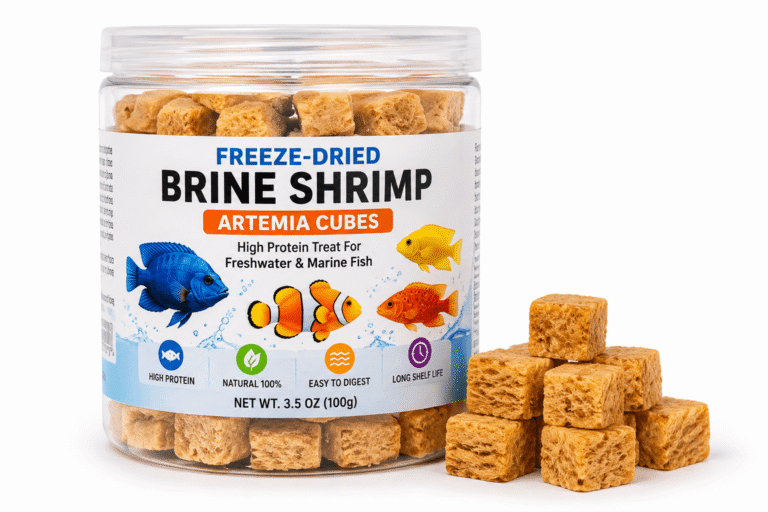
While Hikari can confidently serve as the foundation of a goldfish’s daily diet, many experienced aquarists enhance its nutritional value by rotating it with other high-quality foods. For example, protein-rich treats such as Freeze-Dried Brine Shrimp Cubes provide excellent dietary variety and encourage natural foraging behaviour.
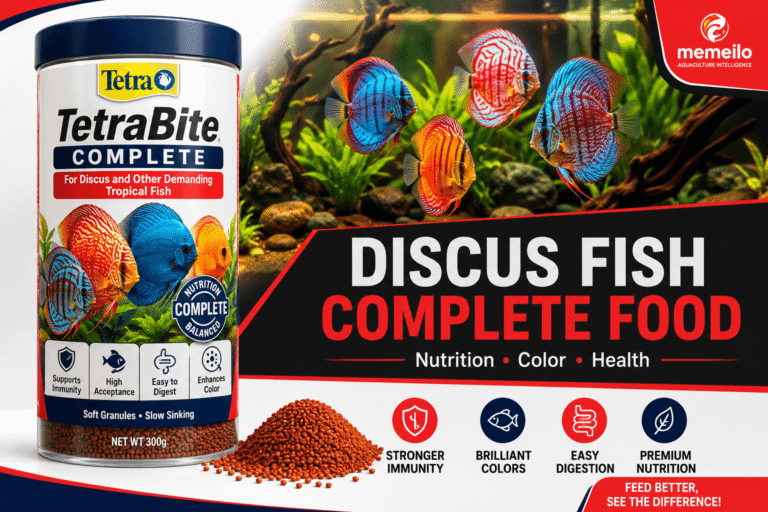
Likewise, although formulated primarily for discus and other demanding tropical fish, Tetra TetraBite Complete Discus Fish Food contains high-quality marine proteins that some advanced hobbyists occasionally use as a supplementary food for larger omnivorous fish, including goldfish. It should complement—not replace—a dedicated goldfish diet because goldfish have nutritional requirements that differ from those of discus.
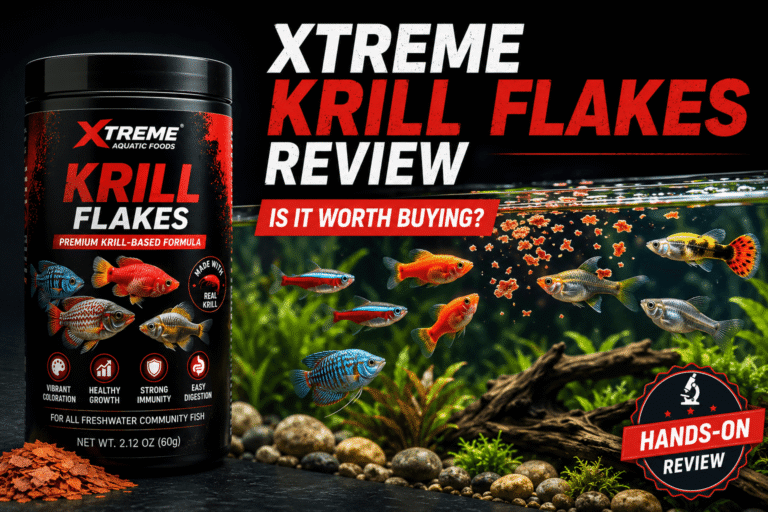
Another excellent supplemental option is Xtreme Krill Flakes a premium krill-based food rich in natural carotenoids, marine proteins, and omega fatty acids. When offered occasionally alongside Hikari, it can help diversify your goldfish’s diet while supporting natural colour intensity and overall condition.
Looking for a premium goldfish food? Check today’s best deals on
Hikari Goldfish Food and provide your fancy goldfish with a highly digestible diet designed to support healthy growth, vibrant colours, and cleaner water.
Moses Lokorio is a certified aquaculture expert with over 6 years of hands-on experience helping fish-pond builders create healthy, balanced pond ecosystems. At Memeilo.com, he writes detailed, data-driven guides to simplify pond construction, maintenance, and fish care for DIYers and professionals alike.