Verdict
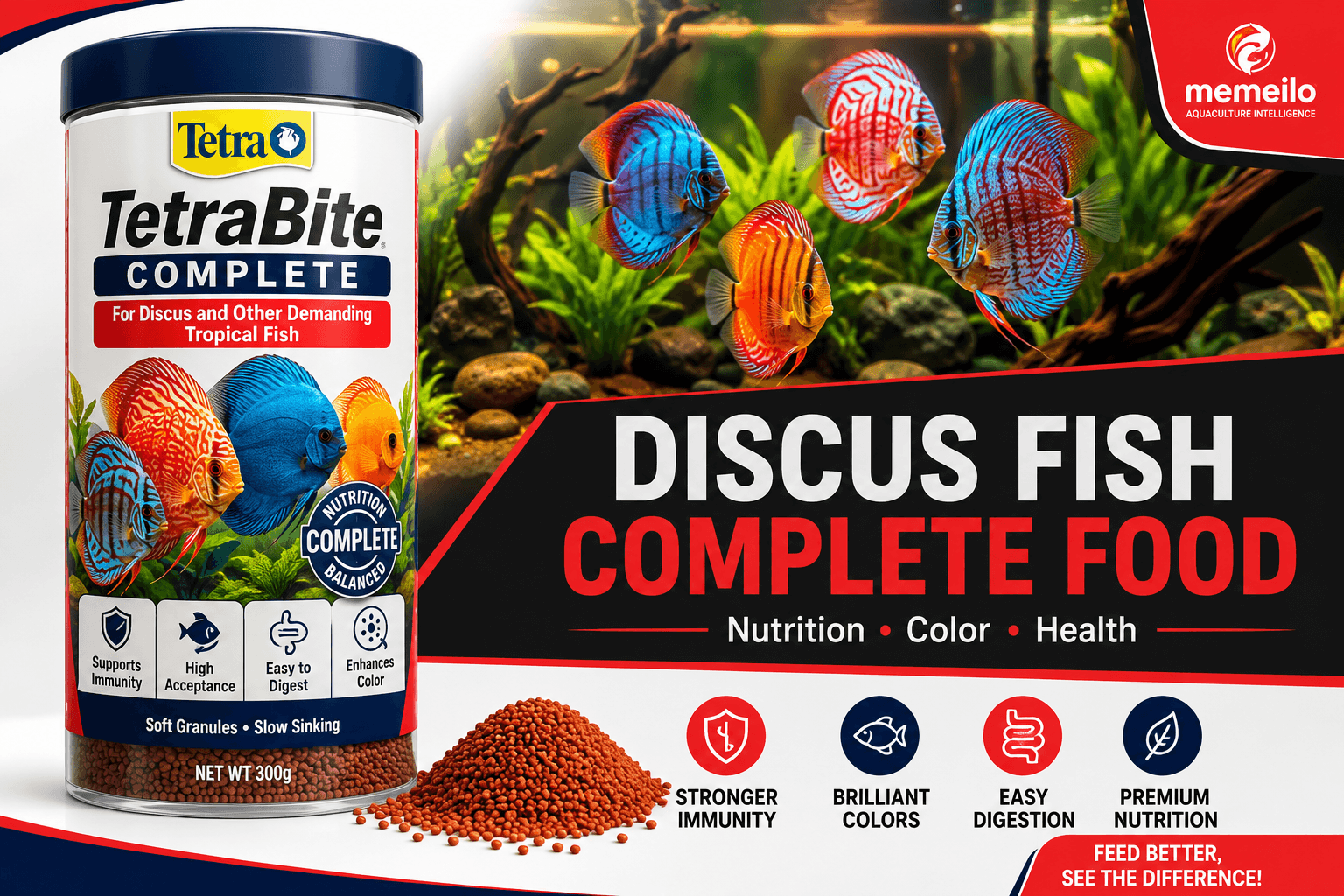
Tetra TetraBite Discus Fish Food is a premium 4.9/5-rated staple diet with 48% protein, slow-sinking granules, and excellent nutrition for healthy discus fish.
Verdict
Tetra TetraBite Discus Fish Food is a premium 4.9/5-rated staple diet with 48% protein, slow-sinking granules, and excellent nutrition for healthy discus fish.
Tetra TetraBite Discus Fish Food is a premium complete diet formulated specifically for discus fish and other demanding tropical species. The food consists of slowly sinking granules designed to match the natural feeding habits of discus, which typically feed in the middle and lower regions of the water column rather than exclusively at the surface.
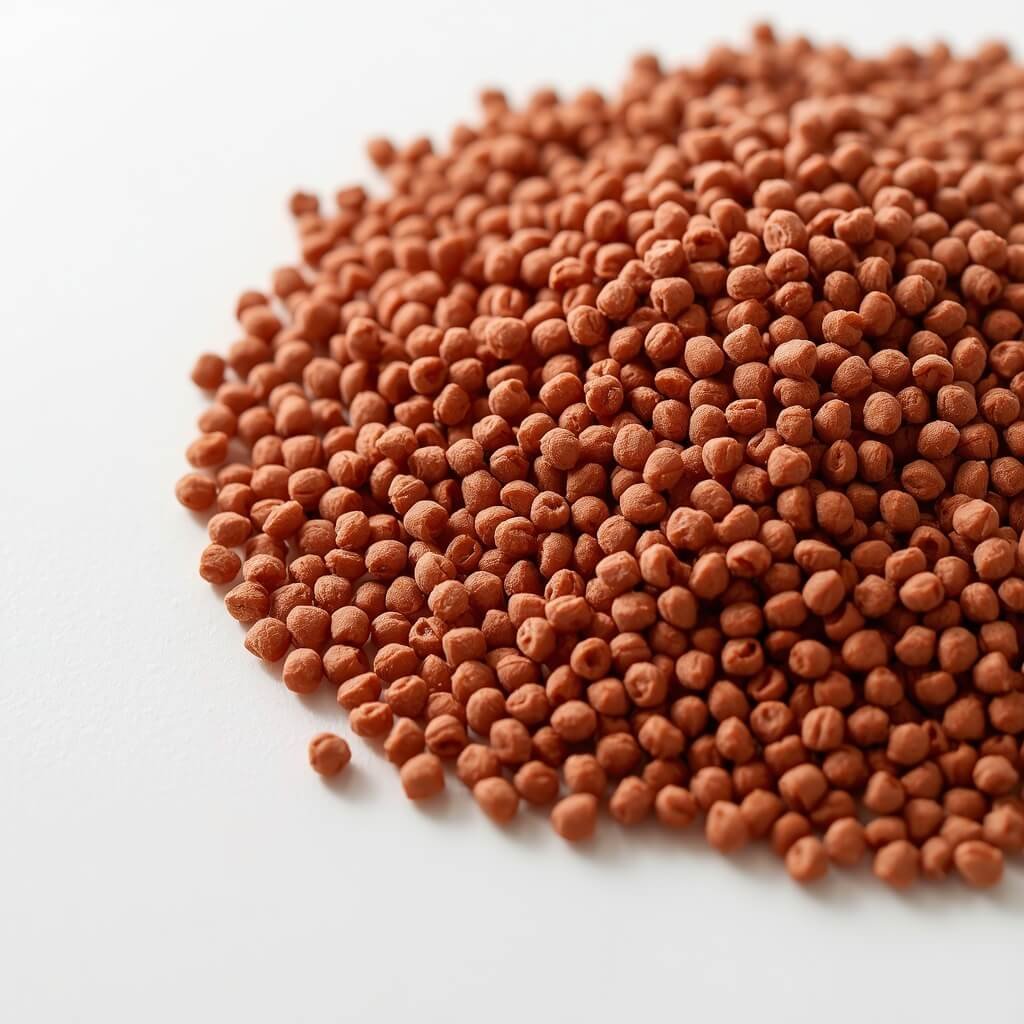
Protein is the single most important nutrient for carnivorous and omnivorous cichlids such as discus because it supports muscle development, tissue repair, enzyme production, and normal growth.
According to Tetra Discus Granules,Tetra lists a crude protein content of 48%, placing this food within the range commonly recommended for quality discus staple diets.
From a nutritional perspective, this protein level is suitable for both maintenance and growth when fed as part of a varied feeding program.
One of the standout features is the sinking design.
Wild discus naturally feed below the surface on insect larvae, small crustaceans, worms, and other animal matter.
A slowly sinking pellet therefore better mimics their natural feeding behavior than floating flakes.
Tetra specifically states that these granules are intended for fish that prefer feeding in the middle water layer and near the bottom.
This makes the product particularly useful for timid discus that may avoid vigorous surface feeding.
Poor water quality remains one of the leading causes of stress and disease in discus aquariums.
According to Tetra, the granules are formulated to be highly digestible, allowing fish to absorb nutrients efficiently while reducing the amount of undigested waste released into the aquarium.
The manufacturer also notes that the granules are easy to eat and contribute to cleaner, clearer water when fed appropriately.
While no dry food can prevent water pollution on its own, highly digestible formulations can help reduce waste compared with foods that contain excessive indigestible fillers.
The product contains added Vitamin D3 (2,098 IU/kg) along with other nutrients intended to support normal physiological functions.
Vitamin D3 plays an important role in calcium metabolism and skeletal development in fish, while balanced vitamin supplementation helps reduce the risk of nutritional deficiencies in captive aquarium species.
Many aquarists prefer foods with simpler formulations.
Tetra states that the recipe is made without added colourants and added preservatives, relying instead on carefully selected ingredients to provide nutrition while promoting optimal growth and resilience.
Although “natural” does not automatically mean healthier, avoiding unnecessary additives aligns with the preferences of many discus keepers.
One of the first things experienced aquarists examine is the ingredient list. While guaranteed analysis tells you how much protein or fat is present, the ingredient list helps explain where those nutrients come from.
According to the official product information, Tetra TetraBite Discus Fish Food contains the following major ingredient groups:
| Ingredient Category | OFFICIAL FORMULATION Tetra TetraBite Discus Fish Food Ingredient Purpose Explained |
|---|---|
| Fish and Fish Derivatives | ✔ Primary source of highly digestible animal protein and essential amino acids required for muscle growth, tissue repair, enzyme production, and overall health in discus fish. |
| Vegetable Protein Extracts | ✔ Supplies additional digestible protein that complements fish-derived proteins while helping create a balanced nutritional profile and stable granule structure. |
| Yeasts | ✔ Natural source of B-complex vitamins, amino acids, nucleotides, and other functional nutrients that support normal metabolism and overall fish health. |
| Derivatives of Vegetable Origin | ✔ Provides dietary fibre and plant-based nutrients that contribute to digestive function and balanced nutrition. |
| Molluscs and Crustaceans | ✔ Supplies marine-derived proteins and naturally attractive ingredients that closely resemble foods consumed by wild discus, encouraging feeding. |
| Oils and Fats | ✔ Concentrated energy source supplying essential fatty acids needed for normal cell function, growth, and nutrient absorption. |
| Minerals | ✔ Supports skeletal development, enzyme activity, osmoregulation, and numerous metabolic processes essential for healthy tropical fish. |
Tetra TetraBite Discus Fish Food combines multiple animal- and plant-derived ingredient groups to create a complete staple diet for discus and other demanding tropical fish. The formulation is built around fish-derived proteins, supplemented with vegetable protein extracts, marine ingredients, vitamins, minerals, and functional nutrients from yeast. Although Tetra publishes the ingredient categories, it does not disclose the percentage contribution of each ingredient, so the exact proportions of fish protein, crustaceans, and plant proteins cannot be independently verified. Nevertheless, the ingredient composition aligns with the company’s guaranteed nutritional analysis of 48% crude protein, 7% crude fat, 2% crude fibre, and 8% moisture, making it suitable as a high-protein daily diet when fed according to the manufacturer’s recommendations.
Fish meal and related fish ingredients provide a complete amino acid profile that closely matches the nutritional needs of carnivorous and omnivorous cichlids such as discus.
Unlike terrestrial animal proteins, fish proteins are generally more suitable for aquarium fish because they are naturally adapted to digest aquatic animal tissues.
Since Tetra identifies fish and fish derivatives as the first ingredient category, it indicates that aquatic protein forms a substantial part of the formulation.
The inclusion of molluscs and crustaceans provides additional marine-based protein and may improve palatability.
In nature, wild discus consume insect larvae, small aquatic invertebrates, crustaceans, and other animal matter. Although aquarium discus are several generations removed from wild populations, diets containing aquatic animal ingredients more closely resemble their natural feeding ecology than plant-based diets alone.
The manufacturer confirms that molluscs and crustaceans are part of the ingredient composition.
Some aquarists mistakenly assume all plant proteins are inferior.
In reality, vegetable protein extracts are widely used in premium ornamental fish foods to improve protein balance, pellet stability, and manufacturing consistency.
The important consideration is balance—not simply whether plant ingredients are present.
Because Tetra combines vegetable proteins with fish-derived proteins, the formulation provides multiple protein sources rather than relying exclusively on one ingredient class.
Yeast is a common ingredient in quality ornamental fish diets because it naturally contains:
• B-complex vitamins
• Nucleotides
• Amino acids
• Functional compounds that support normal metabolism
Although the manufacturer does not specify the yeast species or concentration, its inclusion is consistent with formulations used in many premium tropical fish foods.
The guaranteed analysis provides a standardized breakdown of the product’s major nutrients.
| Nutrient | OFFICIAL ANALYSIS Tetra TetraBite Discus Fish Food Guaranteed Nutritional Composition |
|---|---|
| Crude Protein |
48% |
| Crude Fat |
7% |
| Crude Fibre |
2% |
| Moisture |
8% |
| Vitamin D3 | 2,098 IU/kg |
| Citric Acid | 379 mg/kg |
Tetra TetraBite Discus Fish Food contains a high 48% crude protein level, making it well suited for the nutritional requirements of discus and other demanding tropical fish. The moderate 7% fat content provides a balanced source of energy, while the low 2% crude fibre helps maintain digestibility. The formula also includes Vitamin D3 (2,098 IU/kg) to support normal calcium metabolism and 379 mg/kg of citric acid, which serves as a technological additive in the formulation.
Why It Matters
Protein supplies essential amino acids required for:
• Muscle development
• Tissue repair
• Enzyme production
• Hormone synthesis
• Immune function
• Normal growth
With 48% crude protein, Tetra TetraBite Discus Fish Food falls within the range commonly associated with premium diets for carnivorous tropical fish.
Expert Evaluation
5/5
The protein level is excellent for:
• Juvenile discus
• Adult discus
• Angelfish
• Severums
• Other medium-sized South American cichlids
A high protein percentage alone does not guarantee quality, but when combined with fish-derived ingredients, it supports the product’s suitability as a staple food.
Dietary fat is the most concentrated source of energy for fish.
It also supports:
• Cell membrane integrity
• Hormone production
• Absorption of fat-soluble vitamins
• Reproductive health
At 7% crude fat, the formulation provides adequate energy without being excessively rich. This level is appropriate for routine feeding in most home aquariums.
Although fish do not require large amounts of fibre, small quantities can aid the movement of food through the digestive tract.
The product contains 2% crude fibre, which is typical for high-quality carnivorous fish foods.
Dry fish foods usually contain less than 10% moisture to improve shelf life and reduce spoilage.
The stated 8% moisture content is consistent with quality granulated ornamental fish foods.
The manufacturer states that the carefully selected ingredients and optimized protein mix are intended to promote healthy growth and vitality.
From a nutritional standpoint, the combination of 48% crude protein and balanced fats provides the building blocks required for normal tissue development when fed as part of a complete husbandry program.
Growth, however, also depends on:
• Water quality
• Temperature
• Stocking density
• Genetics
• Feeding frequency
No commercial food alone can guarantee rapid growth.
One notable advantage of Tetra TetraBite Discus Fish Food is its slowly sinking granules.
Discus naturally forage below the water surface, and a slow-sinking pellet allows timid fish more time to feed while reducing competition from fast surface feeders.
This design closely matches the species’ feeding behaviour described by the manufacturer.
Tetra states that the granules are highly digestible and formulated to support cleaner aquarium water by reducing uneaten particles and waste when fed correctly.
While this claim is plausible, it should be interpreted carefully. Water quality is influenced by several factors, including:
• Overstocking
• Overfeeding
• Filtration efficiency
• Water-change schedule
• Pellet stability
Scientific studies have shown that pellet stability and nutrient leaching can affect water quality, reinforcing the importance of feeding only what fish consume promptly.
Proper feeding is just as important as choosing the right food.
Want your discus to grow faster, display richer colours, and stay healthy for years? Download my Discus Fish Feeding Handbook and discover the feeding methods used by experienced aquarists to maximise growth while maintaining excellent water quality.
Feed 2–3 times daily, offering only the amount the fish can consume within a few minutes. Remove any uneaten food to help maintain water quality.
Growing juveniles typically benefit from 3–5 smaller meals per day, alongside excellent filtration and frequent water changes to support healthy development.
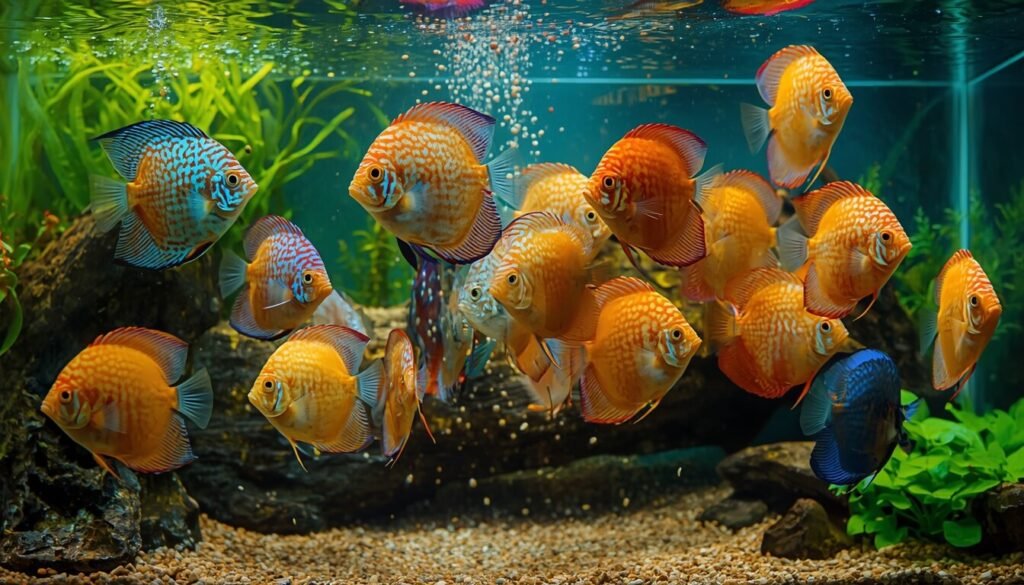
Because the granules sink slowly, observe feeding to ensure discus receive their share before faster species consume the food.
• Feed small portions rather than one large meal.
• Watch the fish during feeding and adjust the amount to
• avoid leftovers.
• Rotate with frozen or live foods occasionally for dietary variety.
• Store the container in a cool, dry place with the lid tightly sealed to preserve freshness.
Based on the published composition, Tetra TetraBite Discus Fish Food offers several strengths:
• A high 48% crude protein level suitable for discus and other demanding tropical fish.
• Multiple aquatic protein sources, including fish derivatives and crustaceans.
• Slowly sinking granules that align with the natural feeding habits of discus.
• No added colourants or preservatives according to the manufacturer.
• A balanced nutrient profile with added vitamin D3.
At the same time, some limitations remain:
• The manufacturer does not disclose the percentage of each individual ingredient, making it impossible to quantify the contribution of fish-derived versus plant-derived proteins.
• No omega-3, omega-6, or amino acid profile is published.
• Claims regarding improved coloration or immunity should be viewed as supportive rather than guaranteed outcomes, as these depend on overall nutrition, genetics, and aquarium management—not on a single food alone.
Every aquarium food has strengths and limitations. Rather than relying on marketing claims, the following assessment is based on the manufacturer’s published specifications, nutritional composition, and practical considerations for discus husbandry.
One of the strongest features of Tetra TetraBite Discus Fish Food is its 48% crude protein, which places it among high-protein staple diets suitable for discus and other demanding tropical fish. Protein is essential for tissue growth, muscle maintenance, enzyme production, and overall health. The manufacturer formulates the food with fish-derived ingredients alongside vegetable protein extracts to provide a balanced protein mix.
Why this matters: Discus, being primarily carnivorous/omnivorous cichlids, benefit from diets rich in high-quality protein.
Unlike floating flakes, these granules sink gradually through the water column.
Discus naturally forage below the surface for insect larvae, small crustaceans, and other prey. A slow-sinking feed therefore better mimics their natural feeding behaviour and allows timid fish more time to feed.
This is one of the product’s most significant practical advantages for discus keepers.
According to the manufacturer, the formulation contains no added colourants or preservatives.
Although this does not automatically make a food healthier, many aquarists prefer products that avoid unnecessary additives while focusing on nutritional quality.
Tetra states that the granules are formulated for easy digestion and efficient nutrient utilisation.
Digestible foods can help reduce uneaten waste and nutrient leaching into aquarium water when fed correctly. Good pellet stability and digestibility are recognised as important factors in maintaining water quality.
Although designed specifically for discus, the food is also appropriate for several other tropical species, including:
• Angelfish (Pterophyllum scalare)
• Severums (Heros spp.)
• Geophagus
• Festivum cichlids
• Other medium-sized South American cichlids
Its slowly sinking granules are especially useful for species that feed in the middle and lower water column.
While Tetra publishes the ingredient categories, it does not disclose the percentage of each ingredient.
This makes it impossible to determine:
• the exact proportion of fish-derived protein,
• the contribution of vegetable proteins, or
• the quantity of crustacean ingredients.
This lack of transparency is common in the aquarium feed industry but remains a limitation for buyers who want detailed nutritional information.
The guaranteed analysis includes:
• Crude protein
• Crude fat
• Fibre
• Moisture
• Vitamin D3
However, Tetra does not publish data on:
• Omega-3 fatty acids
• Omega-6 fatty acids
• DHA
• EPA
• Individual amino acid profiles
These nutrients are important in fish nutrition, but without published values, they cannot be objectively evaluated.
The manufacturer notes that the food supports intense colours through its balanced formulation. However, no published independent trials specific to this product quantify improvements in colour intensity.
Colour expression in discus depends on multiple factors, including:
• genetics,
• water quality,
• stress levels,
• lighting,
• overall nutrition.
For that reason, colour enhancement should be regarded as a potential benefit rather than a guaranteed outcome.
| Comparison | BEST OVERALL Tetra TetraBite Discus Fish Food Balanced Daily Discus Nutrition | PREMIUM CHOICE Hikari Discus Bio-Gold High-End Japanese Formula | BEST VALUE Tetra Discus Granules Premium Premium Complete Discus Diet |
|---|---|---|---|
| Crude Protein |
48% |
~50%* |
~50%* |
| Slow-Sinking Granules | ✔ | ✔ | ✔ |
| No Added Colourants | ✔ Yes | Varies by Formula | Varies by Formula |
| Fish-Based Ingredients | ✔ | ✔ | ✔ |
| Vitamin D3 Listed | ✔ | Yes | Yes |
| Beginner Friendly | ★★★★★ | ★★★★☆ | ★★★★☆ |
| Overall Expert Score | 9.0 / 10 | 9.2 / 10 | 8.8 / 10 |
| Buy Now | Shop Tetra TetraBite Discus Fish Food | Compare Hikari Discus Bio-Gold Prices | Buy Tetra Tetramin Flakes |
Tetra TetraBite Discus Fish Food earns the Best Overall recommendation thanks to its verified 48% crude protein, slow-sinking granules, highly digestible formulation, and absence of added colourants and preservatives according to the manufacturer. It is an excellent everyday staple for discus and other demanding tropical fish.
Hikari Discus Bio-Gold remains a premium Japanese alternative with a long-standing reputation among experienced aquarists, while Tetra Discus Granules Premium provides another high-quality complete diet for discus keepers seeking a balanced nutritional formula.
*Note: Protein values for Hikari Discus Bio-Gold and Tetra Discus Granules Premium may vary slightly depending on the product variant and market. Always verify the guaranteed analysis shown on the packaging or the official manufacturer website before purchasing.
While anecdotal experiences should not replace scientific evidence, community feedback can provide insight into long-term use.
Across discussions among experienced discus keepers, several recurring themes emerge:
Frequently Praised
• Fish readily accept the granules after a short adjustment period.
• The slow-sinking format suits discus feeding habits.
• Many hobbyists report using it successfully in automatic feeders.
• It is commonly used alongside best pellet frozen foods for dietary variety.
Common Challenges
Some discus that have been raised exclusively on frozen foods or beef heart may initially reject dry granules.
Experienced keepers often recommend gradually mixing the new food with the fish’s preferred diet to encourage acceptance.
Yes. Tetra markets it as a complete food formulated to meet the nutritional requirements of discus fish. For optimal health, many experienced aquarists still recommend offering occasional frozen or live foods as part of a varied feeding programme.
Yes. The small granules are suitable for juveniles that are large enough to consume them. Younger fish generally benefit from several smaller meals throughout the day to support growth.
When fed in appropriate amounts, the highly digestible granules are designed to help maintain cleaner water. However, overfeeding any dry food can increase organic waste and reduce water quality.
It can serve as a complete staple diet according to the manufacturer. Nevertheless, many advanced discus keepers incorporate frozen foods such as brine shrimp, mysis shrimp, or bloodworms to increase dietary variety and encourage feeding behaviour.
es. The slow-sinking granules work well for peaceful tropical community tanks containing discus, angelfish, and other mid-water feeders. Monitor feeding to ensure slower fish receive enough food before faster species consume it.
After reviewing the published nutritional composition, ingredient list, feeding characteristics, and practical suitability, Tetra TetraBite Discus Fish Food earns a strong 9/10.
Its strengths include:
• 48% crude protein suitable for discus nutrition.
• Slow-sinking granules that match natural feeding behaviour.
• A formulation free from added colourants and preservatives.
• Highly digestible ingredients that may help reduce waste when used correctly.
• A balanced composition suitable as a staple food for discus and other demanding tropical fish.
The main drawbacks are the limited disclosure of ingredient percentages and the absence of detailed fatty acid and amino acid analyses. These omissions are common across many ornamental fish foods but prevent a deeper nutritional assessment.
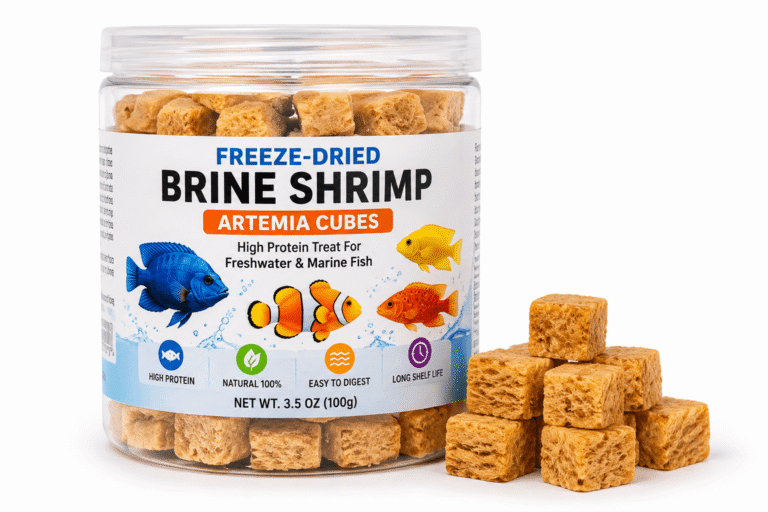
For aquarists looking to provide greater dietary variety, consider rotating this staple diet with occasional high-protein treats such as freeze-dried brine shrimp cubes, which can help encourage natural feeding behaviour, or supplementing with Xtreme Krill Flakes, a nutrient-rich food formulated to support the nutritional needs and natural colouration of tropical aquarium fish.
Offering a varied diet alongside good water quality and proper aquarium management can contribute to the long-term health and wellbeing of discus fish.