When I built my first fishpond, I thought clean water meant healthy fish—until ammonia proved me wrong. Within days, my fish were gasping at the surface, victims of a toxic nitrogen spike. New or crowded ponds often face this issue, as waste breaks down into ammonia and nitrite faster than bacteria can process them. These invisible toxins stress fish and can quickly lead to die-offs.
The real goal isn’t just clear water—it’s balance. By establishing a natural nitrogen cycle, your pond becomes self-sustaining and fish thrive. Learn more in Pond Place’s nitrogen cycle guide.
What Is the Nitrogen Cycle and Why It Matters
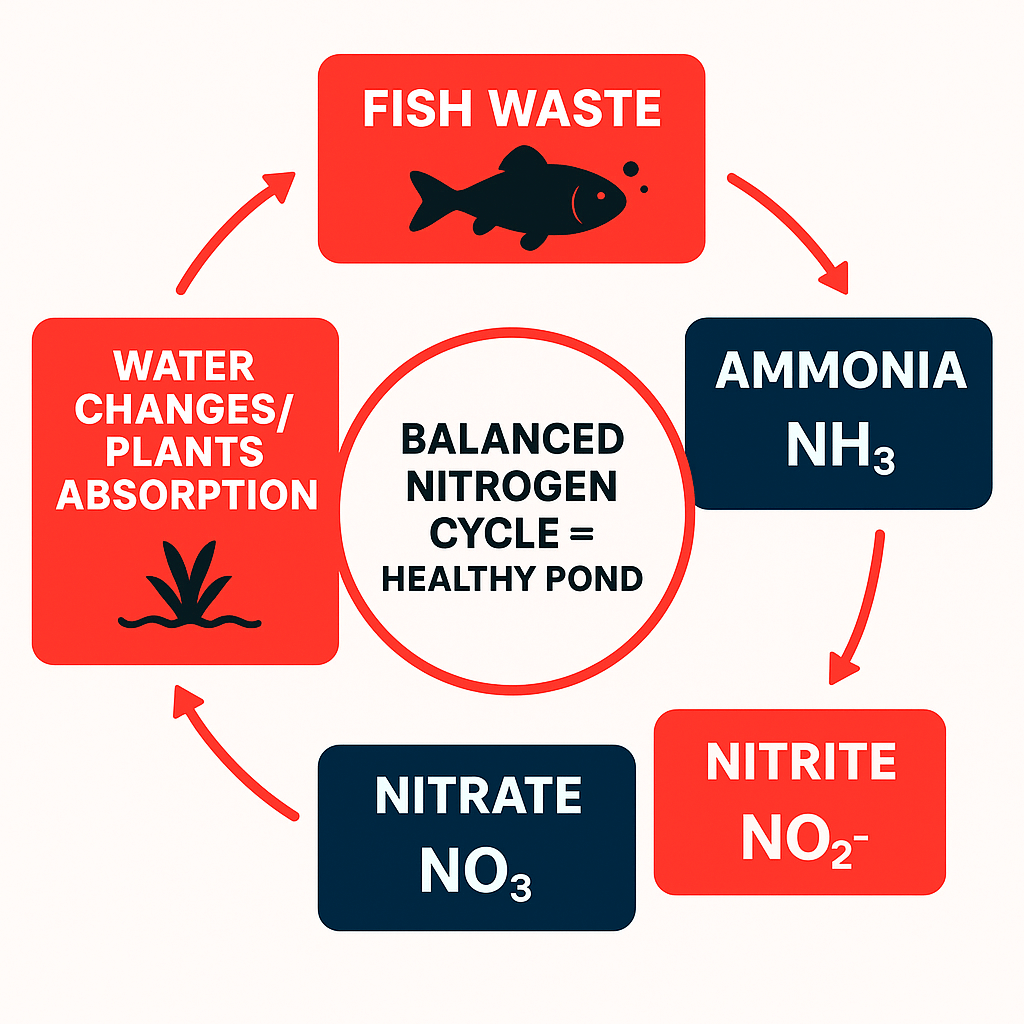
The nitrogen cycle is the invisible life support system that keeps every pond healthy. It’s a natural biological process where beneficial bacteria transform toxic waste into safer, plant-friendly compounds. When fish produce waste—or when leftover food and dead leaves begin to decay—they release ammonia (NH₃) into the water. Even in small amounts, ammonia can burn fish gills and cause stress or death if left unchecked.
That’s where nature steps in. A specific type of bacteria known as Nitrosomonas converts ammonia into nitrite (NO₂⁻). Unfortunately, nitrite is still dangerous for fish, interfering with their ability to absorb oxygen. The next stage involves Nitrobacter bacteria, which convert nitrite into nitrate (NO₃⁻)—a far less harmful substance that aquatic plants actually use as fertilizer.
In a properly balanced pond, this process happens continuously, keeping ammonia and nitrite levels at 0 ppm and nitrate below 40 ppm. As explained in Aquarium Co-Op’s nitrogen cycle guide, understanding this cycle isn’t just science—it’s the secret to clear water, thriving plants, and happy, stress-free fish.
The Four Stages of a Healthy Pond Nitrogen Cycle
When your pond first starts, it goes through a fascinating process of self-balancing — the nitrogen cycle. Understanding each stage helps you keep fish safe and water clear.
Stage 1. Ammonia Formation
It all begins when fish release waste, uneaten food sinks, and organic debris breaks down. These materials release ammonia (NH₃) — a toxic compound that can damage fish gills and suffocate oxygen levels. According to Aquarium Co-Op’s nitrogen cycle guide, this stage is the most dangerous for new ponds.
Stage 2. Nitrosomonas Bacteria Growth
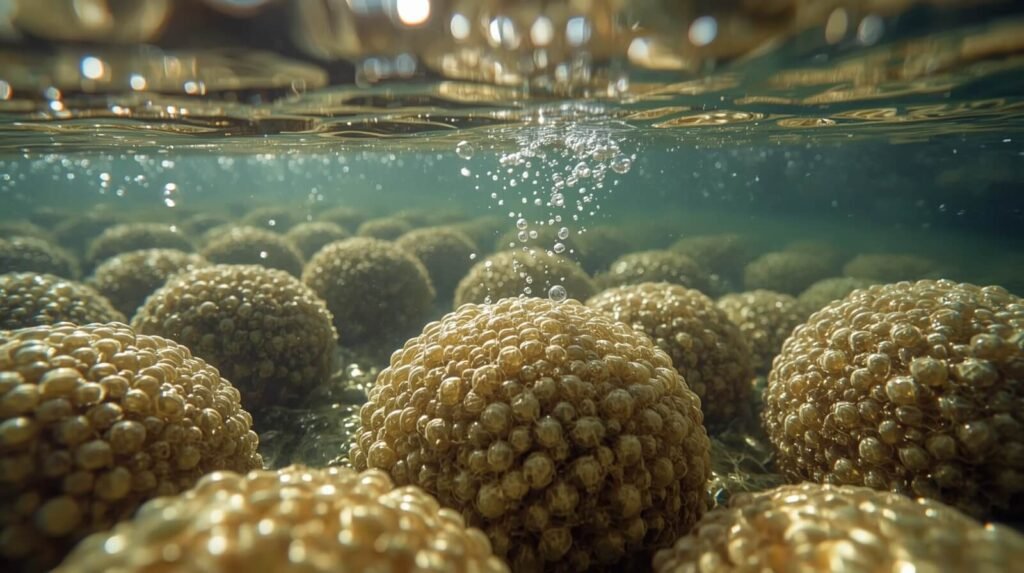
Next, beneficial bacteria known as Nitrosomonas settle in your pond filter, rocks, and liner. Their job? Transforming ammonia into nitrite (NO₂⁻) — still harmful, but a step closer to balance.
Stage 3. Nitrobacter Bacteria Growth
As the cycle matures, another group called Nitrobacter take over. They convert nitrite into nitrate (NO₃⁻), a much safer compound that plants can use for growth.
Stage 4. Plant & Filter Absorption
Finally, aquatic plants and biofilters absorb nitrate, cleaning your water naturally.
Pro Tip: Add fast-growing plants like hornwort, water hyacinth, or duckweed — they act as living filters and nitrate sponges.
Why New or Uncycled Ponds Become Dangerous
When you set up a new pond or add too many fish too soon, the nitrogen cycle hasn’t yet established. This leads to a condition often called New Pond Syndrome. Without established bacteria to process waste, ammonia levels spike first, followed by a surge in nitrite, and your fish suffer long before nature catches up.
Typical warning signs include:
- Fish gasping near the surface for air
- Cloudy, foamy, or foul-smelling water
- A brown or green film forming along rocks or liners
For a more hands-on understanding of how to manage ammonia and nitrite levels, check out our in-depth guide — API Pond 5-in-1 Test Strips Review: Reliable Insights. It walks you through how to test your pond water step by step and interpret the results before these toxins get out of control.
Regular testing is one of the easiest ways to prevent fish loss during the early cycling stage. Consistent monitoring helps you spot rising ammonia or nitrite long before they reach dangerous levels. When paired with tools like the API strips, you can respond quickly—protecting both your fish and your filter bacteria while keeping your pond’s nitrogen cycle stable.
Methods to Establish a Healthy Nitrogen Cycle
There are three effective ways to kick-start the nitrogen cycle in a new or freshly cleaned pond, each with its pros and trade-offs.
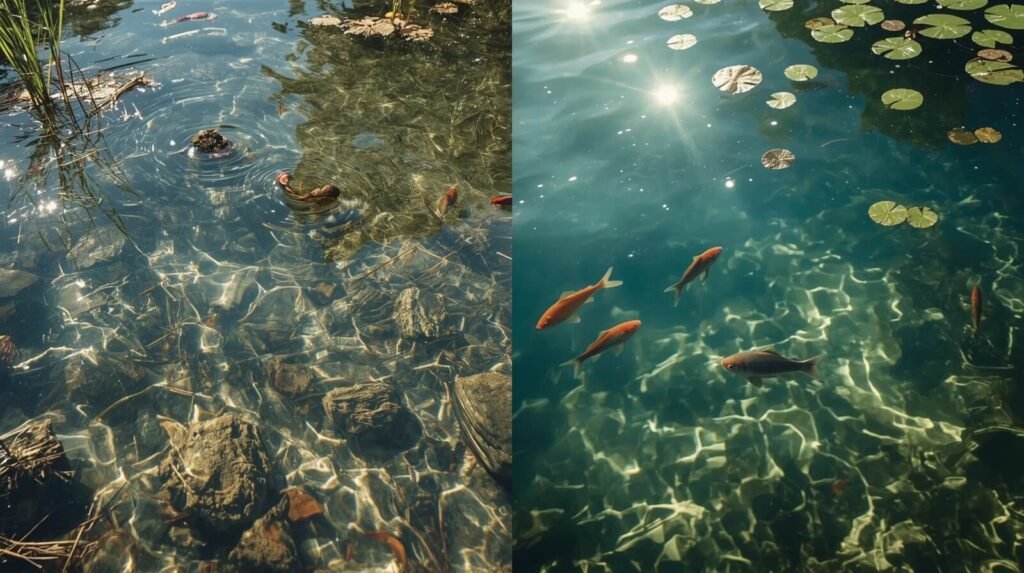
a. Fish-In Cycling (Common but Risky)
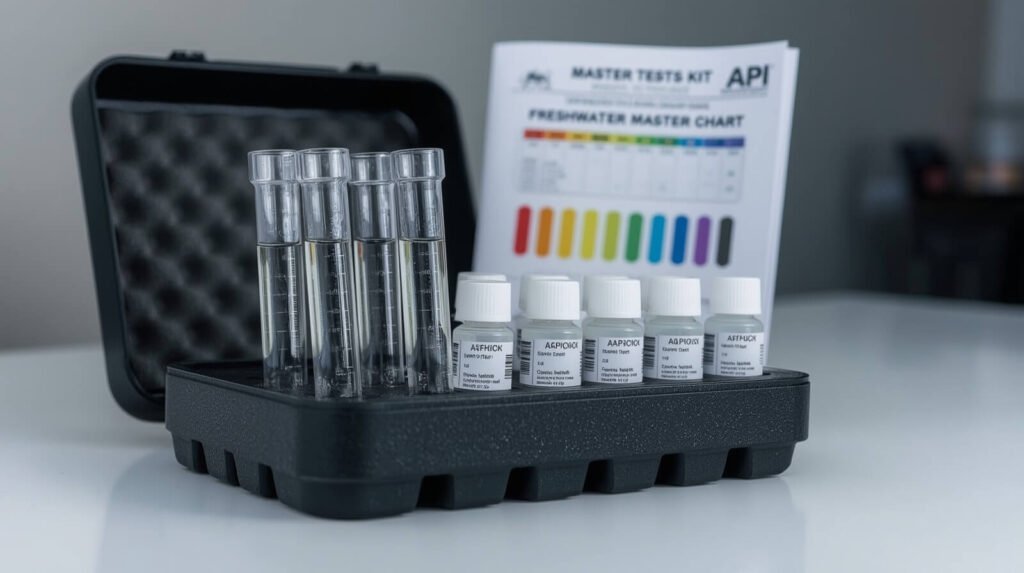
This approach involves adding fish right away and letting beneficial bacteria build up naturally. While convenient, it often leads to sudden ammonia and nitrite spikes that can stress or even kill fish. To reduce harm, use a detoxifier like Seachem Prime, test water daily with the API Freshwater Master Test Kit, and perform partial water changes whenever ammonia exceeds 0.25 ppm.
b. Fishless Cycling (Safest and Most Effective)
In this method, you don’t use live fish. Instead, you feed the growing bacteria with a small dose of pure ammonia or natural waste, allowing colonies to form before any fish are added. Although it takes a few weeks, this method ensures a toxin-free start.
c. Product Cycling (Fast Start Option)
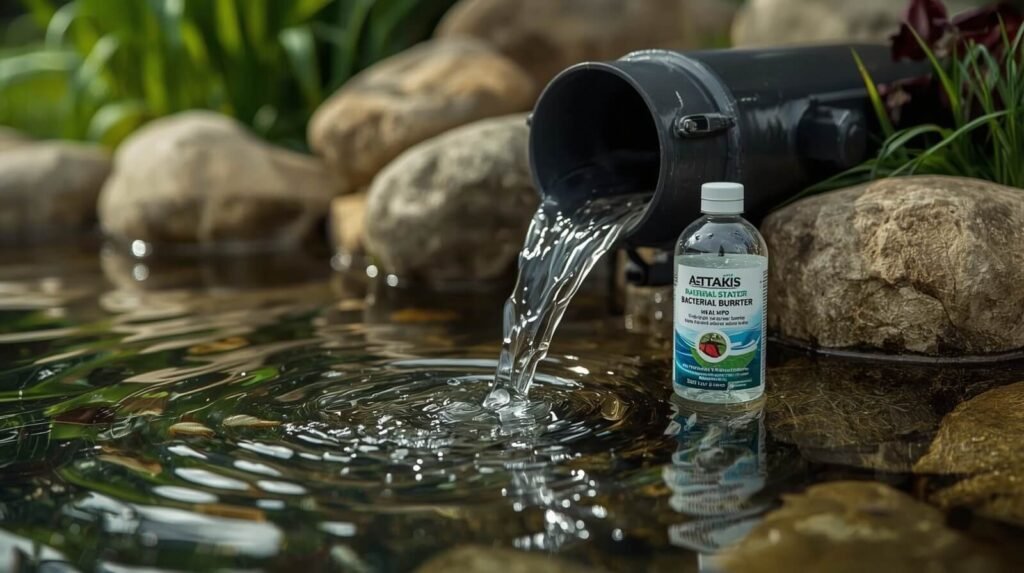
If you want to speed things up, you can seed your pond with bottled bacterial boosters like Tetra SafeStart or Seachem Stability. These products introduce live nitrifying bacteria directly into your pond’s filter and surfaces, jumpstarting the nitrogen cycle in just a few days.
Step-by-Step: How to Fishless Cycle Your Pond
Fishless cycling is the safest and most reliable way to prepare your pond for fish. It allows beneficial bacteria to establish before any livestock is added, preventing toxic ammonia or nitrite spikes. Here’s how to do it right:
Step 1 – Prepare Your Pond Setup
Fill your pond completely and let the filter, aerator, and pump run for at least 24 hours. Always use a trusted water conditioner to remove chlorine and chloramine, as these chemicals kill beneficial bacteria.
Step 2 – Add an Ammonia Source
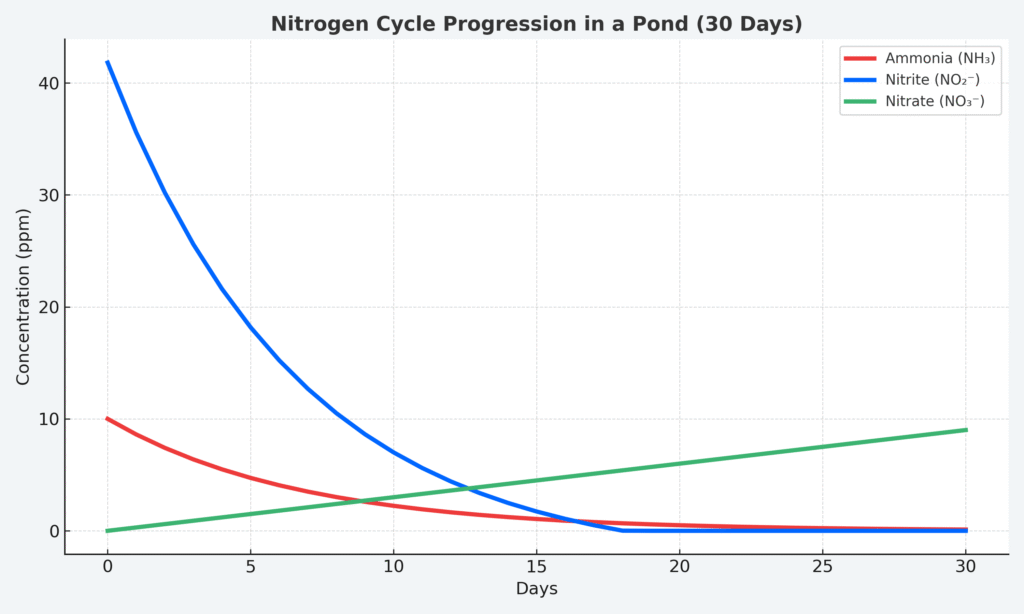
Introduce pure, unscented ammonia (no dyes or soaps) or a small pinch of fish food daily. This acts as “food” for nitrifying bacteria. Maintain ammonia levels below 5 ppm — high enough to feed bacteria, but not excessive.
Step 3 – Test the Water Regularly
Use the API Freshwater Master Test Kit every two days to track ammonia, nitrite, and nitrate. Keep a simple log of your readings to monitor progress.
Pro Tip: The kit performs over 800 tests, making it a smart long-term investment for pond keepers.
Step 4 – Watch the Cycle Progress
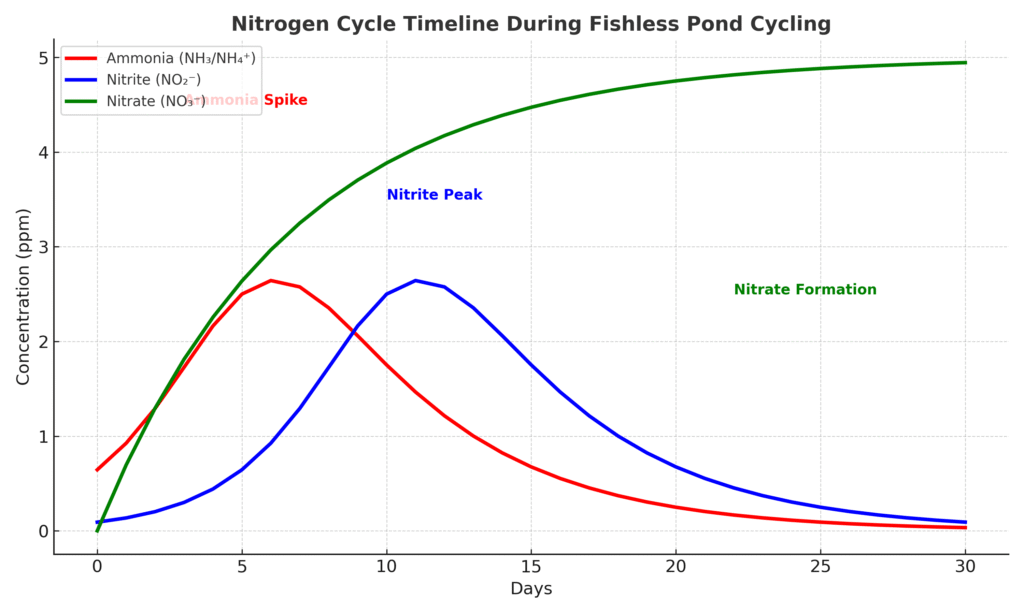
After a week, ammonia levels will start to fall — a sign that Nitrosomonas bacteria are converting it into nitrite. Soon after, nitrite levels will spike, followed by the appearance of nitrate, showing that Nitrobacter bacteria are working effectively.
Step 5 – Balance and Maintain
Continue adding small doses of ammonia until both ammonia and nitrite drop to 0 ppm within 24 hours. This confirms your pond’s bacteria colonies are strong enough to handle real fish waste.
Step 6 – Perform a Partial Water Change
Replace 50–70% of the pond water to lower nitrate levels below 40 ppm. Retest with your kit to ensure the water is safe for fish.
Step 7 – Add Your Fish
Introduce only a few hardy fish at first, such as goldfish or koi. Observe them closely for a week before slowly increasing your pond’s population.
How to Keep the Nitrogen Cycle Stable Long-Term
Once your pond is fully cycled, maintaining that delicate nitrogen balance becomes an ongoing responsibility. Even a well-established pond can slip out of balance if routine care is neglected. Start by avoiding overfeeding — excess food quickly decays into ammonia, the main trigger for toxic spikes. According to The Pond Guy’s guide on Mechanical and Biological Filtration, maintaining proper filtration ensures harmful waste is efficiently removed while beneficial bacteria continue breaking down toxins.
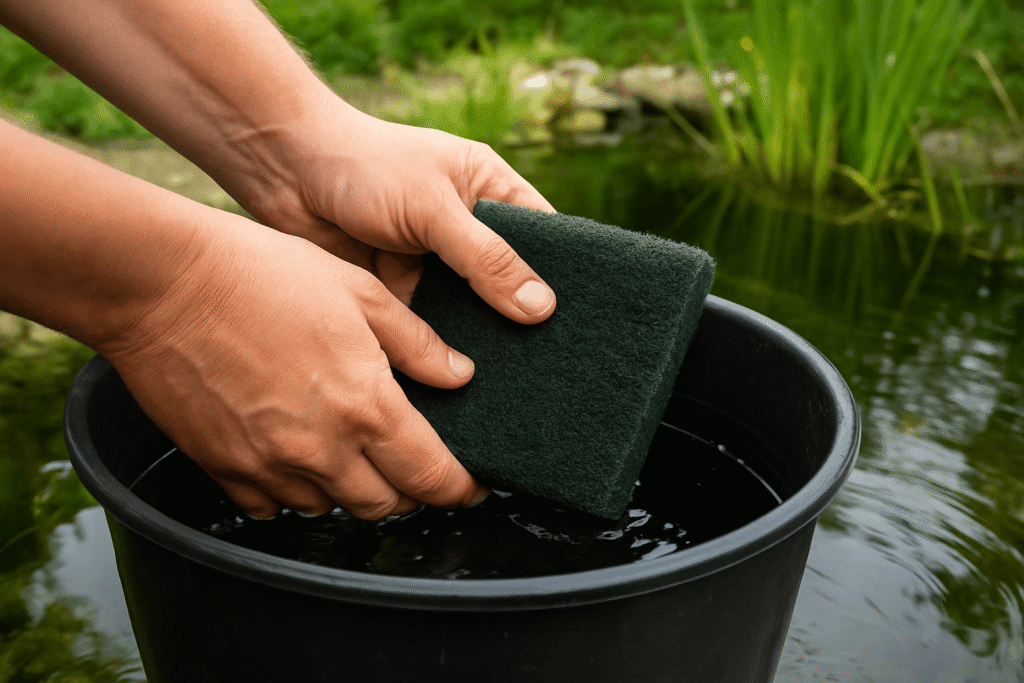
When cleaning your filters, always rinse them with pond water rather than tap water, as chlorine can destroy the bacteria that keep your nitrogen cycle healthy. Keep aeration strong to supply these bacteria with the oxygen they need to thrive.
Lastly, make testing a weekly habit, especially after adding new fish or changing equipment. If you notice recurring spikes in ammonia or nitrite, check for clogged filters or reduced bacterial activity. With steady care and good filtration, your pond will remain balanced, clear, and safe for fish year-round.
Troubleshooting Nitrogen Spikes
Even a seasoned pond system can run into sudden nitrogen imbalances. Often the culprit is one of a few common missteps:
- Overcleaned filters that unintentionally wash away beneficial bacteria
- A hidden dead fish or decaying organic matter
- Using chlorinated tap water or harsh medications that kill bacteria
When you spot a spike, act quickly: perform below 50% water change, add a trusted bacterial booster to help repopulate your filters, and increase aeration temporarily. Then retest after 24 hours to see how your levels are responding.
For more on restoring balance in cloudy or murky ponds, check out The Pond Guy’s “How to Clear Murky Pond Water Naturally” which explains how nitrification, aeration, and stabilization can return your pond to clarity.
If your pond keeps facing the same water quality issues, it’s time to take a closer look at pH stability. Consistent pH levels help beneficial bacteria thrive and keep the nitrogen cycle steady. To understand how even small pH shifts can impact bacterial performance, check out our detailed guide — Generic Digital pH Meter Review: 5 Must-Have Features— where we explain how to track and manage these changes accurately for a healthier, more balanced pond.
Pro Tips to Speed Up the Nitrogen Cycle
When you’re eager to get a new pond running, a few smart moves will jump-start the beneficial bacteria safely and quickly. First, transplant a bit of filter media or gravel from a healthy, established pond — it transfers live nitrifying bacteria instantly and shortens the cycling time.
Next, keep the water warm (roughly 24–28°C / 75–82°F) since bacteria reproduce faster in moderate warmth. Also, try to keep pH steady — aim for 6.8–7.6 — because wide swings slow bacterial activity. Finally, add fast-growing pond plants (hornwort, water lettuce, duckweed) to absorb nitrates as the system matures.
For practical how-tos on using beneficial bacteria and biological filters, see Aquascape’s guide on using bacteria for ponds and water gardens, and the comprehensive primer on biological filtration from AquaPond.
A Balanced Pond Means Happy Fish
When your pond’s nitrogen cycle finally stabilizes, everything transforms — the water clears, fish become more active, and upkeep feels effortless. This balance isn’t luck; it’s the result of steady testing and patience. Each organism, from helpful bacteria to your koi, plays a vital role in keeping your pond healthy.
Keep monitoring ammonia, nitrite, and nitrate levels to catch problems early.
Once you’ve achieved stability, maintaining it becomes second nature. Continue building your pond care skills with these Memeilo guides:
- Choosing the Right Pond Water Test Kit
- Pond Liner Installation Guide: 10 Quick Wins for Builders
- Why You Need a Fishpond
Balancing your pond’s nitrogen isn’t a one-time fix — it’s a habit that creates harmony.
Your reward? Clear water, thriving fish, and a pond you’ll love every day.