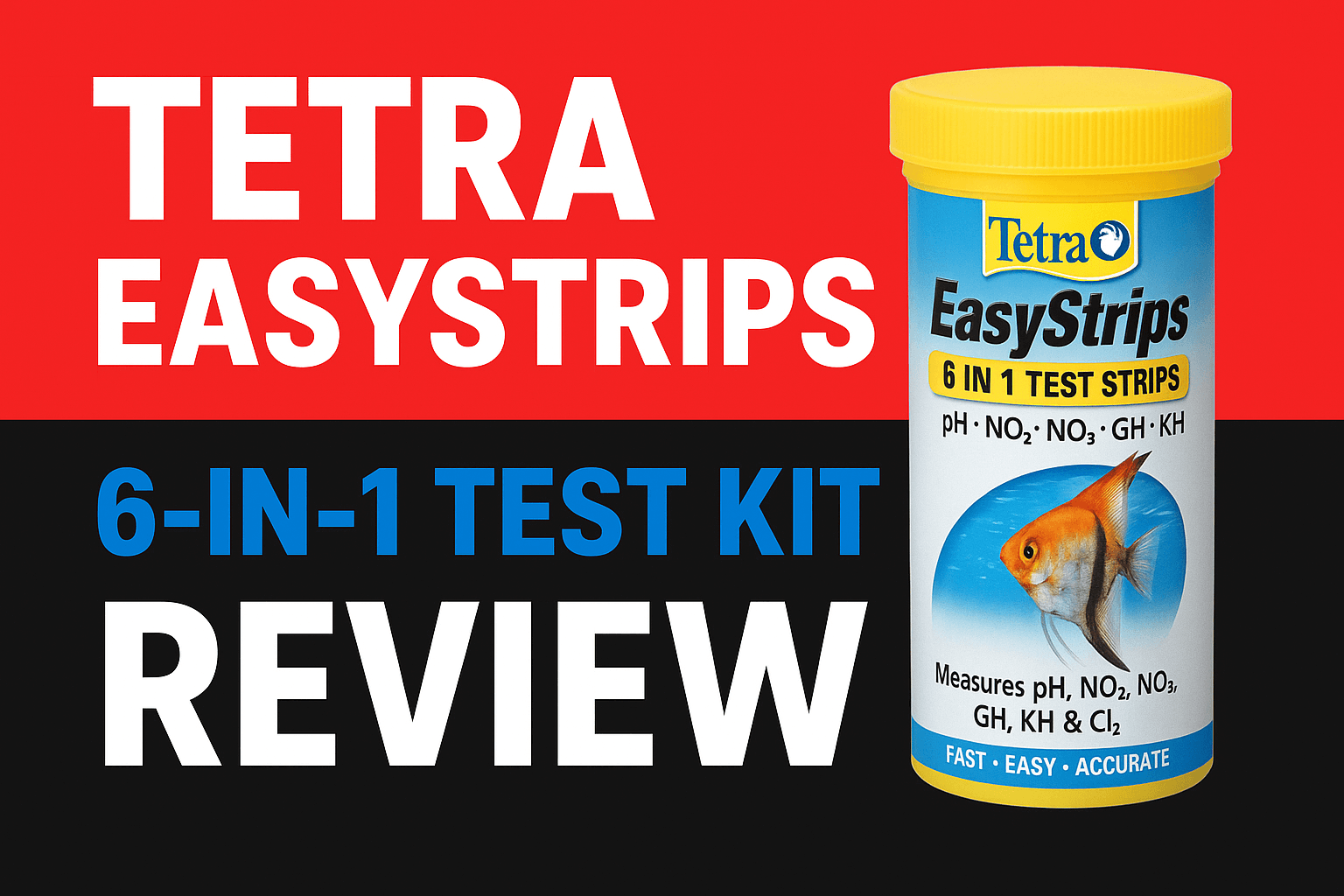
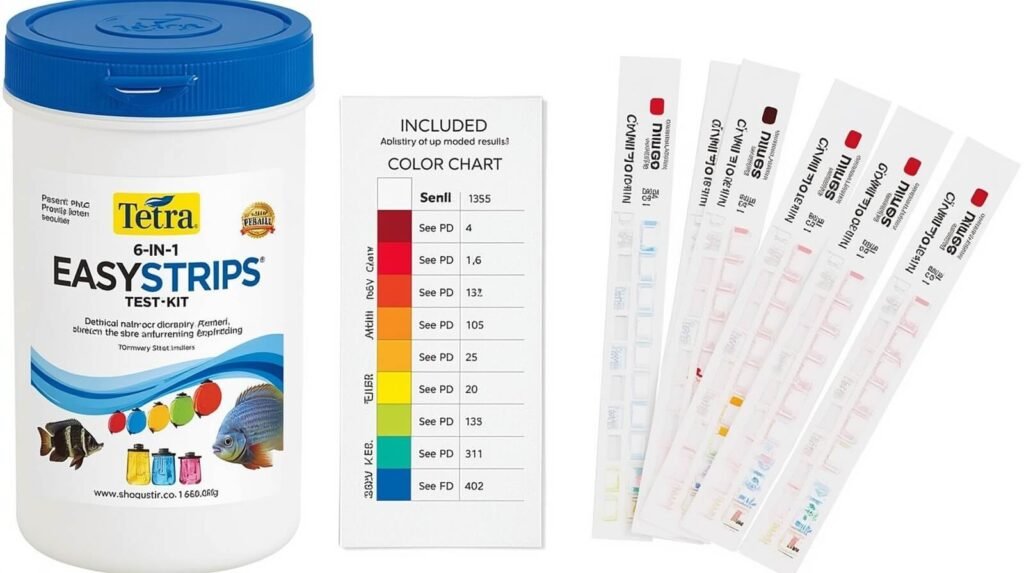
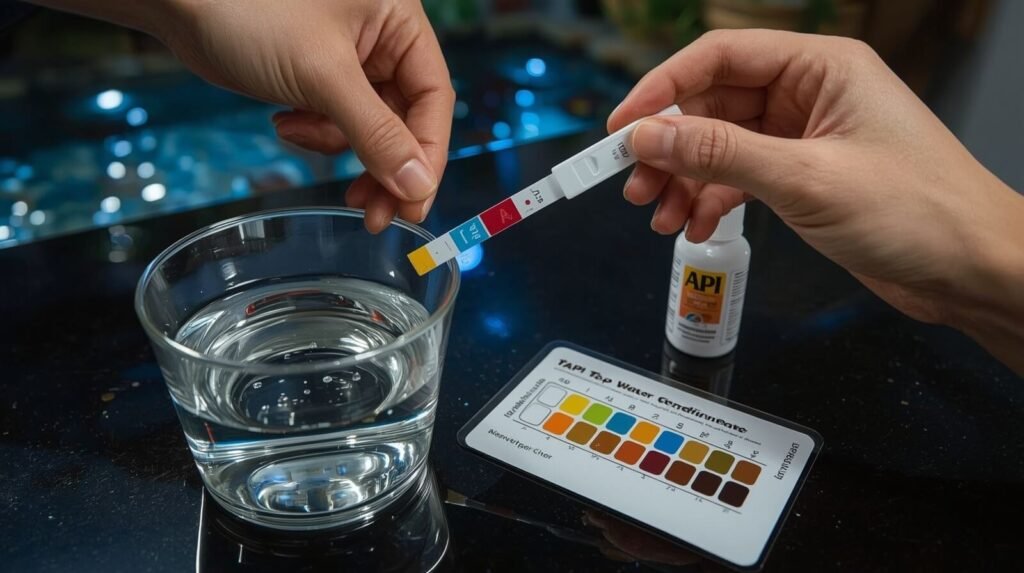
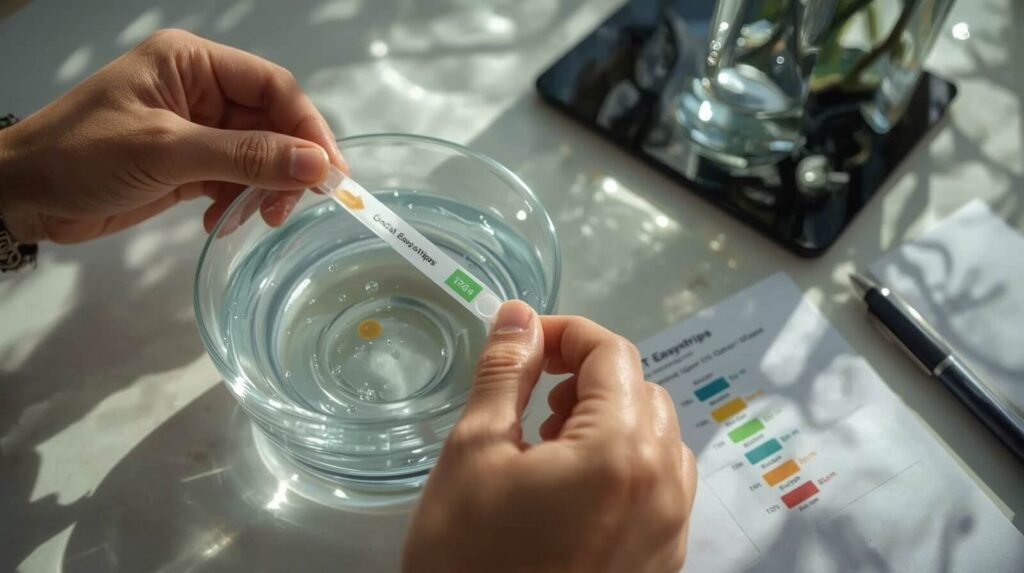
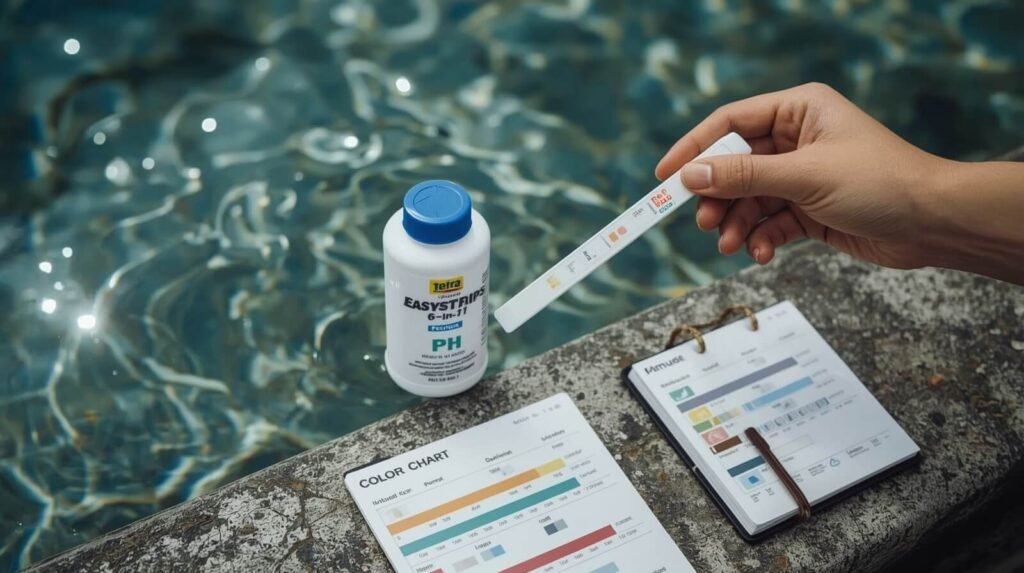
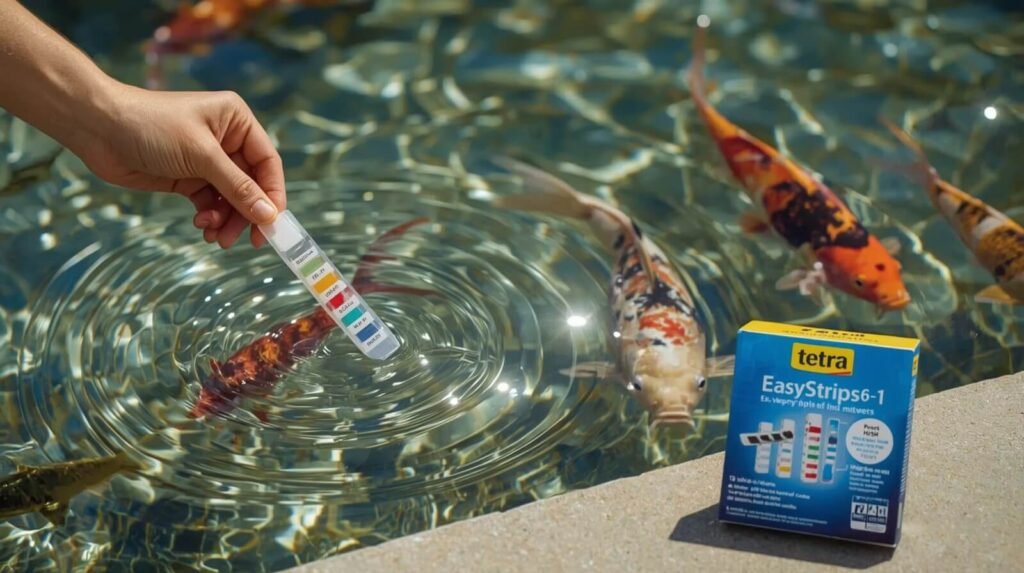
Water testing doesn’t have to feel like a chore. With Tetra EasyStrips 6-in-1 Test Kit, you can check your pond’s health in seconds and know exactly what your fish need. Each strip tests for the basics—pH, hardness, nitrates, and more—so you can quickly spot any changes before they become real problems. Think of it as a weekly checkup for your pond, giving you confidence that your fish is safe, balanced, and thriving.
Extremely quick to use — just dip, wait a few seconds, and read.
Covers six key water parameters in one strip, saving time.
Works for both freshwater and saltwater tanks.
Cost-effective option, especially when bought in larger packs.
Compact container makes it easy to store or carry around.
Simple for beginners yet handy for experienced keepers needing fast checks.
Cons
Less accurate than liquid test kits, especially for nitrate.
Test results can fade or change if not read right away.
Container may lose freshness once opened, reducing strip reliability.
Does not measure ammonia, which is critical for new tanks.
Limited shelf life if exposed to humidity.
When I first started caring for my pond, I quickly realized how important it was to test the water regularly—but I didn’t want a complicated process.
That’s when I discovered Tetra 6-in-1 Test strips, which make checking your pond or aquarium water fast, accurate, and effortless.
Just dip a strip, wait 60 seconds, and you’ll know your water’s pH, nitrite, nitrate, hardness (GH/KH), and alkalinity levels—all in one go.
These quick aquarium water test strips are perfect for busy fishkeepers who want peace of mind without the hassle of liquid kits.
Whether you’re new to fishkeeping or managing multiple tanks, EasyStrips 6-in-1 give you instant, reliable results so your fish stay healthy and your pond stays crystal clear.
Options for Aquarium Test Kits: My Experience With Tetra 6-in-1 Test Strips
When I first started testing my pond water, I quickly learned how important accuracy and speed are. You can’t always seewhen your pond or aquarium water is out of balance. That’s where tools like Tetra 6-in-1 test strips come in handy — they make testing quick, easy, and clean.
I’ve used both test strips and liquid reagent kits, and each has its pros and cons. Let’s break it down in simple terms.
1. Test Strips: Fast and Easy (Like Tetra 6-in-1 EasyStrips™)
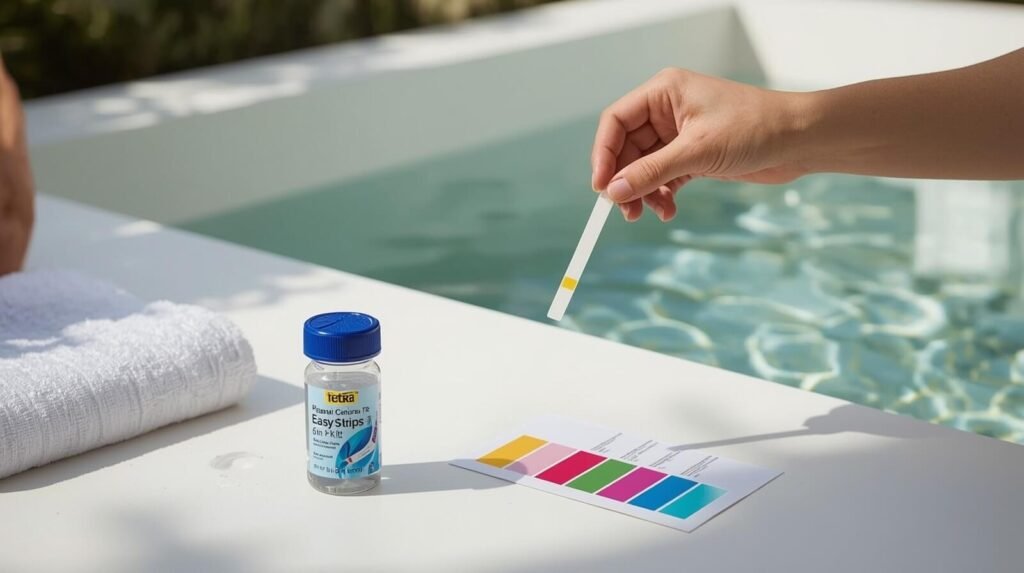
Test strips are the go-to choice for beginners or anyone managing more than one tank. Using Tetra 6-in-1 test strips is simple:
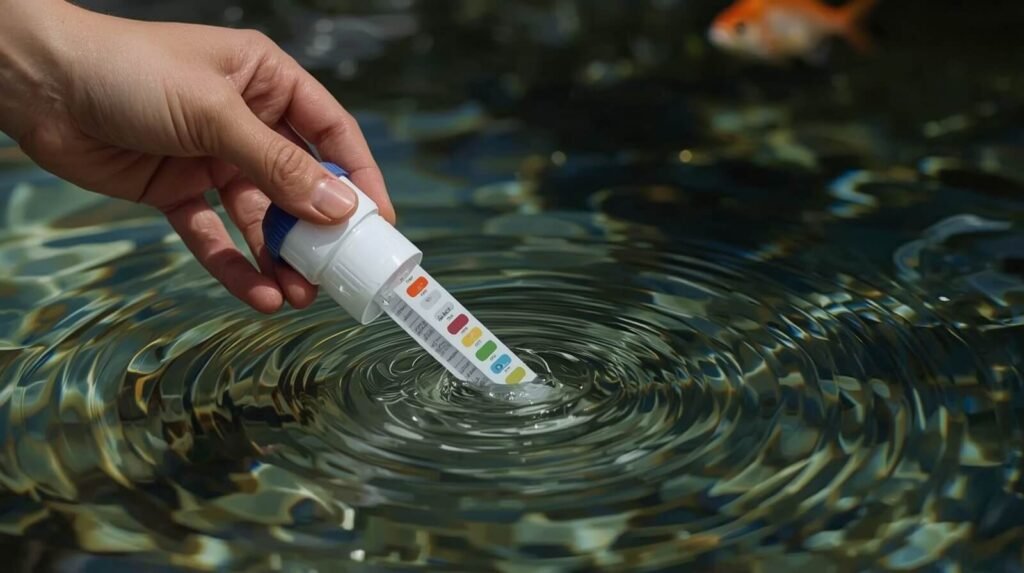
Dip one strip into your pond or aquarium water.
Wait about 60 seconds.
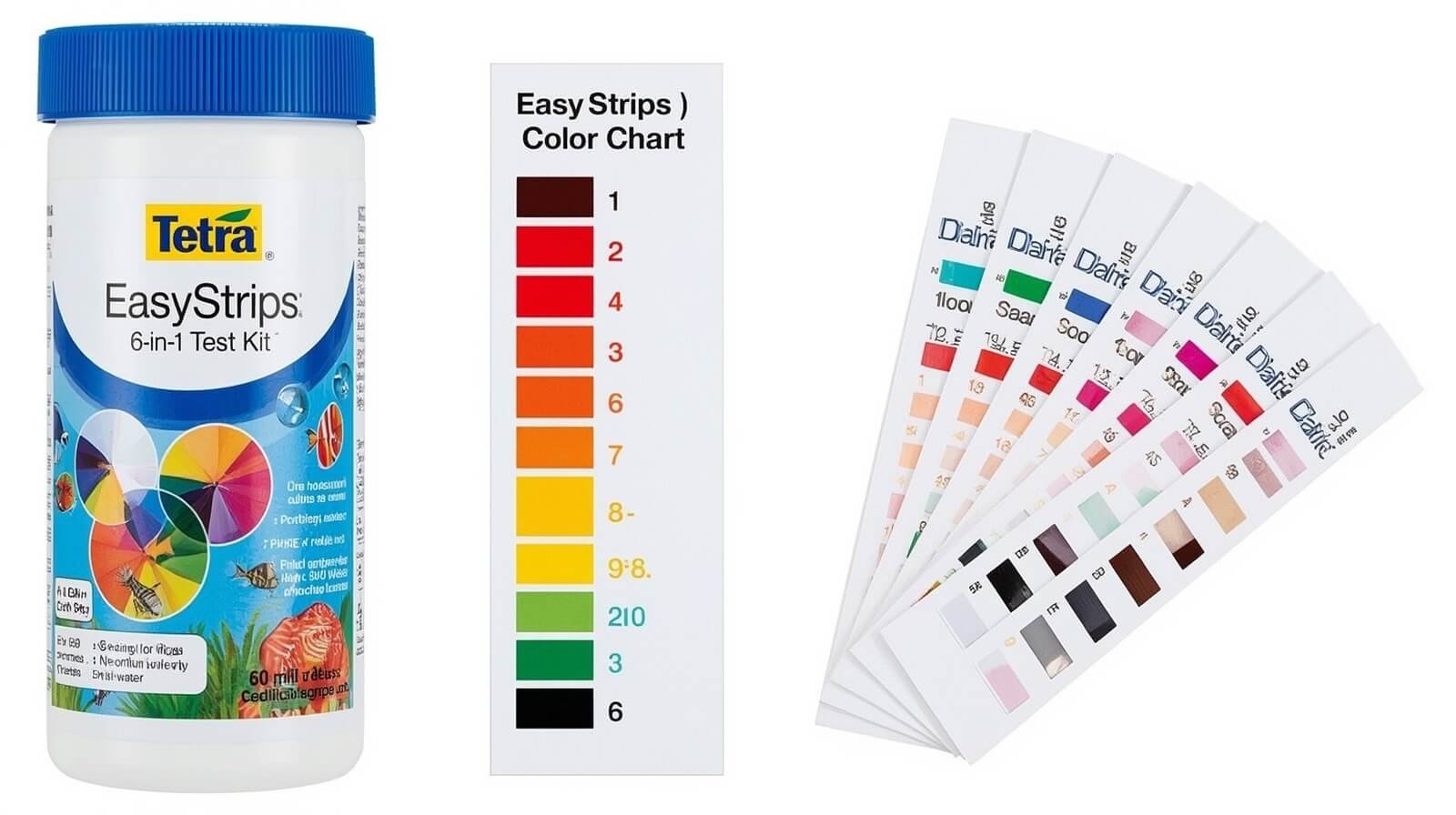
Compare the colors to the chart on the bottle.
That’s it — a quick aquarium water test with no mess, no mixing, and no measuring.
Each Tetra 6-in-1 EasyStrips™ measures six important water parameters:
pH level (using pH test strips for aquariums)
Nitrate and nitrite (important for healthy fish)
GH and KH (general hardness and alkalinity test strips)
Chlorine levels
These quick results help you understand your aquarium water quality right away.
2. The Trade-Off: Convenience vs. Accuracy
While Tetra 6-in-1 test strips are super convenient, they have a few downsides — especially if you’re serious about keeping your pond stable.
Precision: Strips can be less accurate than liquid test kits. Over time, the color pads may fade or become harder to read.
Humidity: If you open the bottle often or store it in a damp area, the strips may lose sensitivity faster.
Cost: During the cycling phase (when you need to test daily), a 100-strip pack can run out quickly.
When I was cycling my pond’s filter, I noticed I used half my Tetra 6-in-1 EasyStrips™ in just two weeks. That’s fine for quick checks, but if you’re managing large systems or breeding tanks, a liquid reagent kit can be more cost-effective over time.
Still, for weekly maintenance or sanity checks, Tetra 6-in-1 test strips remain a reliable and accurate aquarium test strip option when stored correctly.
3. Why I Keep Using Tetra 6-in-1 Test Strips
Here’s why I always keep a bottle of Tetra 6-in-1 test strips beside my pond setup:
They’re fast — I get results in under a minute.
The color chart is easy to read, even under bright outdoor light.
My readings match my liquid test kit within a small margin.
They’re perfect for beginners learning how to test aquarium water without making mistakes.
For me, it’s about balance. I use Tetra 6-in-1 EasyStrips for quick daily checks, and my liquid kit for deeper monthly accuracy tests.
Tetra 6-in-1 Test Strips Review: Quick, Easy, and Reliable for Everyday Pond and Aquarium Use
If you keep fish—whether in a backyard pond or an indoor aquarium—you already know that clean, balanced water means healthy fish. That’s where the Tetra 6-in-1 test strips come in. These handy aquarium test strips make checking your water quality simple and fast—no messy chemicals or glass tubes needed.
What’s Inside the Tetra 6-in-1 Test Kit
When you open the bottle, you’ll find:
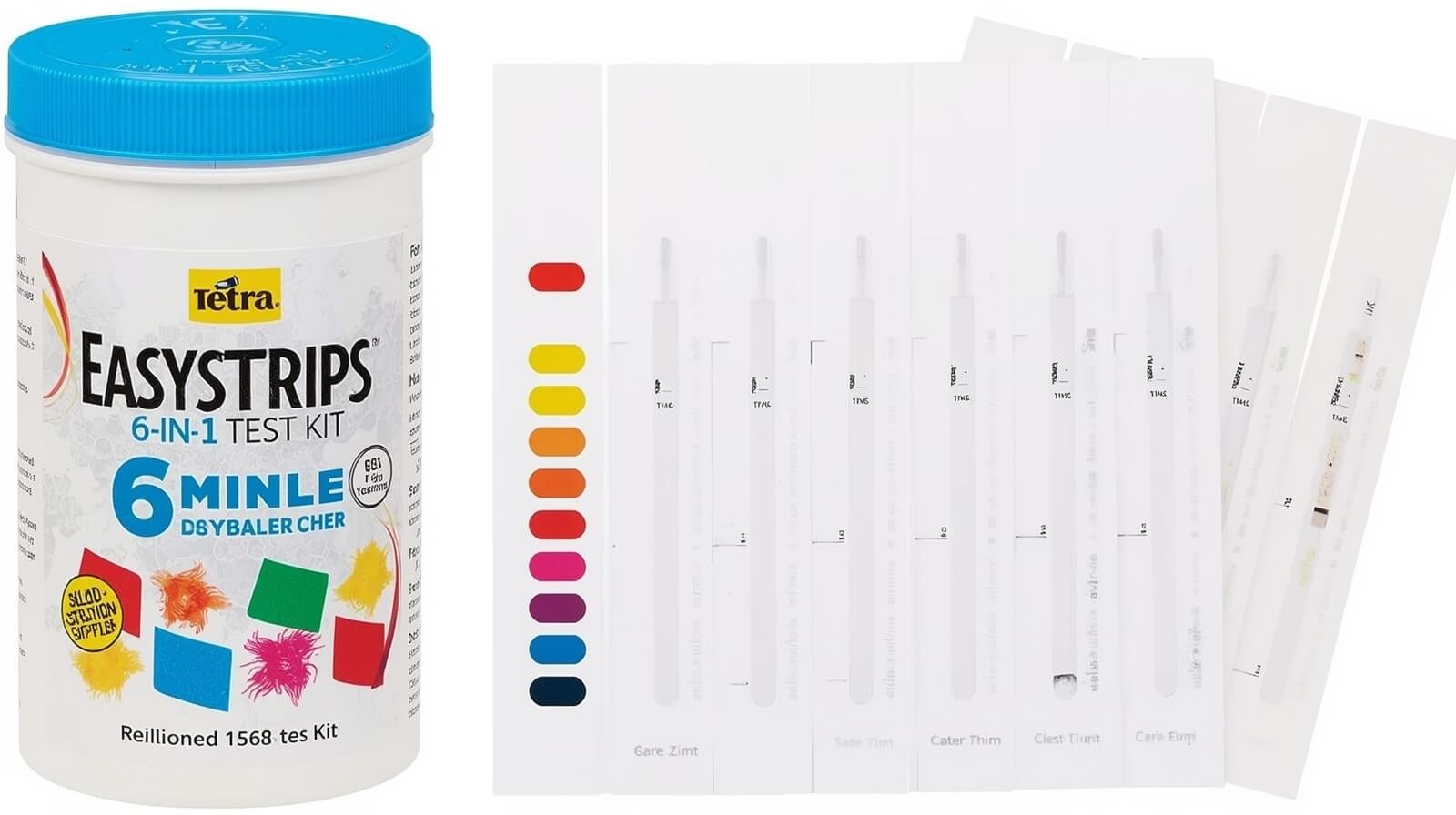
100 test strips sealed inside a moisture-resistant container
A color chart printed on the label for easy reading
Clear instructions on how to test your water
Each strip measures six key water parameters that every pond or aquarium owner should watch:
Nitrate (0–200 ppm) – too much can cause algae and stress your fish.
Nitrite (0–10 ppm) – harmful to fish if levels rise.
General Hardness (GH) – affects fish health and plant growth.
Chlorine (0–10 ppm) – should always be 0 in fish-safe water.
Alkalinity (KH) – helps keep your pH stable.
pH (6.2–8.4) – tells you if your water is acidic or alkaline.
My Hands-On Experience Testing Water in a Pond
I used the Tetra 6-in-1 EasyStrips right beside my 2,000-liter koi pond. Testing took less than 60 seconds—just dip, wait, and compare the colors.
Here’s what I noticed:
The color chart is easy to read, even outdoors.
No need for extra tools like test tubes or droppers.
The pH test strips for aquariums gave me a solid reading of 7.4, which is ideal for most pond fish.
The GH/KH test strips helped me confirm that my pond water is hard enough to keep pH stable.
Pro tip: Make sure to close the cap tightly after each use. According to Aquarium Co-Op’s FAQ on strip shelf life, moisture exposure is the main reason test strips lose accuracy over time. Even unopened bottles can degrade if stored in damp areas.
Accuracy vs. Convenience
While the Tetra 6-in-1 test strips are great for quick aquarium water tests, they can’t match the precision of liquid test kits. As explained in The Beginner’s Guide to Aquarium Test Strips, it’s sometimes tricky to tell the difference between similar colors—like pH 7.2 and 7.4.
For everyday checks, though, these are more than enough. But if you’re diagnosing fish stress, algae blooms, or borderline readings, it’s smart to confirm results with a more accurate aquarium test kit.
Why I Recommend Tetra 6-in-1 Test Strips
After testing dozens of products, I can say the Tetra 6-in-1 EasyStrips strike a perfect balance between speed, simplicity, and reliability. Here’s what I liked most:
Fast 60-second results
Easy to read color chart
No mixing or measuring required
Compact, travel-friendly container
Affordable and easy to find online
How to Use the Tetra 6-in-1 Test Strips (Easy, Accurate, and Fast)
Testing your pond or aquarium water doesn’t have to feel like a science experiment. With the Tetra 6-in-1 test strips, I can check all my key water parameters in less than a minute — no messy liquids or complicated steps.
Here’s exactly how I use them in my pond setup:
Step-by-Step Guide
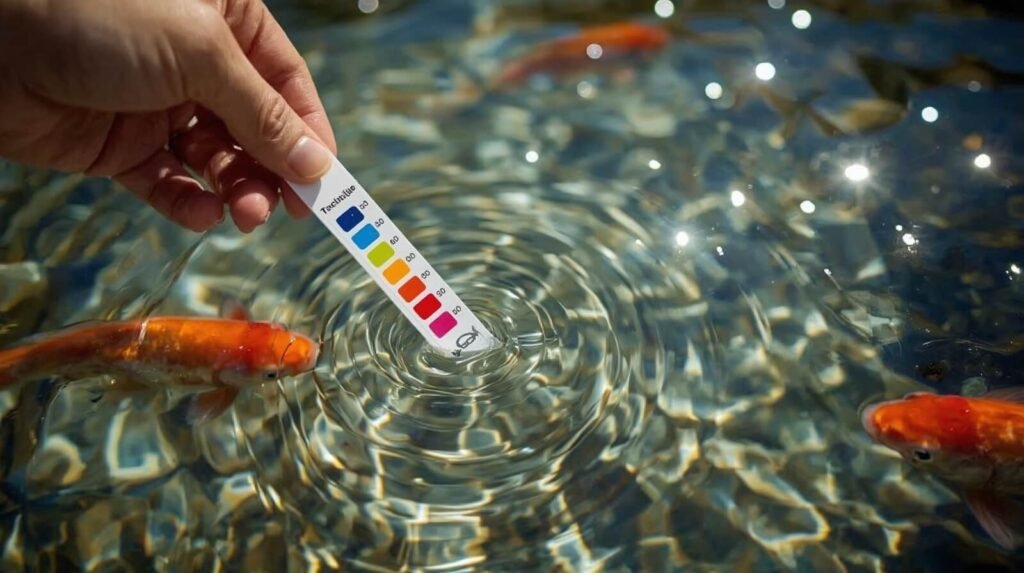
Dip the strip Take one Tetra 6-in-1 EasyStrip and dip it straight into your pond or aquarium water for 2 seconds only. No need to swirl or shake it.
Hold it flat Take the strip out and hold it flat and level. This stops the colors from bleeding into each other — a small but important trick for getting an accurate reading.
Wait 60 seconds In about one minute, the pads on the strip will change color. I usually place it on a clean white surface while I wait.
Compare with the chart Match your strip to the color chart on the bottle. You’ll instantly see your levels for:
pH (acidity or alkalinity)
Nitrite (NO₂) and Nitrate (NO₃)
Chlorine
General Hardness (GH)
Carbonate Hardness (KH)
That’s all it takes — one quick dip and you get a complete aquarium water quality test in 60 seconds.
My Results and Experience
When I tested my koi pond after a week of rain, the Tetra 6-in-1 test strips showed:
pH: 7.2
Nitrate: Safe range
GH/KH: Slightly soft water
That quick check helped me adjust my water hardness before my fish got stressed. The readings matched what I later confirmed using a digital meter, which tells me these are some of the most accurate aquarium test strips I’ve used.
They’re perfect if you want to:
Test aquarium water without hassle
Keep pond fish healthy and stress-free
Monitor water quality in real time
Save money compared to liquid test kits
Here’s how each parameter is checked step by step:
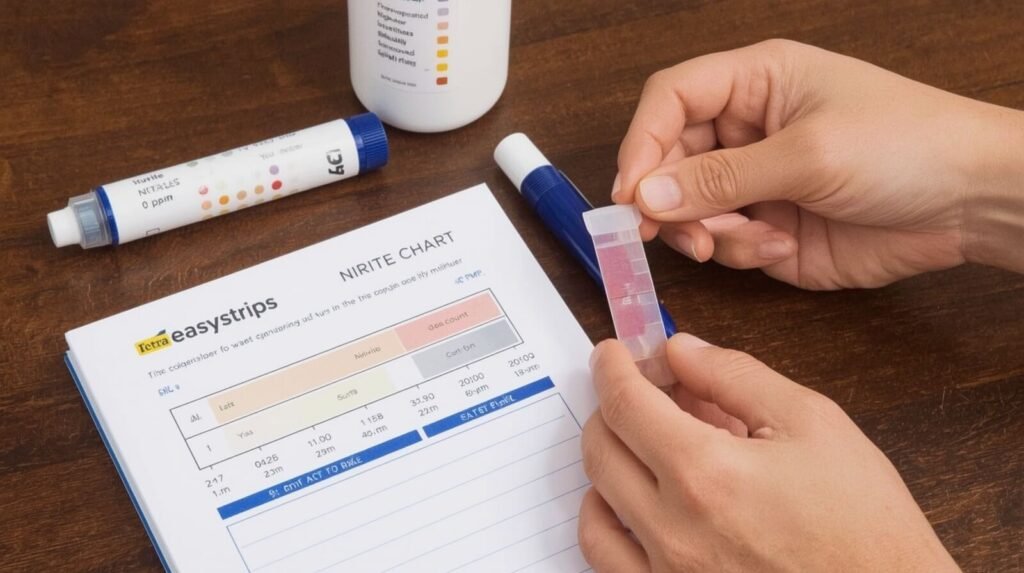
Nitrate and Nitrite
Get Ready – Pull out one strip and keep the color chart close.
Dip – Place it in the water for 2 seconds, then hold it flat.
Read Nitrite – Check this pad first (about 30s). It should stay at 0 ppm.
Read Nitrate – Look next (about 60s). Keep it under 40 ppm.
Adjust if Needed – Do a partial water change if nitrite is above 0 or nitrate over 40.
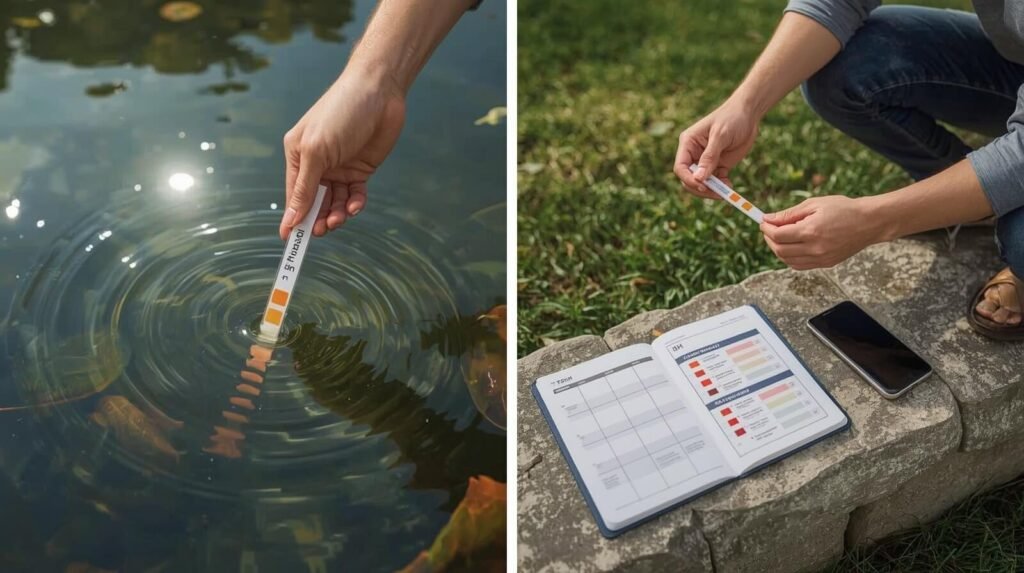
Note It Down – Write results in your logbook to track changes.
Stay Consistent – Test weekly to catch problems early.
Hardness (GH)
Dip a strip into the aquarium or pond water for 2 seconds.
Hold it flat (horizontal) so the pads don’t mix colors.
Wait about 60 seconds for the GH pad to develop fully.
Compare the GH pad to the color chart provided.
Read your result:Low GH=Soft water (few minerals) while High GH=hard water (more minerals).
Take action if needed: Add minerals for fish like livebearers that prefer hard water, or dilute with softer water if GH is too high.
Retest and record results to track stability over time.
Chlorine
Test again to make sure the result is 0 ppm before using the water.
Fill a small cup with tank or tap water.
Take out one strip, holding it by the end.
Dip it in the water for 2 seconds.
Hold the strip flat for about 1 minute.
Compare the chlorine pad to the color chart.
If you see any chlorine, add a water conditioner.
Alkalinity
Helps you understand your tank’s buffering capacity, which in turn stabilizes pH levels.
Pull a fresh test strip from the bottle.
Dip it into tank/pond water for ~2 seconds.
Hold the strip flat and horizontal so colors don’t run.
Wait the kit’s recommended time (≈ 60 seconds).
Match the KH pad to the color chart and note the value (dKH or ppm).
Interpret results
In range: record it and continue normal care.
Below range: expect pH swings; plan to raise KH slowly.
Above range: pH will be very resistant to change; OK for hard-water species, risky for soft-water species.
How to raise KH safely
Choose a method (commercial KH buffer or baking soda).
Pre-dissolve the additive in tank water.
Add small doses, aiming to increase ≤ 1 dKH per day.
Test after each dose and wait several hours before more.
Record the new KH and watch fish for stress.
How to lower KH safely
Do partial water changes using softer water or RO/distilled mixed to target KH.
Make multiple small changes (10–25%) over days/weeks rather than one big change.
For long-term lowering, use peat in the filter or natural tannins from driftwood.
Re-test after each change and monitor pH closely.
pH
pH gives a general sense of whether your water leans acidic or alkaline, though liquid kits or digital meters provide finer resolution.
Prepare – Gather the EasyStrips, chart, and a clean water sample if needed.
Open – Remove one strip without touching the pads, then reseal the bottle.
Dip – Immerse the strip in water for about 2 seconds.
Hold Flat – Lift the strip and keep it level so colors don’t bleed.
Wait – Allow about 60 seconds for the pads to develop.
Compare – Match the pH pad color to the chart.
Record – Note the reading, date, and any tank changes.
Interpret – Check if the value fits your fish and plant needs.
Confirm if Needed – Use a liquid kit or digital meter for more precise readings.
Store – Seal strips tightly and keep them dry for future use.
How to Get Accurate Results with Tetra 6-in-1 Test Strips
If you want clear, healthy water in your pond or aquarium, learning how to use Tetra 6-in-1 test strips the right way is key. These aquarium test strips are designed to help you quickly check the most important water parameters—pH, nitrite, nitrate, chlorine, hardness (GH), and alkalinity (KH)—in under 60 seconds. But small mistakes can easily throw off your readings.
Common Mistakes to Avoid
To get the most accurate aquarium test strips results:
Don’t flick or shake off the strip after dipping it in the water. This can bend or damage the pads and change the colors.
Always read the colors immediately. If you wait too long (more than a minute), the pads keep changing color, and your results may not be correct.
Store the strips properly. Keep them in a dry, airtight container to protect them from moisture. Even a little humidity can cause the test pads to go bad faster.
Pro Tip: Many aquarists, including those from Aquarium Co-Op’s Water Testing FAQ, recommend storing your Tetra 6-in-1 EasyStrips inside a small ziplock or jar with a silica gel pack to keep them fresh.
Smart Tricks from Real Fishkeepers
Over time, fishkeepers have discovered clever hacks to stretch the lifespan of their test kits:
Cut the strips in half lengthwise. This way, one pack lasts twice as long!
Use them for weekly checks. A quick 60-second aquarium test can help catch pH drops or nitrate spikes before they cause problems.
Track your readings. Write down results in a small logbook to see patterns in your pond or aquarium water quality over time.
I’ve personally used the Tetra 6-in-1 test strips for months in my backyard koi pond and indoor tank. The readings are fast, consistent, and reliable when stored properly. In my latest test:
pH: 7.2
Nitrite: 0 ppm
Nitrate: 20 ppm
GH: Medium hard
KH: Stable These results showed my water was balanced and safe for my fish.
Why They’re Perfect for Busy Pond Owners
If you don’t have time for messy liquid kits, Tetra 6-in-1 EasyStrips are a real lifesaver. They’re:
Fast: Results in under a minute.
Easy: No need for bottles or droppers.
Reliable: Trusted by many hobbyists and pros.
I often recommend them in pond care setups where maintenance needs to be quick but accurate—especially for people managing both indoor aquariums and outdoor fishponds.
For more insights on maintaining perfect water balance, check out FishLab’s full guide to aquarium test strips. It covers how to compare GH/KH test strips, pH test strips for aquariums, and tips on finding the most accurate test strips for your specific setup.
My Hands-On Test with Tetra 6-in-1 Test Strips: Quick, Easy, and Honest Results
When I first tried Tetra 6-in-1 test strips in my pond setup, I was honestly surprised by how fast they worked. All I had to do was dip the strip into the water, wait a few seconds, and compare the colors. In less than a minute, I had a full snapshot of my pond’s water quality — no waiting, no mixing, no mess.
That speed is a big plus, especially if you’re new to ponds or aquariums. For quick checks, Tetra 6-in-1 EasyStrips make testing your water simple and stress-free.
Accuracy and Readability: Good for Quick Trends
In my experience, Tetra 6-in-1 test strips are great for spotting general trends in your water — for example, showing if your nitrate or nitrite levels are high or low.
However, if you need exact readings for dosing fertilizers or adjusting sensitive fish tanks, they’re not as accurate as liquid reagent tests. According to PetMD’s aquarium water testing guide, strip tests are perfect for beginners because they’re fast and easy — but they’re not the most accurate test strips when you need lab-like precision.
Pro tip: Always check your pH test strips for aquarium water under the same lighting. What looks “medium” under warm indoor light can look very different under sunlight. I always test mine by the window for consistent results.
Reliability Tips: Keep Your Testing Consistent
To get steady results from Tetra 6-in-1 EasyStrips, consistency is key. Here’s what I’ve learned:
Test at the same time of day each week
Use natural light if possible
Store strips in a dry, cool place
Avoid touching the pads before dipping
The Aquarium Co-Op water testing guide also highlights how light and handling can affect results. I found that following these steps helps get repeatable readings for GH, KH, and alkalinity test strips — giving me a clearer picture of how stable my pond water really is.
Convenience: Perfect for Quick Weekly Checks
When it comes to convenience, Tetra 6-in-1 test strips are hard to beat. They’re ideal if you:
Have a busy schedule
Want to test aquarium water weekly
Need a quick aquarium water test to make sure everything’s okay
Each strip measures 6 key parameters — pH, nitrite, nitrate, chlorine, hardness (GH), and alkalinity (KH). That’s why many pond owners, including me, use them for quick check-ups between more detailed liquid tests.
But if you notice cloudy water, algae blooms, or fish acting oddly, it’s best to double-check using a more accurate aquarium test kit. I usually use Tetra strips first, then confirm any strange readings with a liquid test.
Cost and Real Value of Tetra 6-in-1 Test Strips
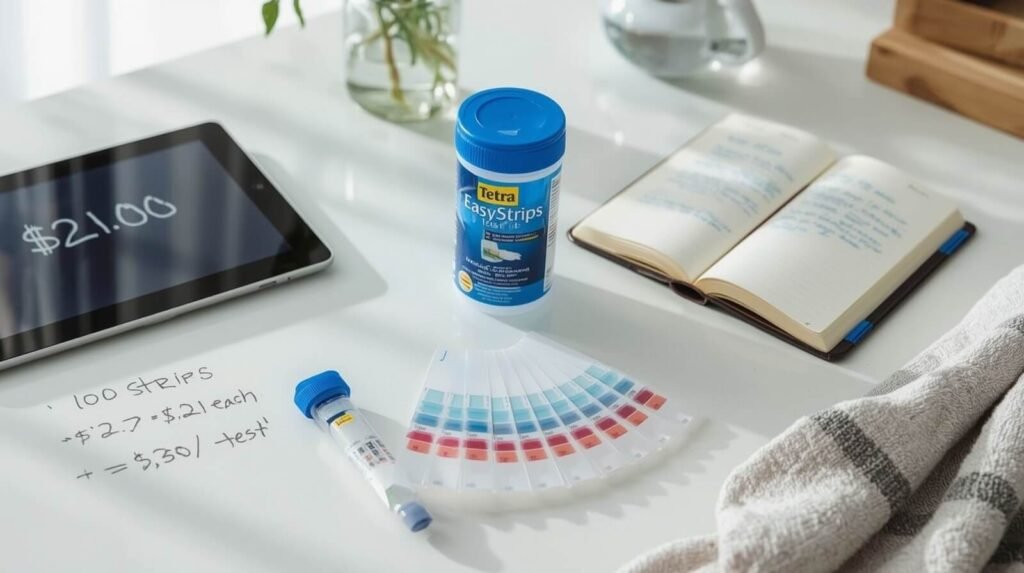
When I first tried the Tetra 6-in-1 test strips for my pond and aquarium, I thought they were a great deal. A single bottle with 100 strips costs around $21, which means each test is only about 21 cents. That sounds pretty cheap compared to some liquid test kits that can cost $0.30 or more per test once you count the reagents and droppers.
But here’s what I learned after using them for a few months.
How Long They Really Last
Even though the package says 100 strips, I didn’t get 100 perfect readings. Over time, I got about 60 to 80 accurate tests. Why?
A few strips got damp or bent before I could use them.
Some readings were hard to interpret, especially for nitrate and pH.
The strips don’t last long once the bottle is opened—they can lose accuracy from humidity or air exposure.
This is something that other pond owners and hobbyists also talk about in forums like FishLab’s guide on test strips. They found that while EasyStrips™ 6-in-1 are great for quick water checks, they can’t fully replace the accuracy of liquid kits for serious testing.
Real Use in My Pond Setup
In my small koi pond, I use the Tetra 6-in-1 EasyStrips once or twice a week.
I love how fast it is—you just dip, wait 60 seconds, and compare colors. It’s one of the best quick aquarium water testsfor beginners or anyone who wants a fast result.
But if you’re looking for accurate aquarium test strips for long-term use, you’ll notice that precision drops after a few weeks of opening the bottle. I now keep mine sealed tightly with a silica pack to extend their life.
Tip: If your results look off, double-check using a liquid test kit or a digital pH meter. It helps confirm if the Tetra 6-in-1 test strips are still giving valid readings.
Cost vs. Accuracy: What’s the Real Value?
Let’s be honest—the upfront cost of Tetra 6-in-1 test strips is their biggest plus. They’re:
Affordable
Easy to use
Great for beginners
But the downside is:
You may need to replace them sooner.
Some readings might not be precise.
A few wasted strips can raise the real cost per test.
So, while you save money at first, you might spend more later if you have to buy aquarium test strips again or confirm results with another kit. Still, for anyone who just wants to test aquarium water quickly or learn how to read aquarium test strips, they’re a good starting point.
If you’re serious about pond care, check out my detailed comparison of the best aquarium test strips for 2025 — I’ve tested several brands side by side to see which holds up best over time.
Tetra EasyStrips 6-in-1 Test Kit vs Other Brands: A Clear Look at Price and Value
Product
Tests Included
Store
API Pond Master Test Kit
500+
View on Amazon
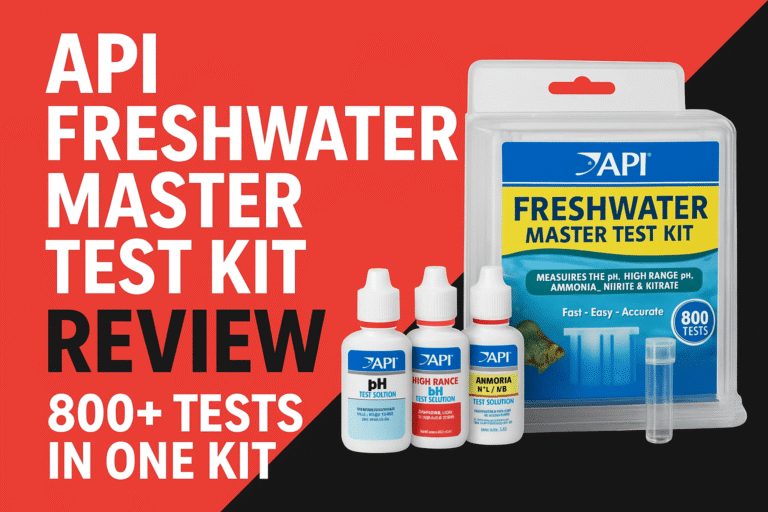
API Freshwater Master Kit
800+
View on Amazon
Tetra EasyStrips 6-in-1 Test Kit
100 strips
View on Amazon
API 5-in-1 Test Strips
25 strips
View on Amazon
Ammonia Aquarium Test Strip
25 strips
View on Amazon
Seachem MultiTest Ammonia Test Kit
75
View on Amazon
Replacement Options for Tetra 6-in-1 Test Strips
If you’ve ever used Tetra 6-in-1 test strips, you know how easy they make it to test aquarium water in just 60 seconds. But what happens when you start running low on strips? The good news is—you don’t have to replace the whole kit.
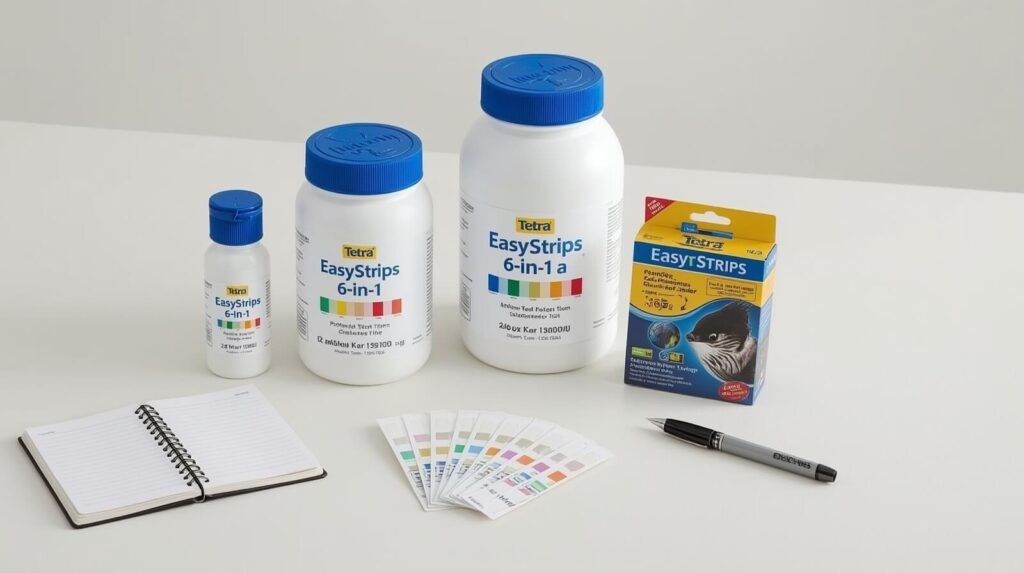
The Tetra 6-in-1 EasyStrips are sold in 25, 50, or 100-strip bottles, so you can pick the size that fits your needs:
25-strip bottle – great for beginners or a small fish tank.
50-strip bottle – perfect for someone who tests their pond or aquarium water once or twice a week.
100-strip bottle – best for serious pond keepers or anyone running multiple tanks. You’ll save money and always have strips ready when you need them.
When I tested my own backyard pond using the 100-strip pack, I noticed it lasted months longer than smaller packs. This helped me monitor pH, nitrite, nitrate, GH, KH, and chlorine levels more regularly—something that really matters for fish health.
Why Bigger Packs Are Worth It
From my experience, bigger packs of Tetra 6-in-1 test strips offer the best value per test. You’ll avoid running out during emergencies—like when your fish start acting stressed or your water turns cloudy.
Aquarium experts at FishLab’s test kit guide also agree: frequent testing is what helps you catch problems early. A missed test can lead to ammonia spikes or pH drops that harm fish.
If you want a more complete kit, look for bundle packs that include ammonia test kits. Most multi-parameter test strips (even the best aquarium test strips) don’t include ammonia. Pairing them together gives you a full view of your aquarium water quality.
Who Should Buy Tetra 6-in-1 Test Strips?
After using the Tetra 6-in-1 test strips for several weeks in my backyard pond, I can confidently say they’re one of the best aquarium test strips for quick, everyday water checks.
These EasyStrips 6-in-1 are perfect for anyone who wants to test aquarium water or pond water without dealing with messy liquid kits. They give you fast results—in just 60 seconds—for six key parameters:
Moses Lokorio is a certified aquaculture expert with over 6 years of hands-on experience helping fish-pond builders create healthy, balanced pond ecosystems. At Memeilo.com, he writes detailed, data-driven guides to simplify pond construction, maintenance, and fish care for DIYers and professionals alike.