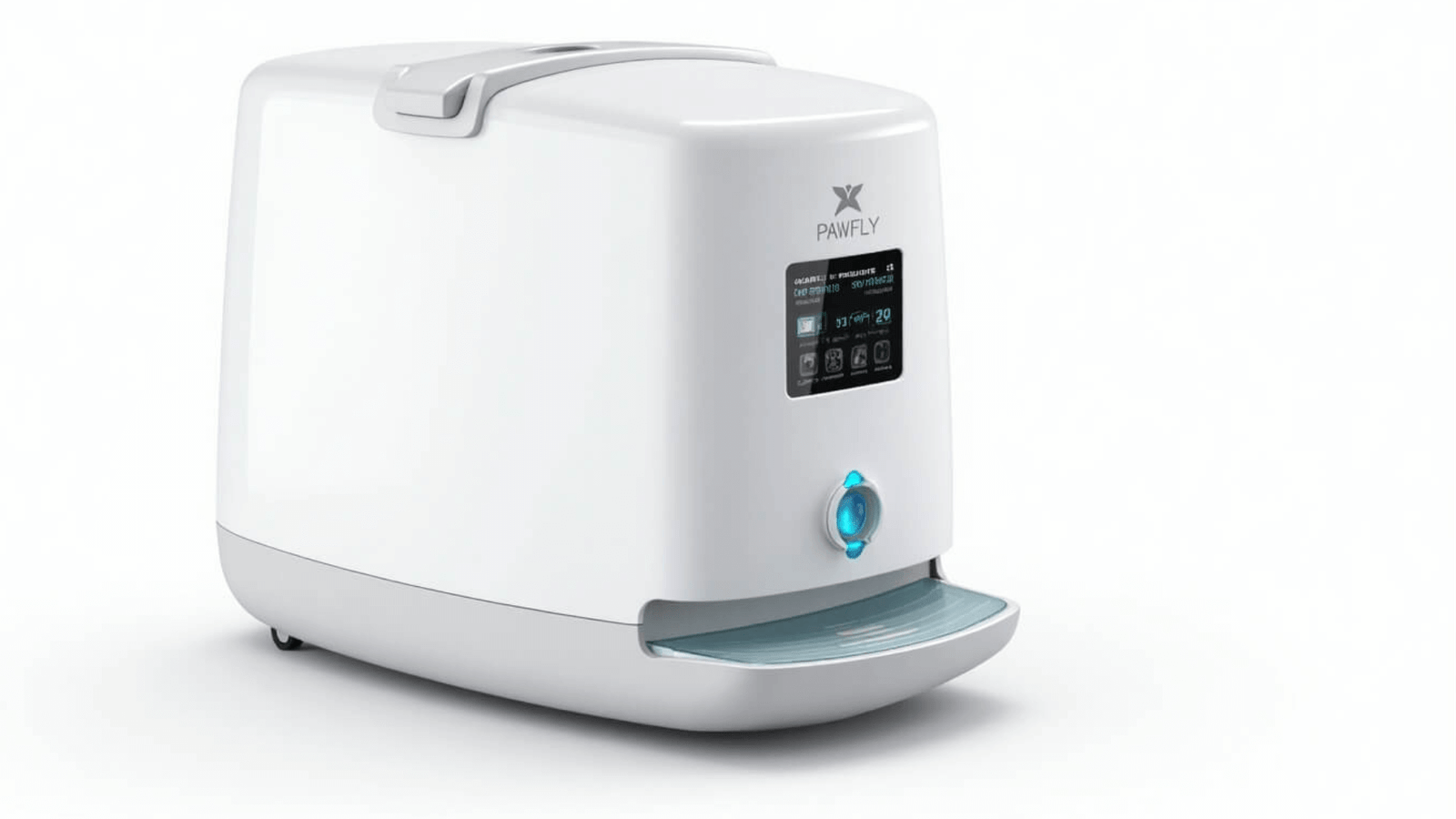
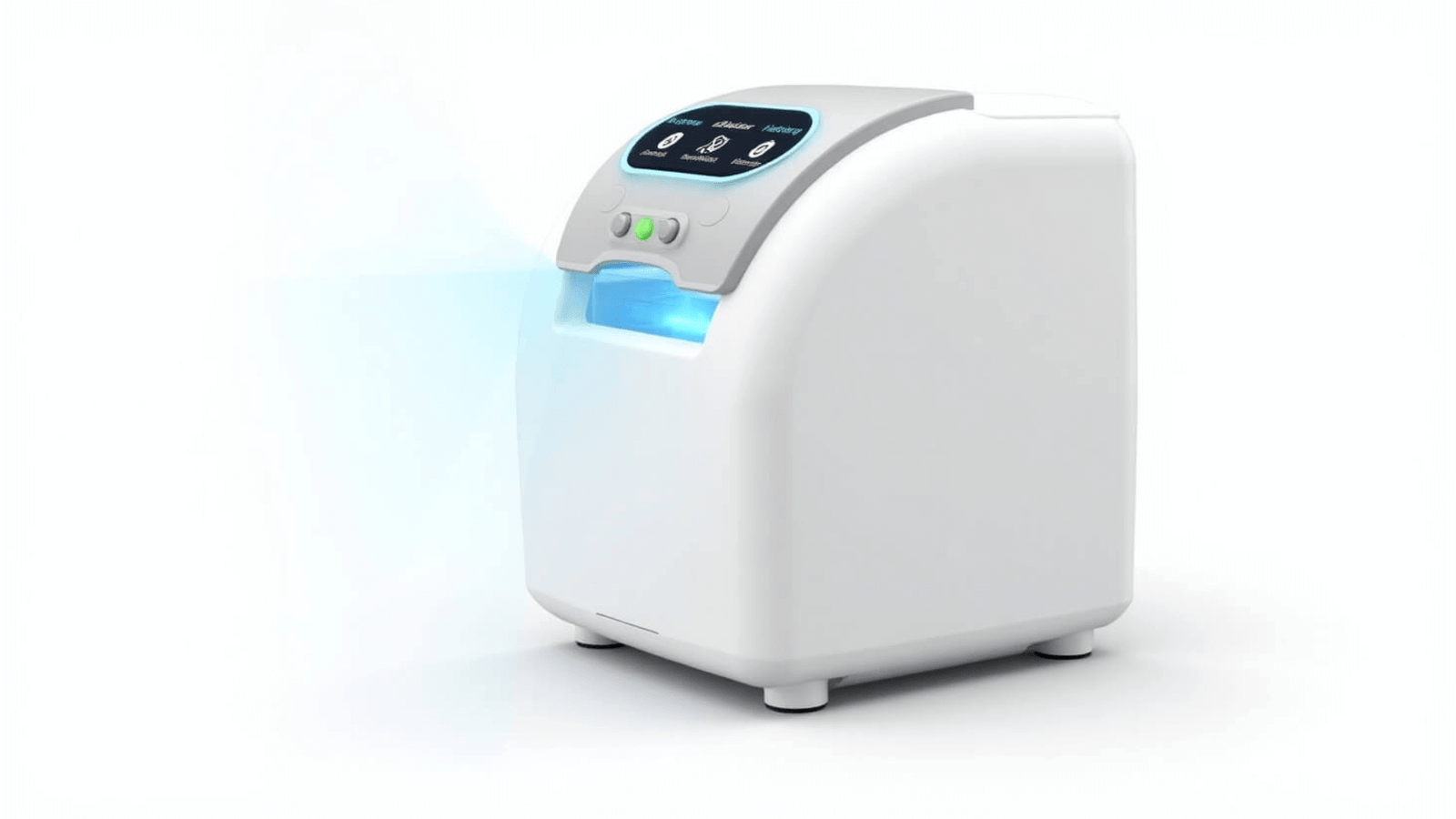
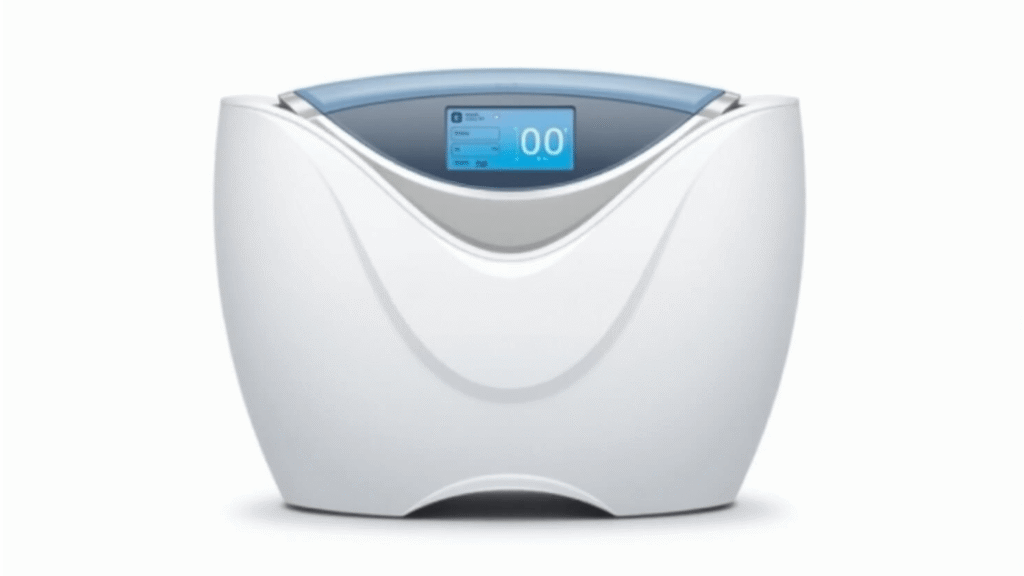
Designed with ease of use and flexibility, this compact feeder simplifies feeding routines without requiring constant oversight.
While it doesn’t come with the advanced features of some premium feeders—like Wi-Fi connectivity or mobile app integration—it makes up for that with its straightforward setup, decent feed capacity, and solid timer functionality. This feeder offers excellent value, especially for hobbyists and small-scale setups.
Specs
Model: Pawfly AF-011
Capacity: ~200 ml (0.44 lbs)
Feedings per day: Up to 4
Power: 2 × AA batteries
Mounting Options: Clamp mount, tank lid
Feed types: Pellets, flakes, crumbles
Weatherproof: No (indoor/semi-sheltered use recommended)
Timer type: Mechanical
Made in: China
Pros
Extremely budget-friendly
Supports pellets and flakes
Easy to clean and maintain
Simple, reliable mechanical timer
Cons
Not suitable for large outdoor ponds
No Wi-Fi or app control
Not fully weatherproof
Limited feed capacity
Regarding ensuring reliable, hands-free feeding for your aquatic companions, the Pawfly Automatic Fish Feeder emerges is a practical, budget-friendly solution that caters exceptionally well to small-scale fish farmers, koi pond owners, and indoor aquarium managers. Designed with ease of use and flexibility, this compact feeder simplifies feeding routines without requiring constant oversight.
While it doesn’t come with the advanced features of some premium feeders—like Wi-Fi connectivity or mobile app integration—it makes up for that with its straightforward setup, decent feed capacity, and solid timer functionality. This feeder offers excellent value, especially for hobbyists and small-scale setups.
Let’s explain how the Pawfly Automatic Fish Feeder performs in all the key aspects.
The Pawfly Automatic Fish Feeder offers a capacity of approximately 200 ml (0.44 lbs), which is modest but adequate for most small to medium-sized fish tanks and ornamental ponds. How long the feeder lasts between refills depends on how many fish you have and how often they’re fed—it can go as short as a couple of days or stretch to more than a week before needing a top-up. For example, in a community tank with 10–20 fish, you can expect to refill it every 3–5 days.
While it may not suit large commercial pond operations, its capacity is ideal for hobbyist-level use, especially in controlled environments where overfeeding must be avoided. The rotating drum design allows you to adjust the portion size easily, making the limited volume work efficiently across multiple feedings.
2. Feed Type Compatibility
A standout feature of the Pawfly feeder is its flexibility with different types of fish food. It works well with flakes, pellets, and crumbles—making it a solid option for fish keepers with various species to feed. Remember that wonderful flakes or powdery food might clump together, particularly when the air is humid.
This feeder should be indoors or semi-sheltered unless paired with a moisture control hack (like placing silica gel packets inside the drum) to avoid moisture ingress and clogs. Pellet feeds work best, especially when kept at a uniform size.
3. Programmability & Timer Functionality
Although it lacks a digital display, the Pawfly feeder includes a mechanical timer wheel that allows for up to 4 feedings per day. Setup is intuitive, and once programmed, the unit maintains consistent timing as long as battery power remains stable.
This simplicity is ideal for aquarists who want basic, set-and-forget functionality without the complexity of digital interfaces. You can control how much food comes out by adjusting the drum’s opening, which works well for most daily feeding needs. But if you want exact digital settings, this feeder might not have enough options.
Real-World Feeding Example: How the Pawfly Feeder Performs Day-to-Day
To better understand how the Pawfly Automatic Fish Feeder performs in everyday use, let’s look at a common real-world setup that reflects how most hobbyists actually feed their fish.
Example Setup
Pond / Tank: 1,000–1,500 liter ornamental pond
Fish Stock: 8–12 small koi or goldfish
Feed Type: Floating pellets (3–4 mm)
Feeding Schedule: 2 feedings per day (morning & evening)
With this setup, the Pawfly feeder dispenses small, consistent portions that the fish consume within a few minutes—helping prevent overfeeding and excess waste buildup. At two feedings per day, the 200 ml drum typically lasts about 4 to 5 days before needing a refill.
During testing, the mechanical timer remained accurate and dependable, even when temperatures fluctuated. The feeder delivered food at the same times daily without jamming, provided the pellets were dry and uniform in size.
For weekend travel or short holidays, this setup offers peace of mind. Many users run the feeder for 2–3 days before leaving to confirm portion size and timing—an approach we strongly recommend for any automatic feeding system.
How to Set Up a Safe Feeding Schedule with the Pawfly Automatic Fish Feeder
Follow this simple, real-world feeding schedule to avoid overfeeding, reduce waste, and keep your pond or aquarium fish healthy using the Pawfly Automatic Fish Feeder.
Choose the right feed.
Use dry, floating pellets (3–4 mm) for best results. Avoid moist or powdery feeds that can clump inside the drum.
Set feeding frequency.
Program the mechanical timer for 2 feedings per day—one in the morning and one in the evening. Increase to 3–4 feedings only for fast-growing juvenile fish.
Adjust portion size.
Open the drum slot slightly so fish consume all food within 3–5 minutes. This prevents excess waste and water quality issues.
Test before relying on it.
Run the feeder for 2–3 days while observing fish behavior and leftover food before leaving it unattended.
Check weekly.
Refill the drum, wipe away food dust, and confirm the timer wheel is still aligned correctly.
Memeilo Pro Tip: In cooler water or during low activity periods, reduce feeding to once per day to avoid stressing fish and overloading your biofilter.
4. Weatherproofing & Durability
While not designed for fully exposed outdoor use, the Pawfly feeder is made of durable ABS plastic that can withstand occasional splashes or high-humidity environments. It performs best when mounted in covered outdoor spaces or inside aquariums rather than in full sun or heavy rain.
Over time, the feeder holds up nicely in spots like shaded pond edges or covered patio tanks. But if left out in direct sunlight all day, the plastic might wear down due to UV exposure.
5. Power Source & Battery Life
The Pawfly Automatic Fish Feeder runs on two AA batteries (not included), which usually last around 3 to 4 months, depending on how often it’s used and the surrounding temperature. This makes it an excellent choice for places without easy access to electricity, like remote ponds or backup tanks.
Even though there’s no warning when the battery is low, users say the motor stays reliable until the batteries are almost dead. Swapping them out every few months is a good habit to avoid unexpected stops.
6. Ease of Installation & Mounting
Setting up the Pawfly Automatic Fish Feeder is quick and straightforward. Its clamp fits most tanks and pond edges and doesn’t require tools. You can tighten it by hand and adjust it to fit different glass or frame thicknesses—ideal for beginners.
If you’d rather not use the clamp, place it on a tank lid or tape it down. Its lightweight design makes it easy to position however you like, whether you’re using it indoors or outside.
7. Feed Dispersion Mechanism
Pawfly Automatic Fish Feeder uses a turning drum to drop out food at scheduled times. It’s a slow, gravity-based system that works well with dry pellets and doesn’t jam easily.
It is important to know that this feeder drops food in a single spot rather than spreading it around like paddle-style feeders. This makes it ideal for smaller tanks or ponds where fish tend to gather. For larger ponds, though, you may need to supplement by hand to ensure every fish gets fed.
8. Maintenance & Cleaning
Cleaning the Pawfly Automatic Fish Feeder is simple and doesn’t take much time. The food drum pops off easily, so you can rinse or wipe it clean to remove leftover food or dust. Cleaning it once a week is a good idea if you’re using sticky or fine food.
Since the electrical parts are sealed away from the food area, there’s no water damage or rust risk. This makes upkeep super easy, which busy fish keepers will appreciate.
9. Reliability & Consistency
The Pawfly Automatic Fish Feeder is impressively dependable when used correctly. It runs on a steady but straightforward timer, operates quietly, and delivers feed like clockwork—making it easy to set and forget precisely what you want when you’re away for a weekend or stuck at work.
Still, since it runs on a basic mechanical setup, it’s a good idea to test it for a few days before leaving it to run independently—especially if you’ll be away for a while. As long as the drum isn’t stuffed too full or blocked, it delivers feed reliably and on time.
10. Price & Value for Money
Priced between $17 and $25, the Pawfly Automatic Fish Feeder is easily one of the most budget-friendly options. What’s impressive is its performance at such a low cost—offering dependable service that holds up against more expensive models for everyday use.
For small-scale pond owners, shrimp tanks, or anyone just starting in fishkeeping, it offers a reliable way to automate feeding without
spending a lot. It may not have advanced digital features, but it nails the basics—making it a smart pick for budget-conscious fish keepers who want simplicity that works.
Pawfly Automatic Fish Feeder vs Fish Mate P700: Which One Should You Choose?
Choosing the right automatic fish feeder depends on pond size, fish stock, and how much control you want over feeding. Below is a practical, real-world comparison between the budget-friendly Pawfly Automatic Fish Feeder and the higher-capacity Fish Mate P700.
Memeilo Verdict: Choose the Pawfly Automatic Fish Feeder if you have a small pond or aquarium and want simple, affordable automation. The Fish Mate P700 is better suited for larger outdoor ponds where higher feed capacity and weather resistance matter more than price.
Pawfly Automatic Fish Feeder — Frequently Asked Questions
Is the Pawfly Automatic Fish Feeder waterproof?
No. The Pawfly Automatic Fish Feeder is not fully waterproof. It is best used indoors or in semi-sheltered outdoor locations to protect it from direct rain and excessive moisture.
How many feedings per day can the Pawfly feeder handle?
The Pawfly feeder supports up to 4 feedings per day using its mechanical timer wheel, making it suitable for most daily pond and aquarium feeding schedules.
What types of fish food work best with the Pawfly Automatic Fish Feeder?
Dry pellets, crumbles, and standard flakes work best. Very fine powders or moist food may clump, especially in humid environments.
How long do the batteries last?
Battery life typically ranges from 3 to 4 months using two AA batteries, depending on feeding frequency, temperature, and portion size settings.
Is the Pawfly feeder suitable for koi ponds?
Yes, but only for small koi ponds or juvenile koi. Due to its limited feed capacity and single-drop dispersion, it is not ideal for large or heavily stocked ponds.
Does humidity affect the Pawfly feeder’s performance?
Yes. High humidity can cause flakes or fine pellets to clump. Using the feeder in covered areas and adding silica gel packets inside the drum helps prevent moisture buildup.
Can I use the Pawfly Automatic Fish Feeder while on vacation?
Yes. It’s a popular choice for short trips and weekend getaways. Always test the feeder for a few days beforehand to ensure consistent feeding.
Will feeding settings reset when I change the batteries?
No digital memory is involved. Since the Pawfly uses a mechanical timer, feeding settings remain intact as long as the timer wheel is not adjusted.
Final Verdict
The Pawfly Automatic Fish Feeder is a great entry-level device for fish keepers, small-scale pond owners, and hobbyist aquarists who want basic automation without overpaying for features they don’t need. While it’s not built for industrial-scale operations or heavy outdoor exposure, it excels at doing what it’s meant to do—automate feeding simply and reliably.
For its low cost, dependable output, and ease of use, we consider it one of the best-value automatic feeders currently available for small setups.
Moses Lokorio is a certified aquaculture expert with over 6 years of hands-on experience helping fish-pond builders create healthy, balanced pond ecosystems. At Memeilo.com, he writes detailed, data-driven guides to simplify pond construction, maintenance, and fish care for DIYers and professionals alike.