Getting the right pond liner size and thickness is one of the smartest choices you can make for your pond. A liner that fits well keeps your pond strong, clean, and leak-free for years.
If your liner is too small, it can:
- Cause leaks and folds
- Waste your time and money
- Even force you to rebuild your pond later
If it’s too large, you’ll:
- Spend more money than needed
- Find it hard to install properly
According to The Pond Guy’s Pond Liner Calculator & Guide, measuring your pond before buying a liner helps you avoid these problems.
Experts at Pond Trade Magazine also explain that liner thickness is just as important. A thicker liner gives better protection against sharp rocks, roots, or fish that like to dig.
By the end of this guide, you’ll learn how to:
- Measure your pond the right way
- Calculate the exact liner size you need
- Choose the right thickness for strength and durability
Whether you’re building a small koi pond or a large backyard water garden, this step-by-step guide will help you pick the perfect pond liner — one that fits right and lasts long.
Tip 1: Measure Pond Dimensions the Right Way
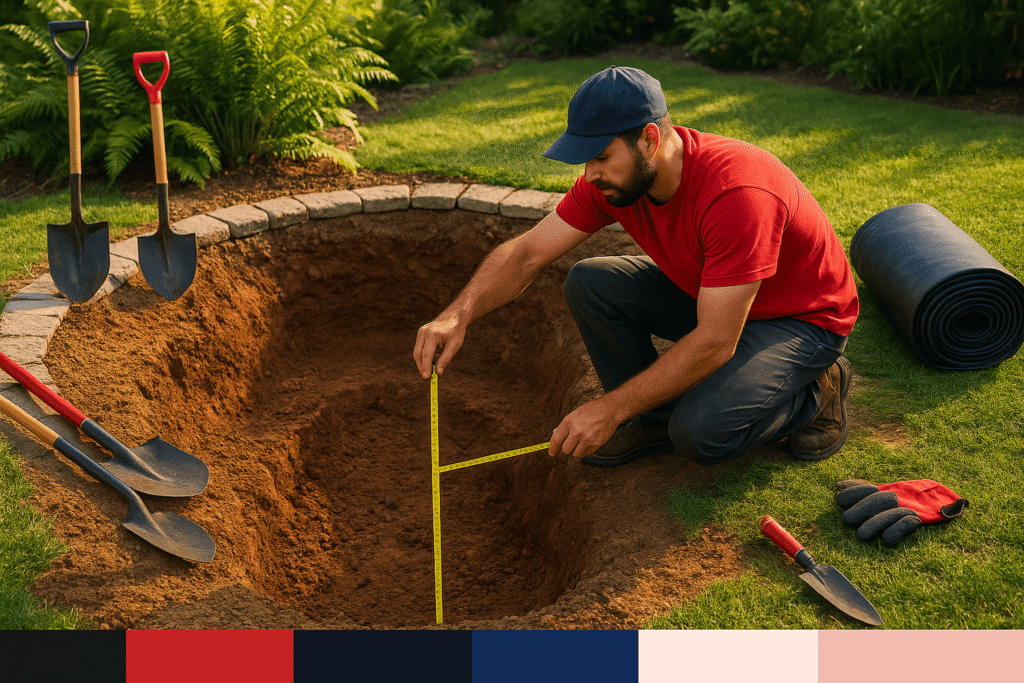
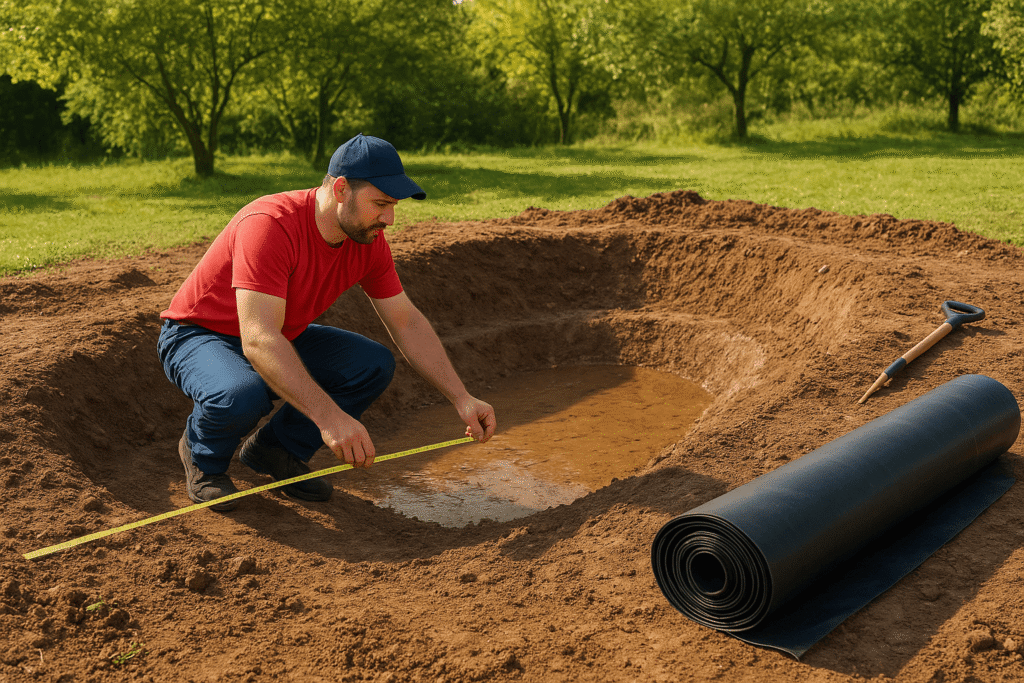
Getting your pond liner size right starts with accurate pond measurements. Even being off by an inch or two can lead to wasted liner material—or worse, a liner that doesn’t fit and forces you to redo the job.
Here’s how to measure your pond the easy and correct way:
- Measure the maximum length, width, and depth
- Use a strong tape measure or a laser distance tool.
- Always measure from the deepest point of your pond, not the edge.
- Remember: the liner must cover the full shape of your pond, including slopes and shelves.
- Use this simple formula to find your liner size:Liner Length = (Max Length + 2 × Max Depth + 2 feet overlap) and Liner Width = (Max Width + 2 × Max Depth + 2 feet overlap)
- Quick Example:
If your pond is 10 ft long, 8 ft wide, and 2 ft deep,Liner Length = 10 + (2×2) + 2 = 16 ft Liner Width = 8 + (2×2) + 2 = 14 ft Total area = 16 × 14 = 224 sq ft (about 21 sq meters) - Prefer metric measurements?
- 1 foot = 0.3048 meters
- You can convert your measurements easily using this ratio.
💡 Pro Tip:
If you want help with unusual pond shapes (like round or curved ponds), try using The Pond Guy’s Pond Liner Calculator & Guide. It’s an interactive tool that helps you find the exact liner size you need for any pond shape.
Tip 2: Don’t Skip the Overhang — It’s Your Leak Protection
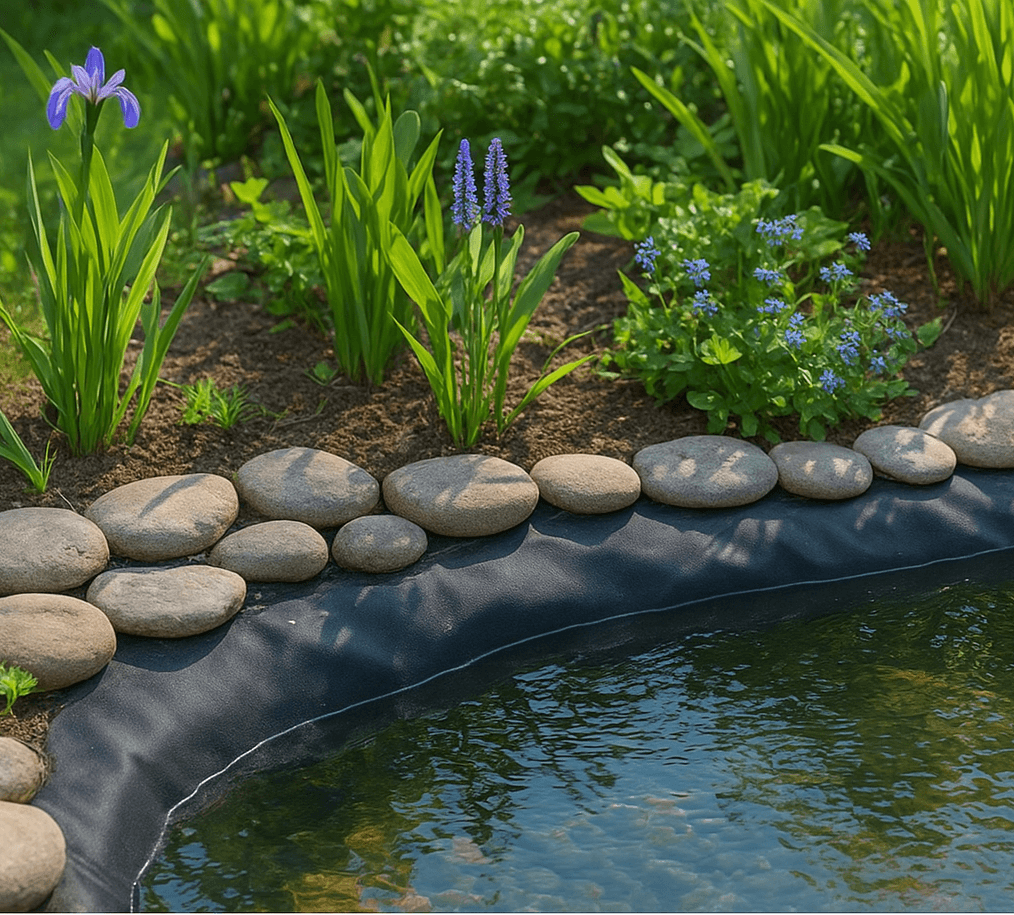
When installing a pond liner, always plan for an overhang. This extra liner that hangs past the pond’s edge isn’t waste — it’s your leak insurance. Without it, even small movements in soil, rocks, or water levels can pull the liner inward, causing slow leaks and water loss over time.
Follow these simple steps to get it right:
Step 1: Measure the Overhang
- Leave 12–24 inches of extra liner all the way around your pond.
- This overlap gives you enough material to anchor the liner securely and adjust it if needed.
Step 2: Secure the Liner
- Place flat stones, pavers, or edging rocks on top of the overhang.
- The weight of these stones keeps the liner in place and prevents it from slipping.
- This also protects the liner from UV rays and erosion at the pond’s edge.
Step 3: Don’t Trim Too Early
- Do not cut the liner until the pond is completely filled with water and has settled for at least a day.
- As the water fills the pond, it stretches the liner into place. Cutting too soon can cause gaps or short edges later.
Step 4: Finish the Edges
- Once everything has settled, trim the liner neatly, leaving a small margin under your stones for extra security.
- Double-check for any loose spots before finalizing your pond border.
Pro Tip: For detailed visuals and expert advice, see The Pond Guy’s Essential Guide to Pond Liners. It covers how to anchor liners safely and keep your pond watertight for years.
Tip 3: Choose the Best Pond Liner Material for Your Pond
Not all pond liners are made the same — and picking the right pond liner material can make or break your pond’s success. The shape, depth, and pond liner size all play a big role in choosing what works best for you.
Whether you’re building a small garden pond or a large koi pond, understanding each material helps you find the perfect balance of cost, durability, and flexibility.
Why Pond Liner Material Matters
When planning your pond liner size, remember — it’s not just about the measurements. The material you choose determines how strong, flexible, and long-lasting your pond will be.
The three most common pond liner materials are:
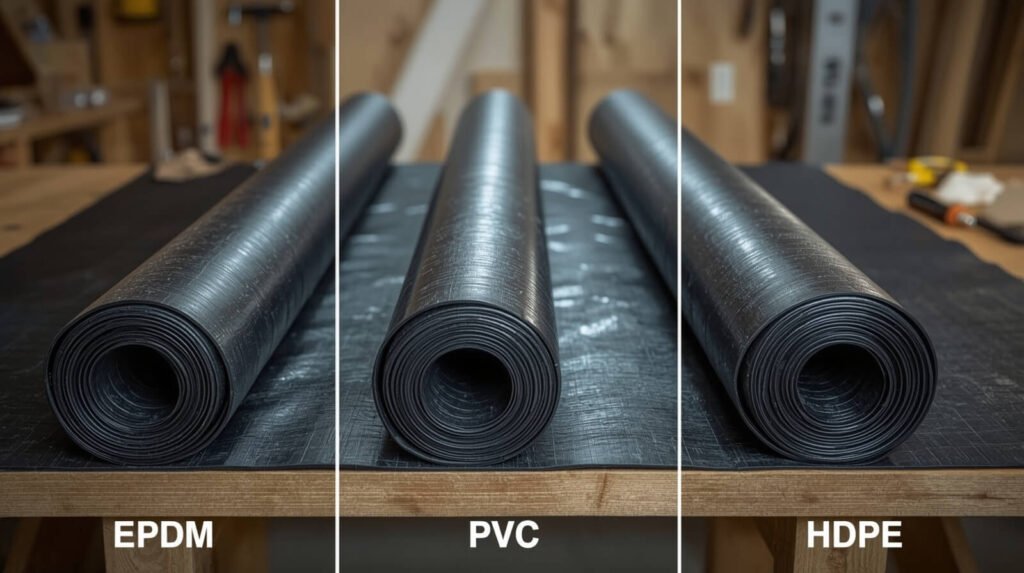
- EPDM rubber liners
- PVC liners
- HDPE (polyethylene) liners
Each one has unique pros and cons depending on your pond type and size.
EPDM Rubber Liners – The Best Overall Choice
EPDM rubber liners are often seen as the best pond liner material for most pond builders. They’re flexible, strong, and built to last for many years.
Why EPDM is great:
- Extremely flexible — perfect for curved or uneven pond shapes.
- Durable and resistant to punctures.
- Handles UV rays, heat, and cold without cracking.
- Ideal for koi ponds and ornamental garden ponds.
If your pond has a unique design or sits in an area with changing weather, EPDM is the safest long-term choice as explained by Aquascape Supplies’ guide on pond liner materials
PVC Liners – The Affordable Option
PVC liners are more budget-friendly, but they don’t last as long as EPDM or HDPE.
PVC pros:
- Great for small ponds or temporary water features.
- Low cost and easy to install.
PVC cons:
- Can become brittle with too much sunlight.
- Not recommended for large or permanent ponds.
If you want a simple setup on a smaller scale, PVC can still be a good short-term solution.
HDPE (Polyethylene) Liners – The Strong, Eco-Friendly Choice
HDPE liners are becoming a favorite among professionals who want tough, eco-friendly pond liners for large projects.
Why HDPE stands out:
- Highly puncture- and UV-resistant.
- Excellent for big ponds, farm ponds, or wildlife ponds.
- Environmentally friendly and long-lasting.
However, HDPE is less flexible, so you’ll need to measure your pond liner size carefully and leave enough extra overhang during installation.
Pro Tip:
If your pond area has sharp rocks, temperature changes, or uneven ground, choose EPDM rubber. It stretches easily and stays strong in all conditions — a smart investment for lasting performance.
To avoid leaks or short edges, always:
- Measure your pond’s length, width, and maximum depth.
- Add at least 1 foot (30 cm) of liner overhang on all sides.
- Double-check your numbers using The Pond Guy’s Pond Liner Calculator & Guide for accurate results.
Quick Comparison: Best Pond Liner Materials
| Material | Best For | Strengths | Weaknesses |
|---|---|---|---|
| EPDM Rubber | All pond types | Super flexible, long lifespan, weather-resistant | Costs more |
| PVC | Small or temporary ponds | Budget-friendly, easy to install | Can crack or fade in sunlight |
| HDPE (Polyethylene) | Large or farm ponds | Very strong, UV- and puncture-resistant | Less flexible, tricky to fit |
Tip 4: Choose the Right Liner Thickness — Balance Strength and Flexibility
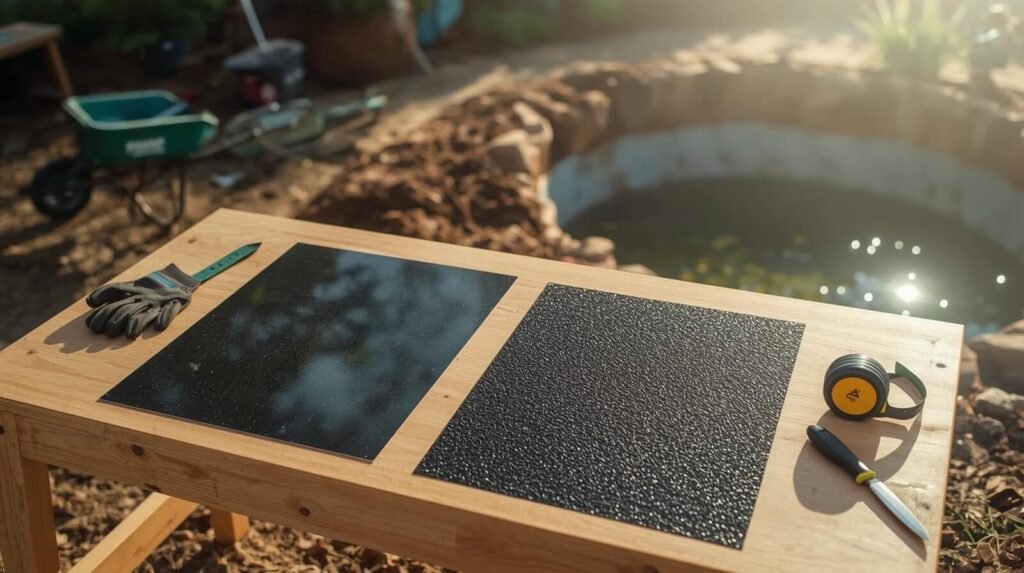
When picking the right pond liner, thickness matters more than you might think. It’s the hidden layer that protects your pond from punctures, roots, and weather changes. But here’s a key point — thicker isn’t always better. The best liner combines strength and flexibility, depending on your pond’s size and design.
Three Common Pond Liner Thickness Levels
Pond liners come in a few standard thickness options. Here’s how to choose:
- 0.35 mm (Light-Duty) – Best for small garden ponds or temporary water features where there are no sharp rocks.
- 0.5 mm (Medium-Duty) – Great for most backyard ponds with some fish and light foot traffic.
- 0.75 mm (Heavy-Duty) – Ideal for koi ponds or rocky pond bases that need extra strength.
Material Makes a Big Difference
As explained in Play It Koi’s guide on pond liner materials, the type of material—like EPDM, PVC, or reinforced polyethylene (RPE)—also affects how flexible and UV-resistant your liner will be.
- EPDM Rubber – Thick, highly stretchable, and flexible. Ideal for irregular or curved pond shapes.
- RPE (Reinforced Polyethylene) – Light, strong, and puncture-resistant. Perfect for large ponds that need easy handling without losing durability.
- PVC – Budget-friendly and flexible but can wear down faster under strong sun or freezing conditions.
Match the Liner to Your Pond and Climate
When choosing thickness, think about these three factors:
- Pond Base – Is your pond bottom rocky or smooth? Rocky bottoms need thicker liners.
- Fish Load – More or larger fish (like koi) mean you need stronger protection.
- Climate – If your area has hot summers or cold winters, pick a liner that can stretch and shrink without cracking.
Quick Reference: Pond Liner Thickness by Pond Type
| Pond Type | Recommended Thickness | Best Material |
|---|---|---|
| Small garden pond | 0.35 mm | PVC or EPDM |
| Backyard pond | 0.5 mm | EPDM or RPE |
| Large koi pond / rocky base | 0.75 mm | RPE or EPDM |
Choosing the right pond liner thickness keeps your pond leak-free, durable, and easy to maintain. The goal is simple — find the sweet spot between toughness and flexibility for a pond that lasts for years.
Tip 5: Always Prepare the Pond Base
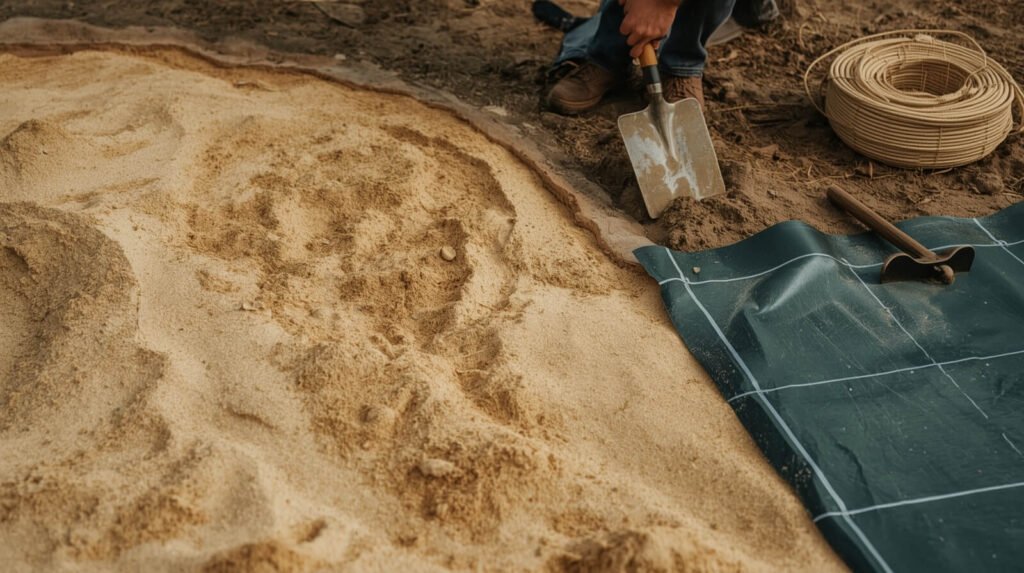
Before you put down your pond liner, make sure the bottom of your pond — called the pond base — is smooth and clean. Even a strong liner can get damaged if the surface underneath is rough or uneven.
Here’s how to prepare your pond base the right way:
- Remove anything sharp.
Pick out all stones, sticks, roots, or pieces of gravel that could poke holes in the liner. - Add a soft layer.
Spread about 2–3 cm of smooth sand across the bottom. This gives the liner a soft cushion to rest on. - Use an underlay for extra protection.
You can also use a pond underlayment fabric instead of sand, or even on top of it. It helps protect the liner from sharp objects and spreads pressure evenly when the pond is full of water.
According to experts at Swell UK, a smooth base helps your liner settle naturally into the pond’s shape. It also keeps the liner from stretching or slipping, which means your pond will look better and last longer.
Tip 6: Stop Your Pond Liner from Floating or Wrinkling
A floating or wrinkled pond liner might look harmless at first — but it can cause leaks, algae growth, and an uneven pond surface over time. This happens when air or groundwater gets trapped under the liner, pushing it upward and creating folds. The good news? You can easily prevent this with the right installation steps.
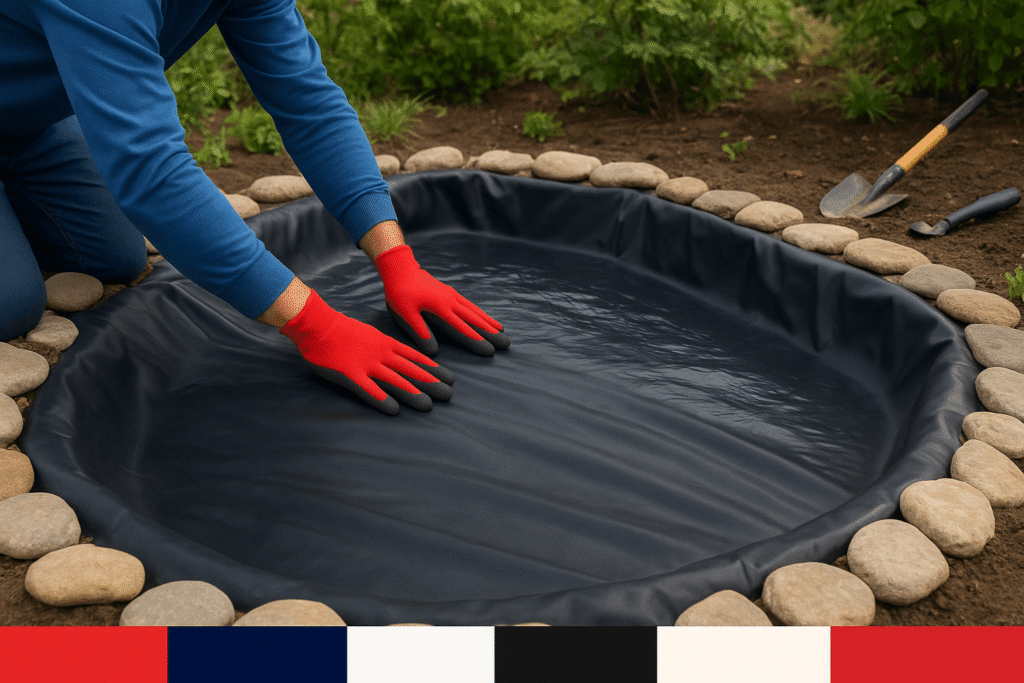
1. Fill Your Pond Slowly
Don’t rush the process — filling your pond gradually helps the liner fit perfectly.
- Add only a few inches of water at a time.
- As the water rises, smooth out folds and press out air bubbles with your hands or feet.
- Work from the center of the pond outward. This lets the liner settle naturally into the pond’s shape.
Pro Tip: The Pond Guy’s Essential Guide to Pond Liners has a helpful step-by-step walkthrough on laying your liner correctly for a smooth, tight fit.
2. Secure the Edges Evenly
Once the liner is in place, make sure the edges are well secured.
- Use smooth stones or edging blocks to hold the liner down.
- Avoid heavy rocks that can shift as the pond fills — they might drag or tear the liner.
- Keep all edges even to prevent “liner lift” or sliding when groundwater builds up beneath.
For larger ponds, it’s smart to include a small drainage outlet under the liner. This helps release any trapped groundwater and keeps the liner flat and stable.
For pros and detailed techniques, check out POND Trade Magazine’s “Bare-Liner Finish” article, which explains how to handle pond floor and edge finishes for a clean, professional look.
3. Keep the Shape and Size Right
When your liner is tight and smooth:
- It matches your pond’s exact size and shape.
- It prevents bulging, wrinkles, and future leaks.
- It gives you a clean, calm water surface that looks great and lasts for years.
Keeping your pond liner flat and secure is all about patience and good setup.
Tip 7: Regular Inspection and Maintenance
Even a perfectly installed pond liner needs a little care over time. Regular inspection helps you catch small problems early — and as the experts at The Pond Guy explain in their article “Find & Fix a Leak”, preventing leaks is always easier (and cheaper) than repairing them later.
Here’s how to make pond liner maintenance simple and effective:
- Check your pond liner every few months.
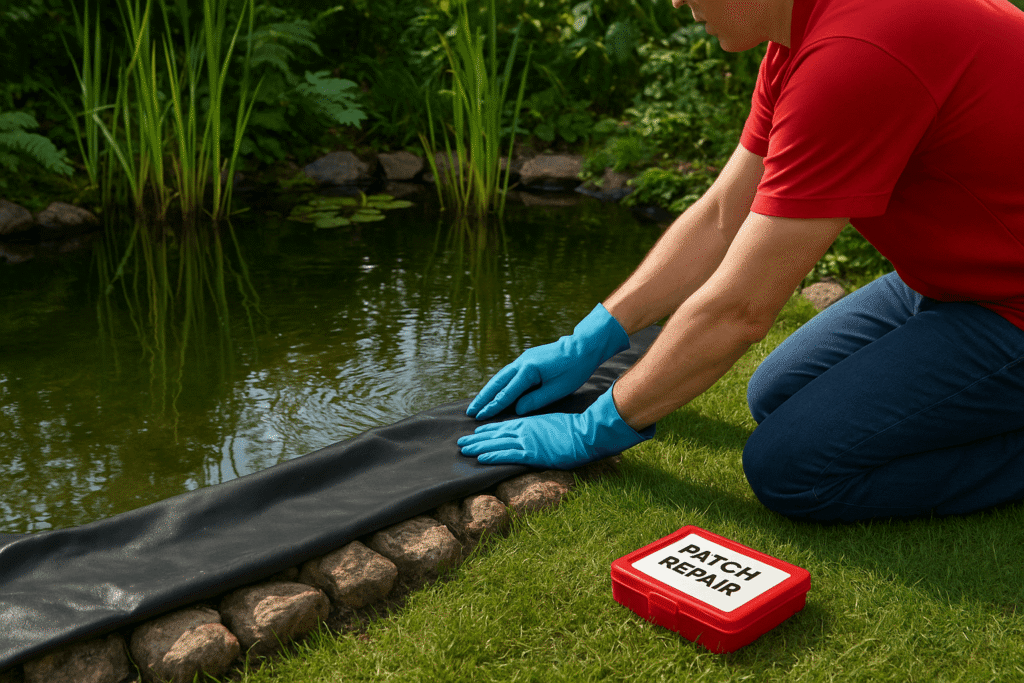
Look for small tears, air bubbles, or edges that have started to shift. Fixing these early is easier and cheaper than waiting until the damage spreads. - Repair small holes right away.
If you see a tiny puncture or a seam starting to separate, use a pond-safe patch kit or sealant immediately. A small hole can grow quickly under water pressure if left untreated. - Inspect the pond edges.
Make sure the liner hasn’t pulled back or become too tight. Exposed edges can cause leaks. Smooth out wrinkles, re-anchor the liner with flat stones, and keep the overlap buried under the pond edging. - Look underneath the liner.
Sometimes, the ground can shift or settle, causing the liner to lift or trap air or water. This shortens the liner’s life, so check for uneven spots and fix them as soon as you notice them.
By making inspection part of your seasonal pond care routine, you’ll:
- Prevent leaks before they start
- Keep your pond water clean and clear
- Protect your fish and plants
- Extend your pond liner’s lifespan
Common Questions About Pond Liners (Simplified Guide)
Let’s answer some of the most common questions builders and pond owners have about pond liners.
Whether you’re making a small backyard pond or a large koi pond, knowing the right liner size and material helps you keep your pond leak-free and easy to maintain for years.
Do I Need a Pond Liner for a Natural Pond?
In most cases — yes.
Even “natural-style” ponds need a liner to hold water properly.
Here’s why:
- A liner creates a waterproof barrier that stops leaks.
- It helps you control the pond’s depth.
- It lets you use a specific pond liner size that fits your design.
According to The Pond Guy – “Pond Liner: The Essential Guide”, pond liners help reduce how often you need to refill your pond and protect the soil around it.
Unless your soil is very dense clay, using a liner is the smart and reliable choice.
What Thickness Is Best for Koi Ponds?
If you have large koi or lots of fish, thicker liners are best.
A pond liner’s thickness matters as much as its size.
- Most koi pond builders use a 45-mil EPDM liner.
- It’s strong, flexible, and long-lasting.
As AquaticPlants.org – “Guide to Pond Liners” explains, EPDM liners resist tears, punctures, and UV rays better than plastic liners.
So, picking the right thickness with the right size helps your pond last for many years.
Why Do Pond Liners Float?
If your pond liner starts floating or bubbling, it’s usually because water or air is trapped underneath.
Common reasons include:
- Groundwater pushing up from below.
- Heavy rainfall or poor drainage.
To fix this:
- Add a drainage trench or overflow outlet to release trapped water.
- Use rocks or edging stones to hold the liner in place.
This stops movement and keeps your liner secure during wet weather.
Is a Black Pond Liner Better?
Yes — black liners are the best choice for most ponds.
Here’s why:
- They hide dirt and algae.
- They block sunlight and protect fish from UV rays.
- They make the pond look deeper and more natural.
So, if you want a pond that looks clean and stays healthy, go for a black liner.
How Do You Find a Leak in a Pond Liner?
Even strong liners can leak over time.
Here’s how to find the problem:
- Watch the water level. If it stops dropping at one point, check that area.
- Inspect folds and seams for holes or tears.
- Try a dye test by adding colored water — leaks will pull the color through the hole.
Catching small leaks early prevents bigger water loss later.
Why Does My Pond Liner Keep Floating?
If your liner keeps lifting, the issue might be wrong liner size or poor installation.
According to BuildMeAPond – “How to Find & Fix a Pond Leak”, the most common causes are:
- Trapped air or groundwater under the liner.
- Loose edges or improper anchoring.
- Liner too small or too big for the pond shape.
To prevent this:
- Pick the right pond liner size.
- Anchor edges firmly with stones or soil.
- Check drainage around your pond before filling it.
These steps keep your liner flat, stable, and long-lasting.
Build Smart, Seal Strong
Building a long-lasting pond starts with one thing — choosing the right pond liner size and thickness. It’s not hard when you take the right steps and plan carefully.
Here’s how to make it simple:
- Measure your pond correctly. Be sure to include the full depth and shape, not just the surface.
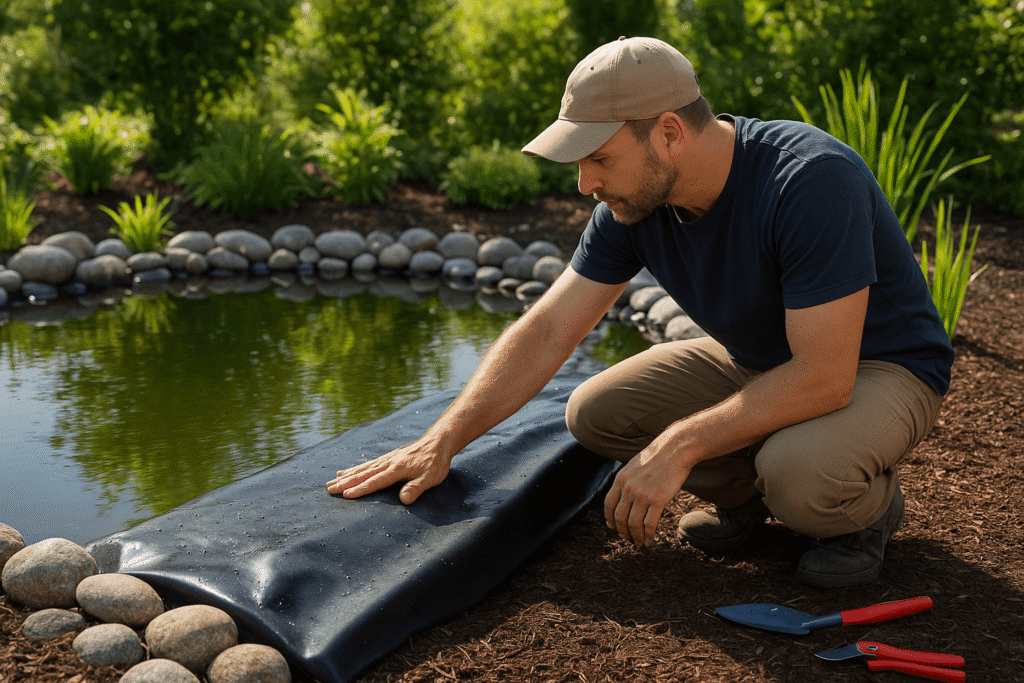
- Leave some extra liner around the edges. This “overhang” keeps your pond from leaking if the ground shifts.
- Pick the right liner thickness. A thicker liner can handle more pressure, roots, and movement over time.
- Add underlayment or soft sand. These layers protect the liner from sharp rocks and punctures.
- Seal the edges well. A tight seal stops leaks and helps your pond last longer.
By following these 7 pro tips, you’re already on your way to a strong, leak-free pond that will look great for years.
Want to go further?
Visit Memeilo.com for our expert-tested pond liner reviews and step-by-step installation guides. Learn how to build a pond that’s durable, beautiful, and made to last.