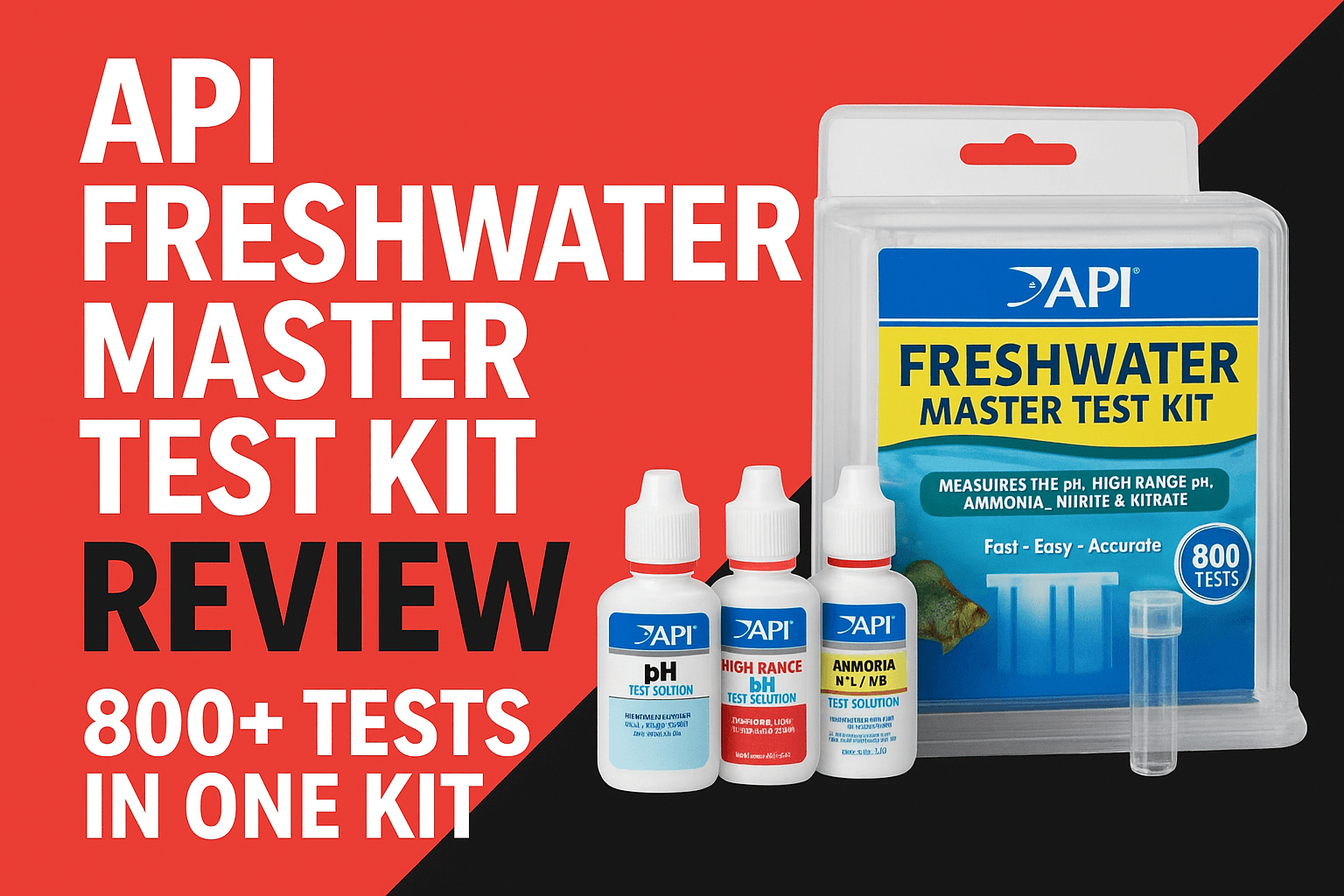
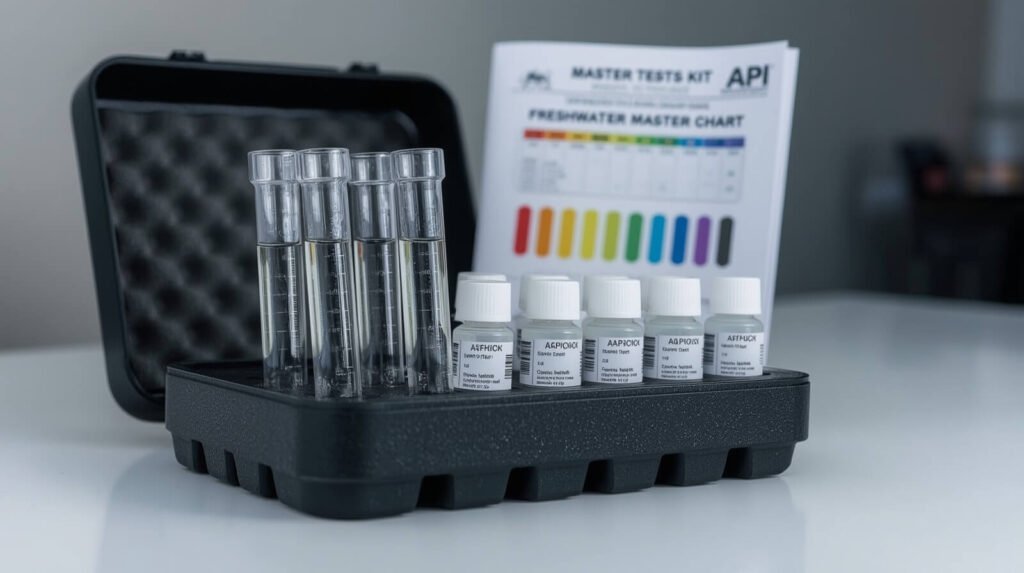
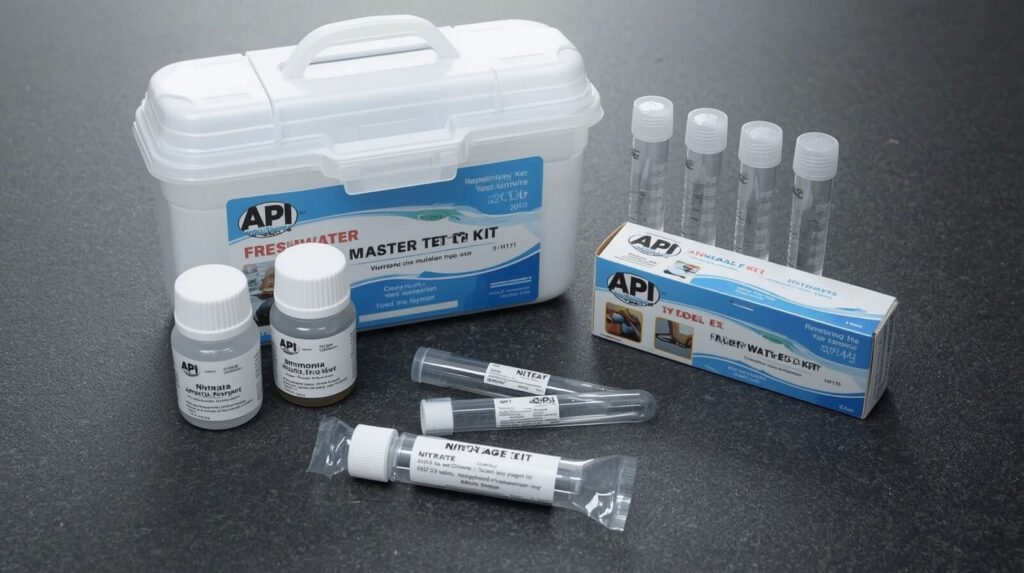
The API Freshwater Master Test Kit gives fishkeepers the tools to keep water conditions stable and fish healthy. With 800 tests included, it measures ammonia, nitrite, nitrate, and pH quickly and accurately. Easy to use and highly reliable, it helps prevent common pond issues and supports a thriving pond environment.
Specs
Water sample size: 5 mL per test (using provided glass tubes)
Ammonia: 8 drops from Solution #1 + 8 drops from Solution #2, detects 0 – 8.0 ppm
Nitrite: 5 drops of reagent, detects 0 – 5.0 ppm
Nitrate: 10 drops from Solution #1 + 10 drops from Solution #2, detects 0 – 160 ppm
Test capacity: up to 800 individual tests
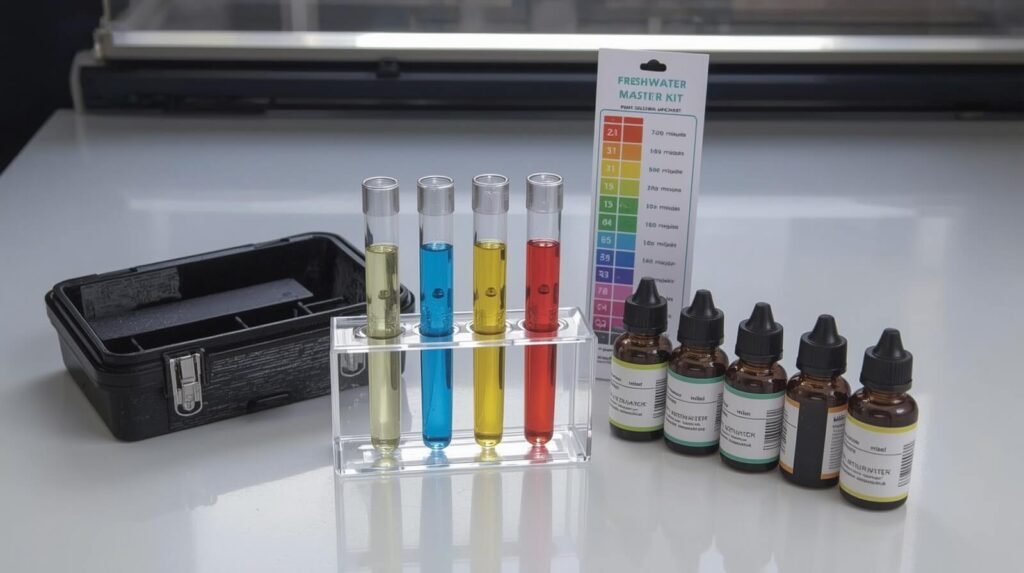
Accessories included: four glass test tubes with caps, instruction booklet, laminated color charts
Storage: keep reagents upright in a cool, dry place for best shelf life
Pros
Tests the most important water parameters (pH, ammonia, nitrite, nitrate).
Delivers up to 800 readings, making it highly cost-effective.
More precise than quick dip strips.
Clear, laminated color guide for accurate matching.
Comes with sturdy glass tubes and tight-fitting caps.
Neatly packed in a storage box for easy organization.
Instructions are simple to follow for all experience levels.
Trusted by many aquarium hobbyists for consistency.
Cons
Takes a few minutes per test, slower than strips.
Color matching can be tricky in poor lighting.
Requires careful handling of glass tubes (breakable).
ome reagents expire within 1–2 years.
Case is compact but can feel crowded once bottles are in use.
When I brought home my first batch of guppies, I thought caring for them was as simple as feeding daily and topping up the water. Within a month, I learned the hard way that crystal-clear water doesn’t always mean safe water. My fish began acting sluggish, and only after some late-night research did I discover the invisible culprit: poor water quality.
This is a common story among new aquarists. Hidden toxins like ammonia and nitrite build up silently, stressing fish long before we notice visible signs. The key to prevention lies in understanding the nitrogen cycle—a natural process where waste turns into ammonia, then nitrite, and finally nitrate. As Aquarium Co-Op notes, mastering this cycle is what separates struggling tanks from thriving ones.
That’s why consistent water testing matters, and why many hobbyists turn to kits like the API Freshwater Master Test Kit.
Once you understand why water testing matters, the next step is figuring out how to test. The aquarium market offers two main choices: test strips and liquid reagent kits. Both can give you a snapshot of your tank’s water quality, but they work very differently and suit different types of fishkeepers.
Test Strips
Test strips are often the first stop for beginners. You simply dip one into your aquarium water, wait about a minute, and then match the colors on the strip to a printed chart. This makes them quick, easy, and less intimidating than handling bottles and test tubes.
As explained in Fishkeeping World’s beginner guide, strips are popular because they make routine testing painless, especially for busy hobbyists. However, convenience comes at a cost.
Advantages of Strips
Speed: A single strip can check multiple parameters in less than two minutes.
Ease of use: No mixing, measuring, or extra tools required.
Beginner-friendly: Perfect for quick checks or casual setups.
Disadvantages of Strips
Lower accuracy: Subtle changes in ammonia, nitrite, or pH may go undetected.
Shelf life issues: Strips degrade quickly in humid conditions.
Expensive for daily use: Frequent testing can make strip-based kits costly over time.
Example Cost Breakdown
To put it into perspective, a pack of API 5-in-1 Test Strips costs about $18 for 25 strips. That works out to around $0.72 per test. But since these strips don’t test for ammonia, you’d also need to buy a separate ammonia kit (around $10–$12). Suddenly, what seemed cheap becomes less economical if you’re testing daily during tank cycling.
Why Upgrade Beyond Strips
While strips are useful for quick checks, most aquarists eventually outgrow them. During the tank cycling stage, water chemistry can swing rapidly, requiring accurate ammonia and nitrite monitoring. Strips may miss these spikes or give vague results, which could lead to poor decisions about water changes or stocking.
This is where liquid test kits like the API Freshwater Master Test Kit shine. They offer more precision, longer-lasting supplies, and lower cost per test over time.
API Freshwater Master Test Kit Overview
If you want dependable accuracy rather than guesswork, the API Freshwater Master Test Kit is one of the stronger choices in the aquarium hobby. While test strips give a quick glance, many aquarium blogs emphasize that liquid reagent kits tend to detect subtle changes more reliably. For example, AquaSnails notes that liquid test kits “provide more precise and accurate results … detecting subtle changes in chemical levels that might be missed by other types of kits.”
That kind of precision becomes especially important during critical phases like cycling, when even minor ammonia spikes can set your tank back. With the API Freshwater Master Test Kit , you get a full suite of tests and the confidence to know exactly where your water chemistry stands.
What’s in the Box?
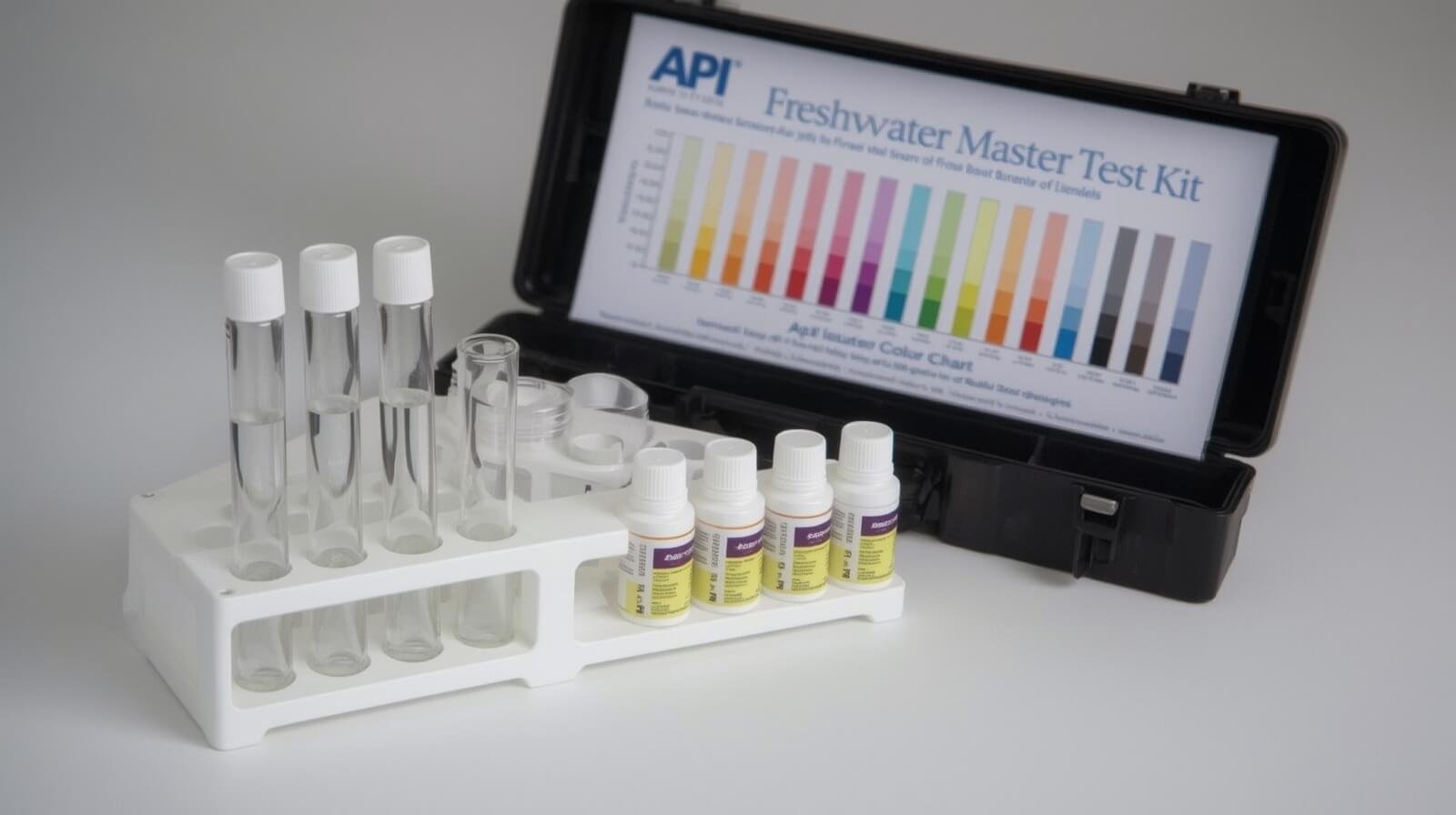
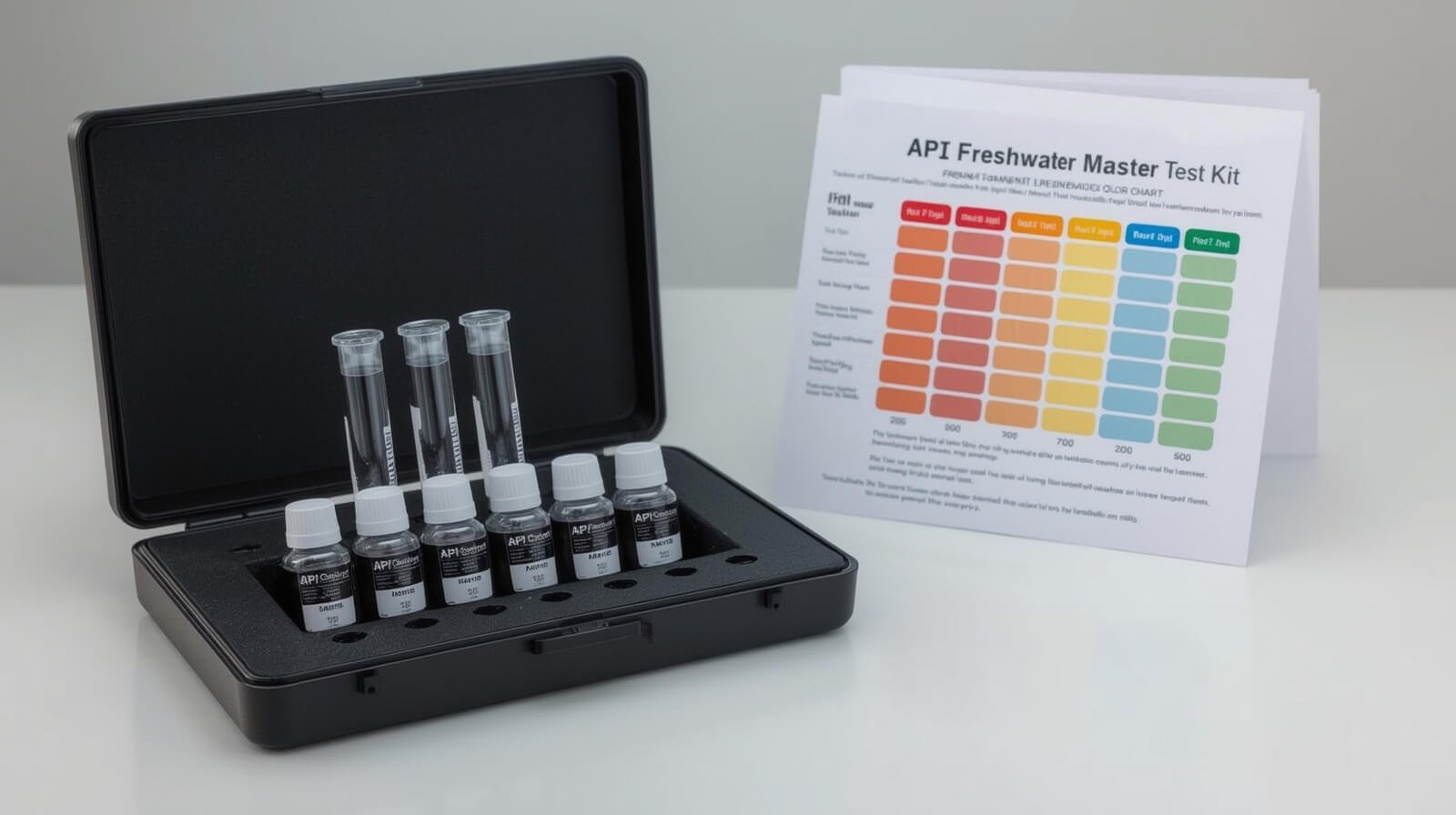
The API Freshwater Master Test Kit is neatly packaged and feels built for long-term use. Inside, you’ll find:
Four glass test tubes with tight caps to prevent spills when mixing reagents.
Seven reagent bottles—each containing a specific solution for testing different water parameters.
A sturdy plastic case that keeps everything organized and doubles as a tube holder during testing.
A laminated color chart designed for easy comparison in different lighting.
Printed instructions that walk you through each test.
Parameters Tested
The API Freshwater Master Test Kit focuses on the five core indicators that reveal the health of any freshwater aquarium. Each one ties directly to the nitrogen cycle or overall stability of the tank:
Low-Range pH (6.0–7.6): Useful for aquariums with tetras, rasboras, or other fish that thrive in slightly acidic water. Tracking this helps prevent sudden shifts that can stress both fish and plants.
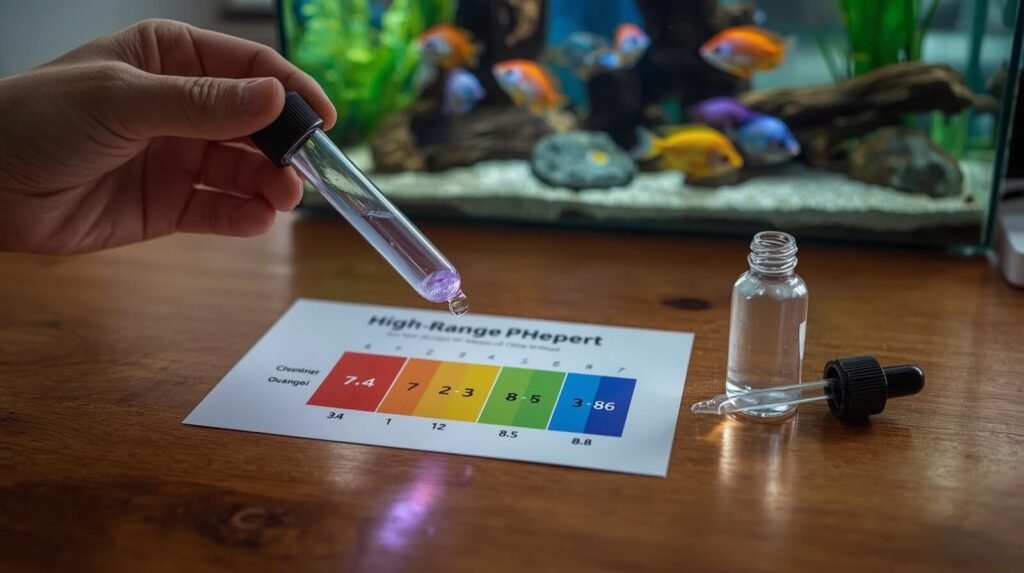
High-Range pH (7.4–8.8): Important for species that prefer alkaline conditions, such as African cichlids or livebearers. It ensures the water chemistry stays in the range they need to flourish.
Ammonia (0–8 ppm): Vital during the cycling phase. Even small amounts of ammonia can burn fish gills or cause lethargy, making this one of the most important readings to keep at zero.
Nitrite (0–5 ppm): Appears as ammonia starts to break down. Like ammonia, nitrite is toxic, so testing confirms whether your biological filter is doing its job.
Nitrate (0–160 ppm): The end product of the cycle. While less harmful than ammonia or nitrite, high nitrate encourages algae growth and weakens fish over time.
Together, these tests show the entire path of the nitrogen cycle—something simple dip strips often miss. For new setups, API Freshwater Master Test Kit makes it easy to follow the rise and fall of ammonia, nitrite, and nitrate, giving aquarists the information they need to act at the right time.
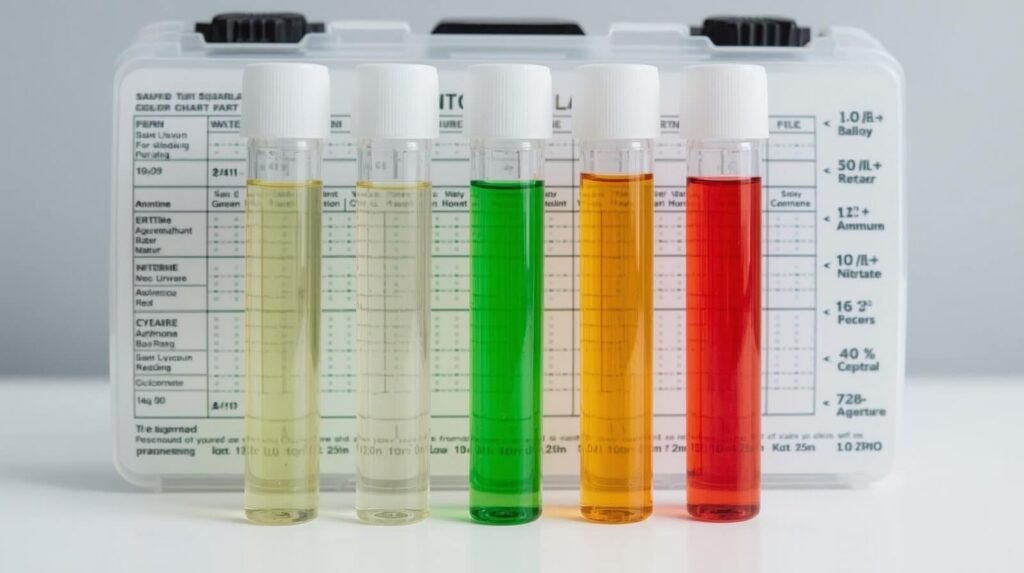
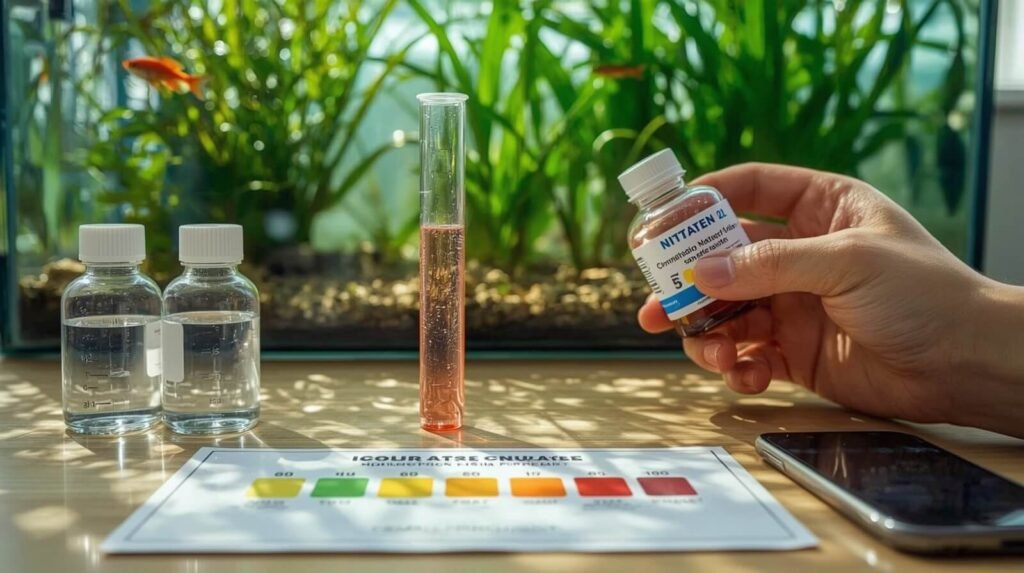
When you run the tests, the results appear as clear color changes in the tubes. A sample with ammonia at safe levels often turns a light yellow, while a tube measuring nitrite may shift into a green shade if levels are starting to build up. For nitrate, the colors become warmer—ranging from orange at moderate readings to a deep red when concentrations are high. These visual cues make it easy to spot whether your tank is balanced or if something needs urgent attention.
First Impressions
Opening the API Freshwater Master Test Kit for the first time can feel intimidating—glass tubes, multiple reagent bottles, and a set of detailed instructions give it a bit of a “chemistry set” vibe. But over time, that initial complexity fades. Many aquarists report that after a few trials, the steps become familiar, and reading results feels intuitive. In fact, The Spruce Pets ranks this kit as “best overall for home hobbyists,” citing its balance of precision and usability compared to simple strips. The Spruce Pets While test strips can wear out or yield inconsistent readings over time, the Master Test Kit gives you a much more durable and reliable tool—one that feels professional and built to last.
How to Use the API Freshwater Master Test Kit
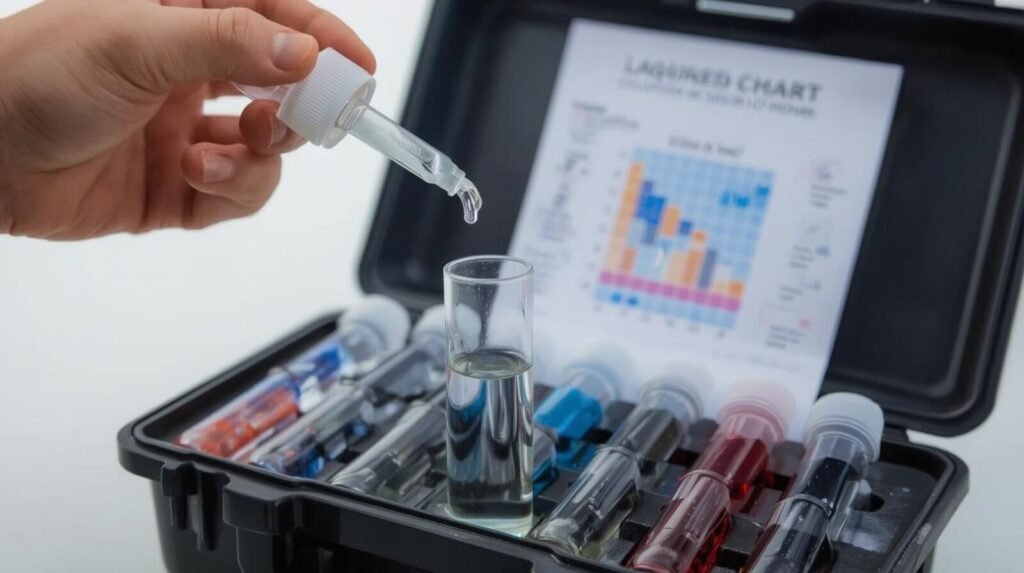
Using the API Master Kit may feel like stepping into a mini science lab, but once you’ve tried it a few times, the process becomes straightforward. Unlike test strips, which you simply dip and compare, liquid testing requires a little more patience and attention to detail—but the payoff is accuracy you can trust.
General Instructions
All tests start the same way:
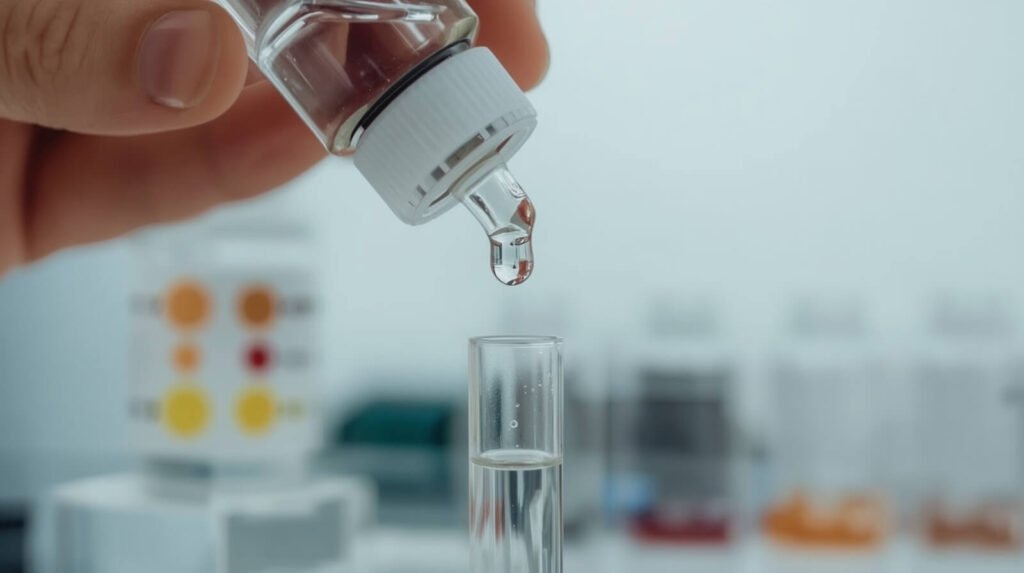
Fill a clean test tube with 5 ml of pond water (the tube has a white line as a guide).
Add the specified number of drops of reagent solution(s).
Cap the tube tightly and shake or invert as directed.
Wait the recommended time for the reaction.
Compare the resulting color to the laminated chart.
Step-by-Step Guide to Using the API Freshwater Master Kit
Nitrate Test
Testing for nitrates takes a bit more effort, but it’s one of the most important checks for long-term tank stability.
Fill a clean test tube to the 5 ml line with aquarium water.
Add 10 drops from Bottle #1, cap the tube, and swirl gently.
Shake Bottle #2 vigorously for at least 30 seconds—don’t skip this part, as the solution tends to settle.
Add 10 drops from Bottle #2, cap again, and shake the tube for about 1 full minute.
Set the tube aside for 5 minutes before holding it against the color chart.
Ammonia Test
Because even trace amounts of ammonia can harm fish, this is a test you’ll likely run often.
Fill the test tube with 5 ml of water.
Add 8 drops from Bottle #1 and then 8 drops from Bottle #2.
Cap and shake gently for around 5 seconds.
Wait 5 minutes, then compare to the chart—yellow means safe, while darker shades lean toward danger.
Nitrite Test
Nitrite is another toxic compound, so accuracy here matters.
Fill the tube with 5 ml of sample water.
Add 5 drops of the Nitrite reagent.
Cap, swirl lightly, and leave for 5 minutes.
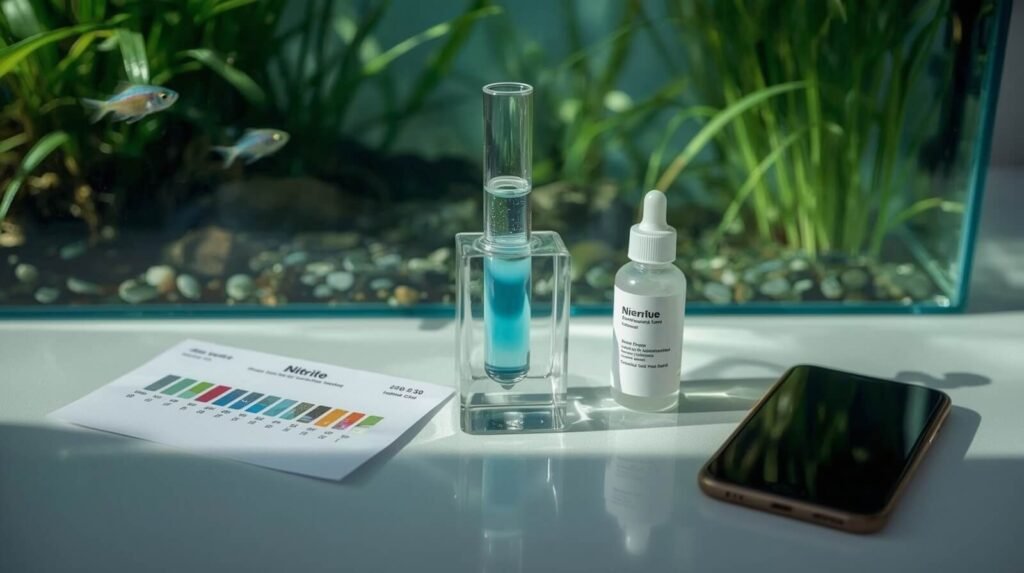
Compare the shade—healthy tanks show pale blue, while higher levels shift toward violet.
Low-Range pH Test
This test is helpful for aquariums stocked with fish that prefer softer, slightly acidic conditions.
Fill to the 5 ml mark.
Add 3 drops of the Low-Range pH solution.
Cap, invert to mix, and check the result against the chart.
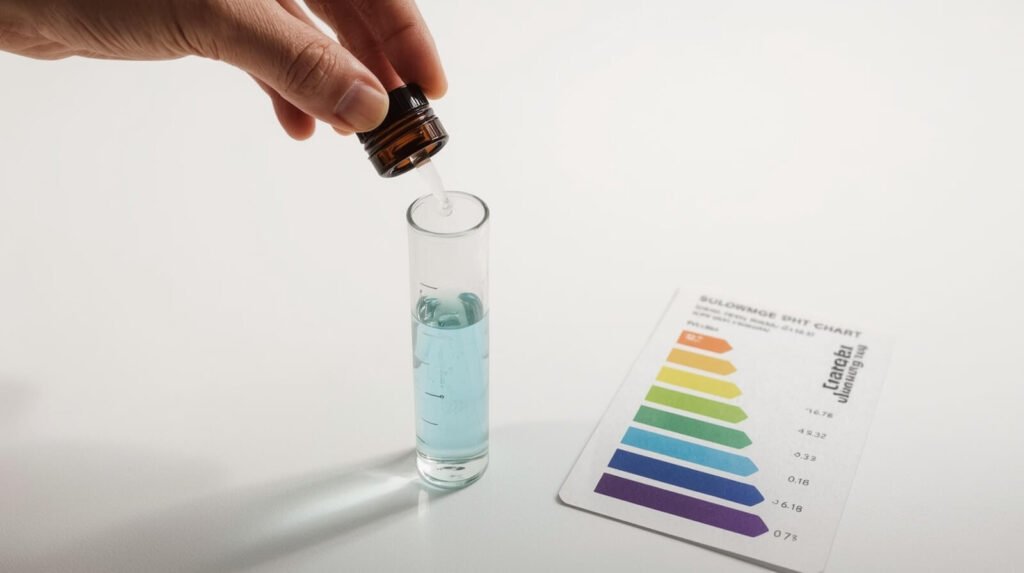
The result will range from yellow (pH ~6.0) to blue-green (pH ~7.6), giving you a clear picture of whether your water conditions match your fish’s natural needs.
High-Range pH Test
For harder, more alkaline setups, this version gives a clearer picture.
Measure 5 ml of tank water into the tube.
Add 5drops of the High-Range pH reagent.
Cap, invert gently, and match the result to the high-range scale.
Tips for Efficiency
Create a quick-reference card: Many aquarists suggest making a simplified notes sheet for each test—this idea is echoed in The Spruce Pets’ guide on how to test aquarium water—so you don’t have to flip through the full manual every time.
Stick to the same tube order: Always place tubes in a consistent layout (for instance, pH, Ammonia, Nitrite, Nitrate from left to right) to avoid confusion.
Overlap waiting times: While one test is developing, begin preparing the next one. It helps you work efficiently without idle moments.
Use good lighting: Always compare colors under natural daylight or bright white light. Shadows or colored bulbs can throw off how the hues appear.
Hands-On Experience with the API Master Test Kit
Using the API Freshwater Master Test Kit can feel a little clunky at first, especially if you’re used to the dip-and-done simplicity of strips. My first few runs were slow, carefully rereading the instructions and nervously counting each drop. But after a week of daily testing during my tank’s cycling phase, the routine started to flow naturally. Many aquarists report the same pattern—initial hesitation, followed by a smooth rhythm once the steps become familiar.
The accuracy is what truly stands out. In fact, reviews on FishLab’s aquarium test kit guide and advice from The Spruce Pets’ water testing article point out that test strips often misread nitrate levels, while the API liquid kit provides consistent results when used correctly. The trade-off, however, is time. Strips can give you a reading in under a minute, whereas the API Freshwater Master Test Kit may take 5–10 minutes if you’re running all four tests. Still, for cycling a tank or diagnosing stressed fish, the precision is well worth the effort.
Cost and Value of the API Freshwater Master Test Kit
At first glance, the API Freshwater Master Test Kit seems like a bigger initial expense compared to buying strips. The typical price usually falls between $24–$30, depending on where you shop. But when you break it down, its value becomes much clearer. API promotes “800+ tests,” though in practice, the nitrate reagents are often the first to run out—many users report getting 70–90 nitrate tests before needing to replace that bottle. Even so, that works out to about $0.30 per test, far less than strips that can run $0.80–$1.00 each.
If you’re a casual fishkeeper doing only occasional checks, strips might feel cheaper up front. But when you’re cycling a tank, managing a busy community setup, or juggling several aquariums, the API Freshwater Master Test Kit pays for itself rapidly. In fact, a guide from Hanna Instruments emphasizes that consistent, repeated testing is critical for aquarium success—and that’s where reagent kits outperform strips in the long run.
Another advantage is reliability. Faulty or faded strips can lead to wasted money on unnecessary chemicals or mask early warning signs—costing you far more in lost fish or fixes. For those who view fish keeping as more than a hobby, the API Freshwater Master Test Kit is more than cost-effective—it’s a smart investment in reliability and peace of mind.
API Freshwater Master Test Kit vs Other major brands
Product
Tests Included
Store
API Pond Master Test Kit
500+
View on Amazon
API Freshwater Master Kit
800+
View on Amazon
Tetra EasyStrips 6-in-1 Test Kit
100 strips
View on Amazon
API 5-in-1 Test Strips
25 strips
View on Amazon
Ammonia Aquarium Test Strip
25 strips
View on Amazon
Seachem MultiTest Ammonia Test Kit
75
View on Amazon
Tips for Best Results with the API Freshwater Master Test Kit
Using the API Master Kit gets easier with practice, but a few small habits can dramatically improve accuracy. The most common mistake beginners make is not shaking Nitrate Bottle #2 long enough—this reagent tends to settle, and if it isn’t mixed thoroughly, the result is often falsely low readings. A good rule of thumb, as noted in Practical Fishkeeping, is shaking it for at least 30 seconds before use.
Another tip: hold reagent bottles perfectly vertical when adding drops. Tilting even slightly can change drop size, which throws off the chemistry. Consistency is what keeps your results reliable.
For pH testing, let your tap water rest for about 24 hours before measuring. That gives dissolved gases like CO₂ a chance to escape, helping avoid misleading spikes. Hobbyist guides—such as one on Aqua-Fish’s water chemistry FAQ—emphasize how important this step is for consistent results.
Finally, protect your reagents. Their accuracy drifts slowly after 3–4 years, especially when exposed to heat or humidity. Store bottles in the kit’s case, away from direct sunlight, to extend their usefulness.
Replacement Options for the API Freshwater Master Test Kit
Over time, certain reagents in the kit will run out faster than others—nitrate and ammonia solutions are usually the first to go, since those get tested the most. Instead of replacing the entire kit, API offers individual replacement bottles and smaller test kits for pH, ammonia, nitrite, and nitrate.
For instance, if you run a planted tank and test nitrate frequently, you can buy just the nitrate reagent kit (around $10–$12) rather than replacing everything. Many hobbyists on Tropical Fish forums praise this strategy as a smart, cost-saving move.
Most replacements are available from Amazon, major chains like Petco or PetSmart, and local aquarium shops. Just be sure the reagent bottles you get have at least two years of shelf life—old stock can slip through unnoticed.
You can also replace broken test tubes. API offers compatible glass tubes, which many pet-supply sites stock as “API Replacement Test Tubes” so you don’t have to discard the whole kit for just one broken tube.
Results That Matter Most
At the end of the day, testing is only useful if you understand what the numbers tell you. The API Freshwater Master Test Kit targets four critical parameters, each with an essential role in fish health.
Target 0 ppm ammonia—any detectable amount can irritate gills and stress fish. Ammonia spikes are almost unavoidable when starting a new tank, so frequent testing is essential. According to an article from American Aquarium Products, ammonia is the ‘food’ that supports growth of nitrifying bacteria, which in turn drive the nitrogen cycle.
Nitrite → This should also stay at 0 ppm. Nitrite is also toxic and interferes with oxygen uptake, making it dangerous for fish in even small amounts.
Nitrate → Some nitrate is unavoidable, but keep levels under 40 ppm in most freshwater setups. Levels above 80 ppm are often a sign of overfeeding, weak filtration, or infrequent water changes.
pH → More than hitting a “perfect” value, stability matters most. A pH that stays consistent within a species’ comfort zone is far better than one that jumps wildly—even if it’s not exactly what you expected.
Final Verdict
After weeks of testing, it’s clear why the API Freshwater Master Test Kit is a staple in the fish keeping world. It balances affordability with accuracy, giving fish keepers—whether they’re cycling a first tank or managing a thriving community setup—reliable insights into water quality.
Best For: Beginners learning the nitrogen cycle and experienced aquarists who value precision over speed.
In short, if you’re serious about your fish thriving rather than just surviving, API Freshwater Master Test Kit deserves a place next to your aquarium. For more context on why liquid kits remain the gold standard over test strips, see this Aquarium Co-Op blog post that compares both methods in real-world use.
Moses Lokorio is a certified aquaculture expert with over 6 years of hands-on experience helping fish-pond builders create healthy, balanced pond ecosystems. At Memeilo.com, he writes detailed, data-driven guides to simplify pond construction, maintenance, and fish care for DIYers and professionals alike.